


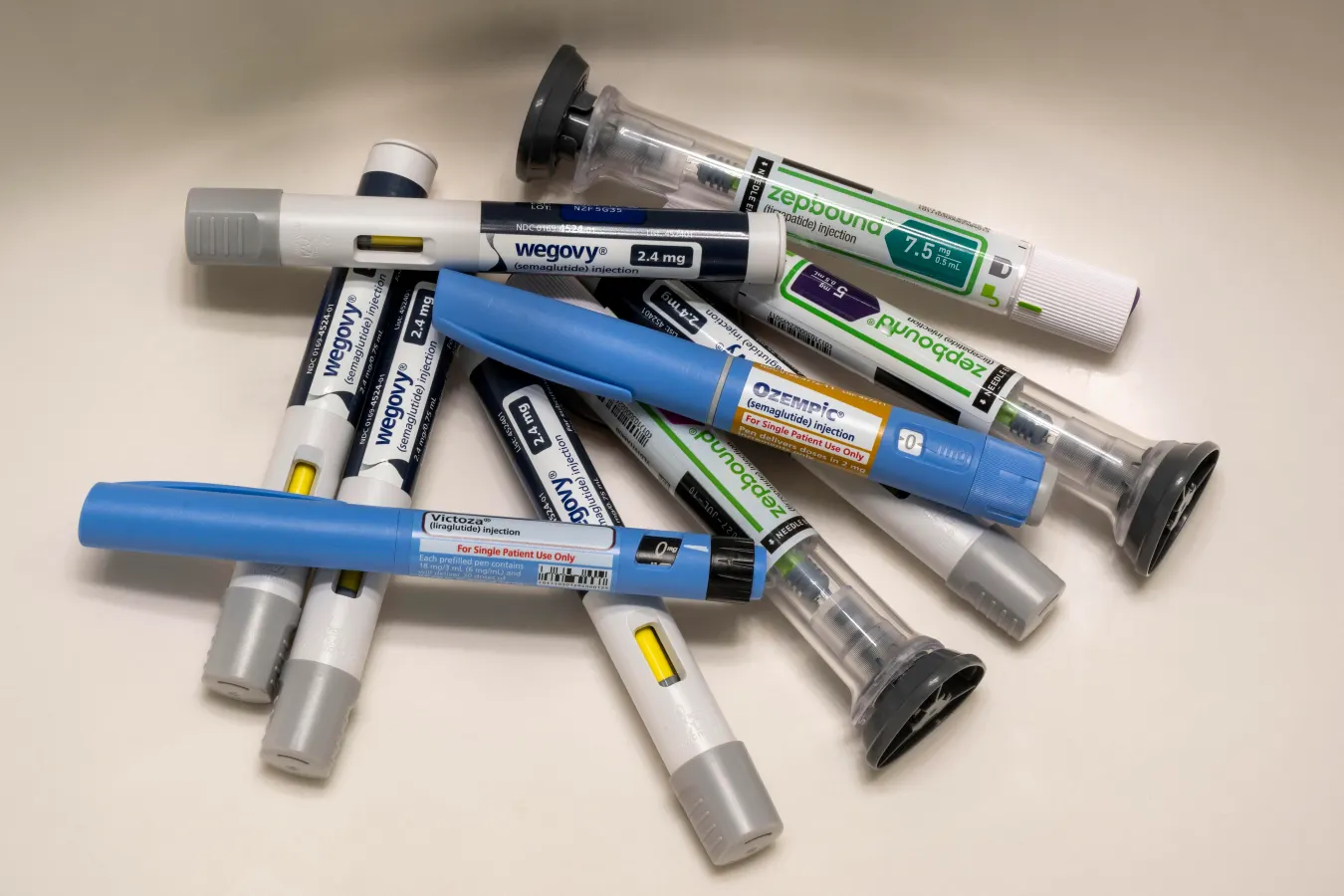

“Compounded GLP-1s have not undergone FDA’s premarket review for safety, effectiveness and quality,” says health expert Sally Pipes. “The FDA has warned about dosing errors, fraudulent compounded products and the use of semaglutide salt forms whose chemical and pharmacological properties the agency has not established.”
UCG/Universal Images Group via Getty Images
The U.S. Food and Drug Administration’s effort to rein in mass-market copies of blockbuster GLP-1 drugs just survived a major legal challenge.
Last month, the U.S. Court of Appeals for the Fifth Circuit upheld the agency’s determination that the shortage of semaglutide—the active ingredient in Ozempic and Wegovy—is over. In a companion case, the court reached the same conclusion about tirzepatide, the active ingredient in Mounjaro and Zepbound.
The challenges came from compounders that had been allowed to make copies of these drugs during the shortages—and weren’t eager to give up that business once supplies recovered. But that exception existed to address scarcity, not to create a permanent competing market in unapproved copies. Now that the shortages are over, compounding should return to its proper, limited role in the drug supply chain.
The origins of this legal dispute date to 2022, when exploding demand for GLP-1 drugs left manufacturers struggling to keep up. During a shortage, federal law relaxes some restrictions on qualifying pharmacies and outsourcing facilities that compound copies of scarce medicines.
That’s an exception to the normal role of compounding. Ordinarily, it allows pharmacists to prepare a medication tailored to an individual patient’s needs, such as a different dose or formulation that isn’t commercially available. Compounded medicines are not FDA-approved and do not undergo the same premarket review for safety, effectiveness, and quality as approved drugs.
The FDA declared the tirzepatide shortage resolved in 2024 and did the same for semaglutide in early 2025. Yet the market for copycat versions remains substantial. By one estimate, roughly 1.5 million Americans take compounded GLP-1s.
That’s cause for concern. Compounded GLP-1s have not undergone FDA’s premarket review for safety, effectiveness and quality.
The FDA has warned about dosing errors, fraudulent compounded products and the use of semaglutide salt forms whose chemical and pharmacological properties the agency has not established.
Over time, this lost investment could translate into fewer medical breakthroughs.
My colleague Wayne Winegarden has estimated that widespread GLP-1 compounding is reducing pharmaceutical R&D investment by roughly $1.2 billion to $1.5 billion a year. Over the remaining exclusivity periods for semaglutide and tirzepatide, he projects a total reduction of $9.3 billion to $11.8 billion—enough, by his estimate, to result in around four or five fewer new medicines.
Compounding still has an important role when individual patients need medicines that commercially available products cannot provide. But shortage-era mass production should end when the shortage does. The FDA is right to enforce that distinction.
















Leave a comment