


Topline
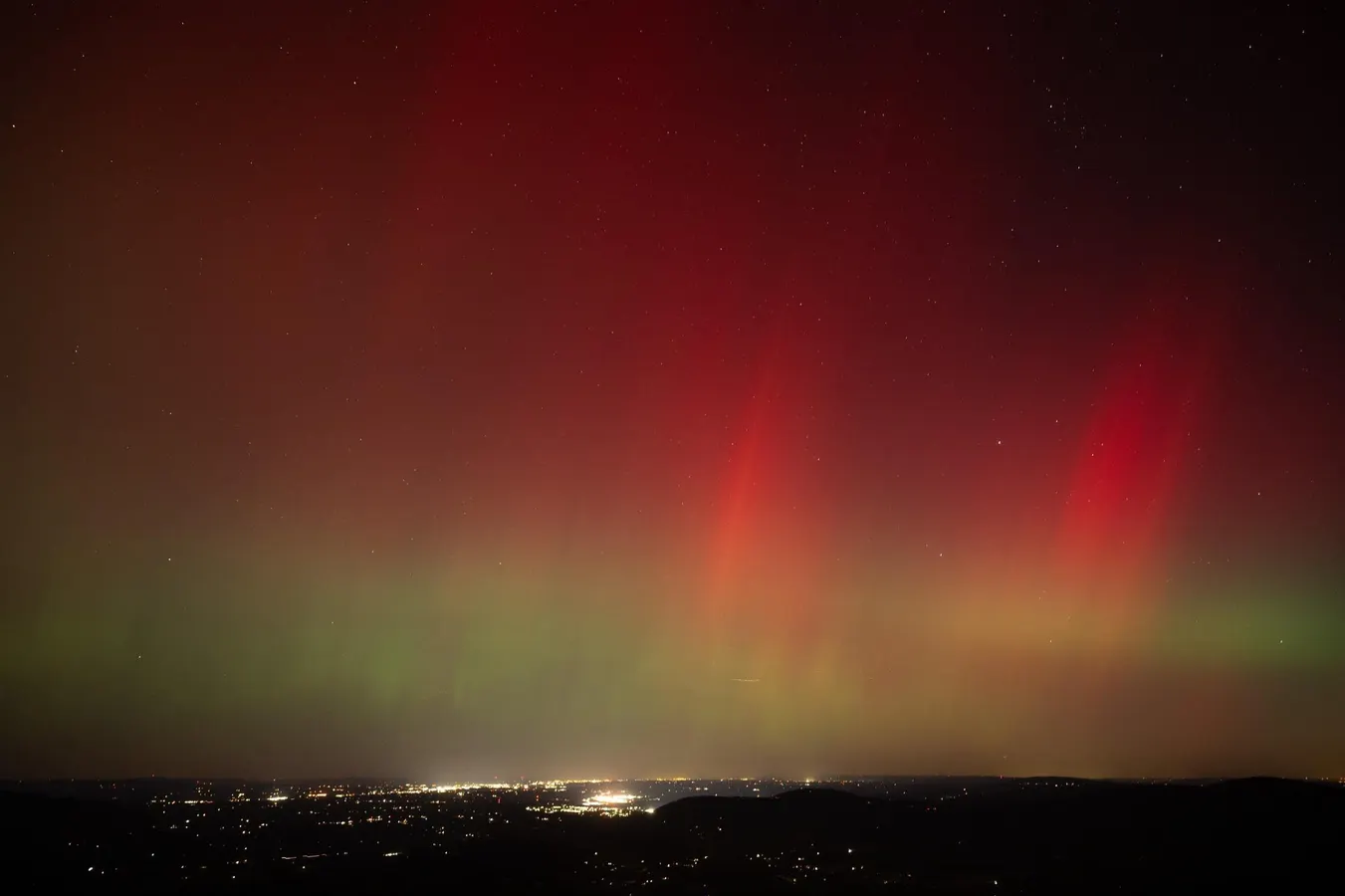
The northern lights may make another appearance in eight states Friday night, according to the National Oceanic and Atmospheric Administration, which issued a forecast giving a few areas along the northern U.S. border a chance at seeing the aurora borealis.
The northern lights have a low chance of being seen along the northern U.S. border.
Photo by SAUL LOEB/AFP via Getty Images
Key Facts
NOAA issued a Kp index of four, meaning the aurora will become brighter and be “quite pleasing to look at” for observers in the right places.
Observers hoping to get a look at the northern lights may have a similar shot at seeing the aurora on Saturday, which has an identical forecast to Friday’s.
No geomagnetic storm impacts, which can enhance northern lights showings, are forecast by NOAA for Friday.
Where Will The Northern Lights Be Visible?
Areas within eight states have a “low” chance of seeing the northern lights Friday, according to NOAA. The forecast includes northeastern Washington, the northern tip of Idaho, northern Montana, much of North Dakota, northern Minnesota and the northernmost stretches of Wisconsin and the Upper Peninsula of Michigan. As usual, Alaska has a strong chance of seeing the northern lights.
Friday’s auroral forecast.
NOAA
What’s The Best Way To See The Northern Lights?
Viewing the northern lights from places with little to no light pollution or moonlight can help observers’ chances of seeing the aurora. Friday’s moon phase is favorable, as the waning crescent slated for Friday night means only 2% of the moon will be visible. Observers should also try to view the northern lights between 10 p.m. and 2 a.m., which usually coincides with heightened auroral activity.
What’s The Best Way To Photograph The Northern Lights?
Phone users should avoid using flash and use night mode when taking photos. Tripods can also help, as can shooting photos in low apertures.
Key Background
2026 is likely to be the last year of consistent auroral activity for a while, as the sun reached the peak of its 11-year solar cycle in 2024, which produced the strongest northern lights showings in the last 500 years. As more time passes from the peak of the solar cycle, auroral activity will decrease.
Further Reading
Aurora Dashboard (NOAA)














Leave a comment