


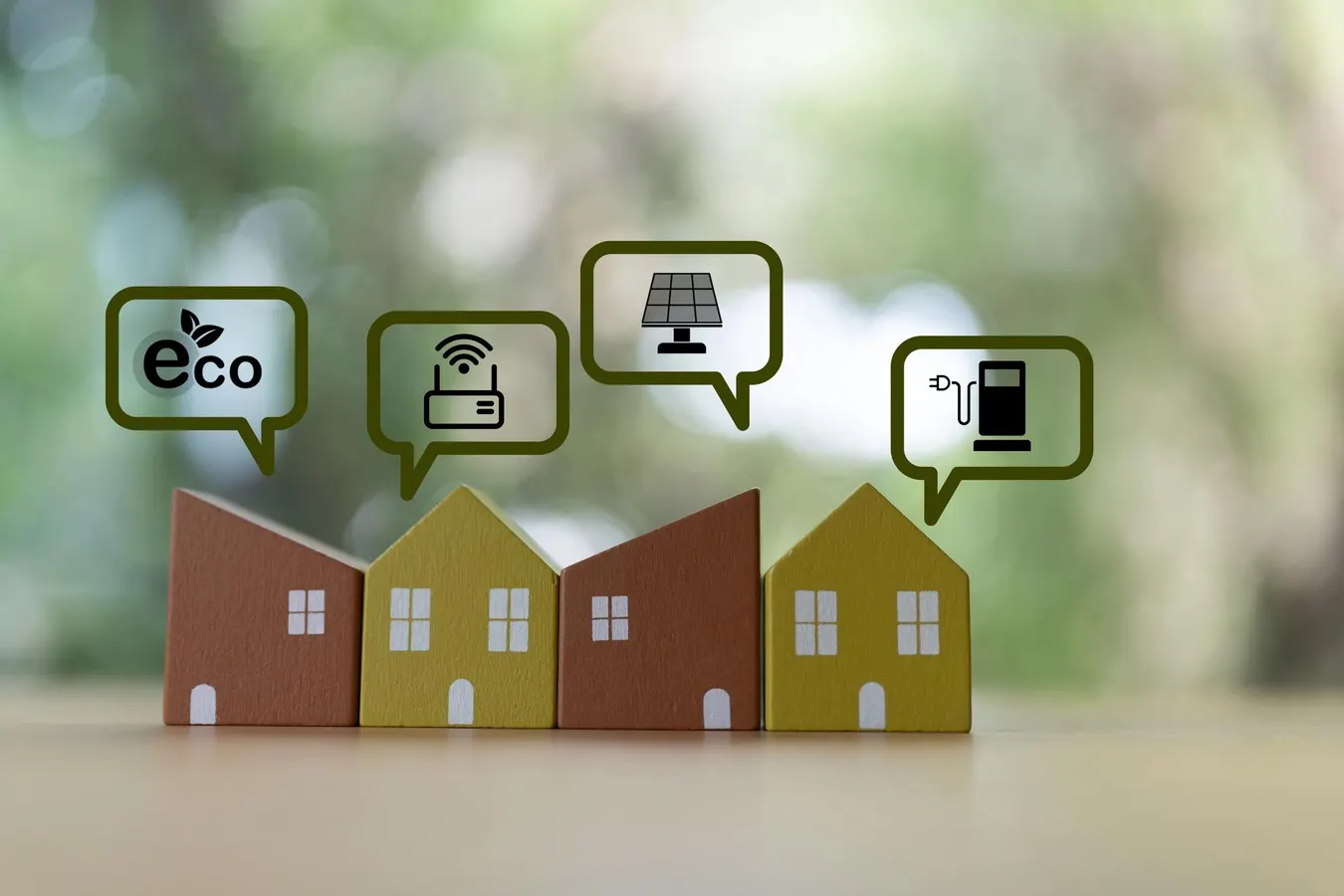

Agentic AI can act autonomously, determining how to deploy energy optimally and cut expenditure. On its own
Deposit Photos
“KITT, I need you.”
If you are of a certain age, you can guess what happens onscreen next: an autonomous black Trans Am roars out of its parking space, swings around the corner and presents itself to its owner with the door already open, ready to roll.
That man was Michael Knight, played by David Hasselhoff, the hero at the heart of the classic 1980s show Knight Rider. The thrill from watching this series is a technological breakthrough brought to life in the 2020s: the ability to tell a machine what you want in plain English and have it execute it.
The progression happened with cars so incrementally we can be excused for not recognizing it, except in hindsight. First, we had cruise control that could lock in a speed and maintain it on its own. Later, came lane-keeping technology that picked up the reins while our hands hovered nearby. Nowadays, we have cars we can tell where to go, and they will take us there.
Knight Rider is for real.
Now what if the energy supplying your home or office could be similarly instructed, spoken to and told what to do? What if it could even act on its own in your best interest? That’s the promise of Agentic AI, according to Jason Schneider, the founder and CEO of Shure Marketing OS, a full-service marketing agency, who explained it to me directly. “You can think of it as software that doesn’t just advise you but actually takes action for you.”
Sigenergy, an energy company based out of Shanghai, sees such capabilities as the future of personal and professional energy deployment. “True AI is not just a chatbot companion,” its founder and CEO Tony Xu told me in our interview. “It is a partner that understands your goals, executes tasks on your behalf and continuously learns over time.”
Their new product, SigenAgent, an all-domain AI Agent for the renewable energy industry, can be likened to another cultural touchstone, the fitness tracker, if it was allowed to work autonomously. So many apps we use to improve our health deliver retroactive information. They show us how we slept last night or how many steps we took. Their work done, these apps leave the rest of the effort entirely up to you to execute on your own.
What if instead, your fitness app stepped in proactively by making sure you got the rest you needed and walked 2,000 steps? That’s the difference.
“Imagine being stunned by this month’s steep electric bill,” says Xu. “You could turn around to SigenAgent with these instructions: find a way to drop next month’s energy bill. It will then autonomously determine the moves needed to reduce your energy expenditure.”
Dean Chiaravallotti shares a similar passion for this kind of cost-cutting and is just as bullish on AI delivering positive environmental effects. Chief Revenue Officer for Solar Insure, his organization is another solar industry leader, providing warranties to strengthen installer credibility and keep renewable energy systems performing optimally over time. “Think about your home or business handling its own energy all day, every day, making the smart call at a moment’s notice, even while you’re asleep,” he said in our interview. “That’s the future of autonomous energy agents. Intelligence isn’t the breakthrough. What matters is how we use it: keeping the customer first and making renewable energy secure and trusted for all.”
Seeking these goals, over the last four years, Sigenergy has placed over 200,000 power stations run on Sigenergy hardware across 80 countries, reducing recorded electricity costs by more than fifty percent in European countries such as Sweden and Poland. Enabled by its switching technology, its commercial and industrial storage solutions have mitigated power outages in South Africa. Now it’s rolling out AI-based energy-management agent that can decide and execute on its own, whether the end user’s goals are to keep the lights on for less outlay or divert from the grid for safety or energy efficiency reasons.
Organized less like a feature and more like a small support staff, Sigenergy employs an “AI in All” approach, embedding intelligence throughout its full technology stack. Its Energy Manager runs households on its own version of autopilot. A System Doctor performs station-wide diagnostic scans, cutting the time needed for fault localization at large solar plants down to as little as fifteen minutes. A Power Trader works high-frequency electricity markets. And a Business Assistant plugs directly into enterprise data to integrate inefficient information silos that so often thwart smooth operations. “Throughout it all each agent runs a perceive-think-execute-optimize loop, drawing on weather feeds, tariff schedules, and grid conditions,” explains Xu.
What Xu describes builds upon the Micro Enterprise Model I previewed in a recent Forbes article, building on the notion that tomorrow’s companies will be able to accomplish far more while relying on considerably less. Before Agentic AI, size was a proxy for power. Increasingly, smaller, nimbler organizations can turn to Agentic AI for efficiency gains in 2026 without necessitating a larger headcount.
Even so, Schneider warns that relying too much on Agentic AI without sufficient oversight is a significant risk. “The bottom line is we need to treat AI as a tool, not a crutch. We can let it go execute, but we still need to manage it just like any other employee or partner.”
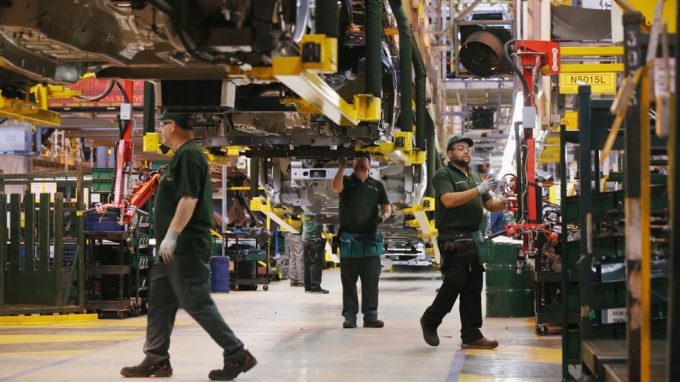
This human and machine partnership signals a critical shift in how work is accomplished, another trend previewed in the manufacturing sector where AI Agents are supporting humans to usher in a productivity boom. “Key to it all from an energy standpoint is evolving from passive diagnosis to active scheduling, to ultimately ecosystem autonomy, achieving truly self-directed operations,” explains Xu.
In other words, learning itself is shifting, transforming the nature of how work gets done. As business thought leader Michael Gerber explained in his seminal book, The E-Myth, the goal for any forward-looking entrepreneur is to get to a place where you are working on your business, not in it. “This expression is the key to escaping this ultimately suffocating condition, to creating a business that doesn’t depend on you—one that consistently generates the results you want without you having to deliver them personally.”
What’s so exciting about Agentic AI, no matter if it’s used to improve energy usage or manufacturing gains, is its autonomous aspect, the same novelty once celebrated in Knight Rider as well as other sci-fi fare like Star Trek.
As so many futuristic TV shows once predicted, companies can offload more of their drudgery work to machines that act not like static tools, but as synthetic, self-evolving partners. As we are now witnessing, these AI Agents are reshaping energy and industrial operations. With the right safeguards and transparency in place, we can expect a future of AI decision-making that does not displace human workers but instead works steadily to optimize their efficiency and productivity.










Leave a comment