


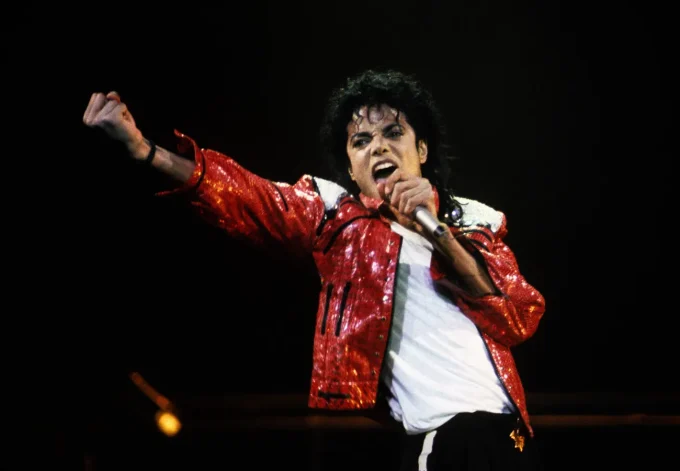
Football: Super Bowl XXVII: Celebrity musician Michael Jackson performs halftime show during Dallas Cowboys vs Buffalo Bills. Pasadena, CA 1/31/1993 CREDIT: Damian Strohmeyer (Photo by Damian Strohmeyer /Sports Illustrated via Getty Images) (Set Number: X43853 )
Sports Illustrated via Getty Images
Paul McCartney was 24 years old in 1966 when he asked, “Will you still need me, will you still feed me when I’m 64?” Paul McCartney is now 84, and he’s still very much needed.
Sixty years later, many of the biggest names from music’s past are providing the soundtrack of 2026. McCartney, Madonna, and the Rolling Stones have released successful, critically acclaimed new albums. Rush has returned after an 11-year absence to major arena demand. And years after his death, Michael Jackson’s life and music have generated the biggest box-office success ever achieved by a music biopic.
The summer of legacy music is bigger than nostalgia. A combination of streaming, popular culture, scarcity and some savvy choices by the artists themselves has changed what it means to be a legacy act.
Legacy Artists Are Giving Audiences Reasons To Care
Iconic artists are achieving critical acclaim that has, at times, eluded them in recent years. Paul McCartney’s The Boys of Dungeon Lane, Madonna’s Confessions II and the Rolling Stones’ Foreign Tongues have all earned strong reviews, with critics in some cases ranking the albums among the artists’ best work in years.
For instance, Pitchfork rated Confessions II an 8.1 out of 10, an improvement from the 4.8 that Madonna achieved for her most recent album before Confessions II, Madame X.
Foreign Tongues earned favorable notice on sites like Consequence of Sound. The Guardian said Foreign Tongues “isn’t nostalgic or a retread. It’s a thoroughly modern-sounding, occasionally political record that has the band confronting the world around them and their remaining time within it.”
Music rating site Allmusic.com awarded Boys of Dungeon Lane 4.5/5.0 stars (McCartney’s highest rating since 1997’s Flaming Pie), gave Foreign Tongues a 4.0 rating (a notch up from Hackney Diamonds) and rated Confessions II with a 4.5 (Madonna’s highest since Ray of Light in 1998).
Madonna, Paul McCartney And The Rolling Stones Drive Sales
The commercial results have been strong, too. McCartney’s latest album debuted at No. 1 on three Billboard album charts. Confessions II became Madonna’s 10th No. 1 on the Billboard 200. The Rolling Stones’ Foreign Tongues debuted at No. 1 on Billboard’s Top Album Sales Chart. Although Rush has not released any new music in 2026, its concert tour is playing to sold-out shows.
‘Michael’ Banks A Billion At The Box Office
Michael Jackson topped them all commercially. Michael has earned more than $1 billion in 2026. Even though the movie was panned by critics, audiences embraced Michael, giving it a 97% rating on Rotten Tomatoes. The movie also sent listeners back to Jackson’s music.
In the week following its release, his solo catalog generated a career-best 137.5 million U.S. on-demand streams, up 146% from the previous week.
Positive reviews expand the listener base beyond loyal fans. Strong new work presents legacy musicians as active artists relevant to a new generation of listeners, rather than as caretakers of famous music libraries. And many legacy artists have made choices that connect them to contemporary music without abandoning who they are.
McCartney and the Rolling Stones have both worked with producer Andrew Watt, whose résumé crosses generations and genres. Madonna has connected herself to current pop through Sabrina Carpenter, recording with her and joining her onstage at Coachella.
Legacy Artists Keep Expanding Their Own
Well-received albums are the spark. But what creates the buzz is a convergence of pop culture, streaming and social media that has given legacy artists a more timeless, multi-generational appeal.
Music once had a much more obvious expiration date in popular culture. Radio stations moved on to newer releases, and MTV rotated in younger artists. Record stores devoted prime space to what was current, while older albums eventually migrated to the catalog bins.
Streaming changed everything. A song recorded in 1972 now sits alongside one released yesterday, and an algorithm can recommend either one without much regard for its age. But availability alone does not explain why people suddenly become interested in older music. Popular culture continually supplies new reasons to rediscover it.
Time and again, TV shows, movies and cultural touchstones like the Coachella festival thrust legacy acts into the limelight. For instance, in 2022, Stranger Things made Kate Bush’s 1985 song “Running Up That Hill” a global hit, but the resurgence depended on younger audiences being able to instantly find the song on streaming services after hearing it in the show.
Movies and television continue to perform that role in 2026, and Michael isn’t the only example. The TV series Off Campus gave Elton John’s 1974 song “The Bitch Is Back” new exposure, helping drive a 577% jump in weekly U.S. on-demand streams.
Social media keeps the artists themselves in circulation, not just their music. Mick Jagger, for instance, has become something of a social media meme. His dancing and physical vitality generate content independently of whatever the Rolling Stones happen to be promoting.
Legacy stars have an enormous advantage in this environment: decades of cultural material waiting to be rediscovered. Paul McCartney has spent more than 60 years building one of the richest and most recognizable cultural legacies in popular music. Madonna has accumulated decades of fashion innovation, controversy, and reinvention. The Rolling Stones have long embodied what it means to be a rock star.
Scarcity Is Turning Legacy Artists Into Events
The surging popularity of Rush demonstrates another force driving the legacy boom: scarcity. When drummer Neil Peart died in 2020, another Rush tour seemed unlikely. The band’s 2026 return offered the possibility of an experience fans thought was gone forever.
The same sense of urgency increasingly surrounds other veteran performers like Bob Dylan, the Eagles and Paul Simon. Jagger and Richards are also in their 80s, and their touring future is in question. Fans considering whether to buy an expensive ticket cannot necessarily assume they will catch these artists the next time around.
At the same time, many longtime fans are in their highest-earning years and have the disposable income for premium tickets, travel, vinyl box sets, and deluxe editions. That demand creates powerful economics: increasingly scarce opportunities paired with audiences willing and able to pay for them.
The Power of Authenticity
As AI continues to reshape the entertainment industry, legacy artists possess one advantage that technology cannot replicate: authenticity. Their songs reflect decades of experience, triumph, failure and reinvention. For some, their performances embrace the imperfections that come with age.
At a time when Gen Z is expressing skepticism toward AI-generated music and anxiety about AI more broadly, that authenticity may create a stronger bond between legacy artists and younger listeners.













Leave a comment