


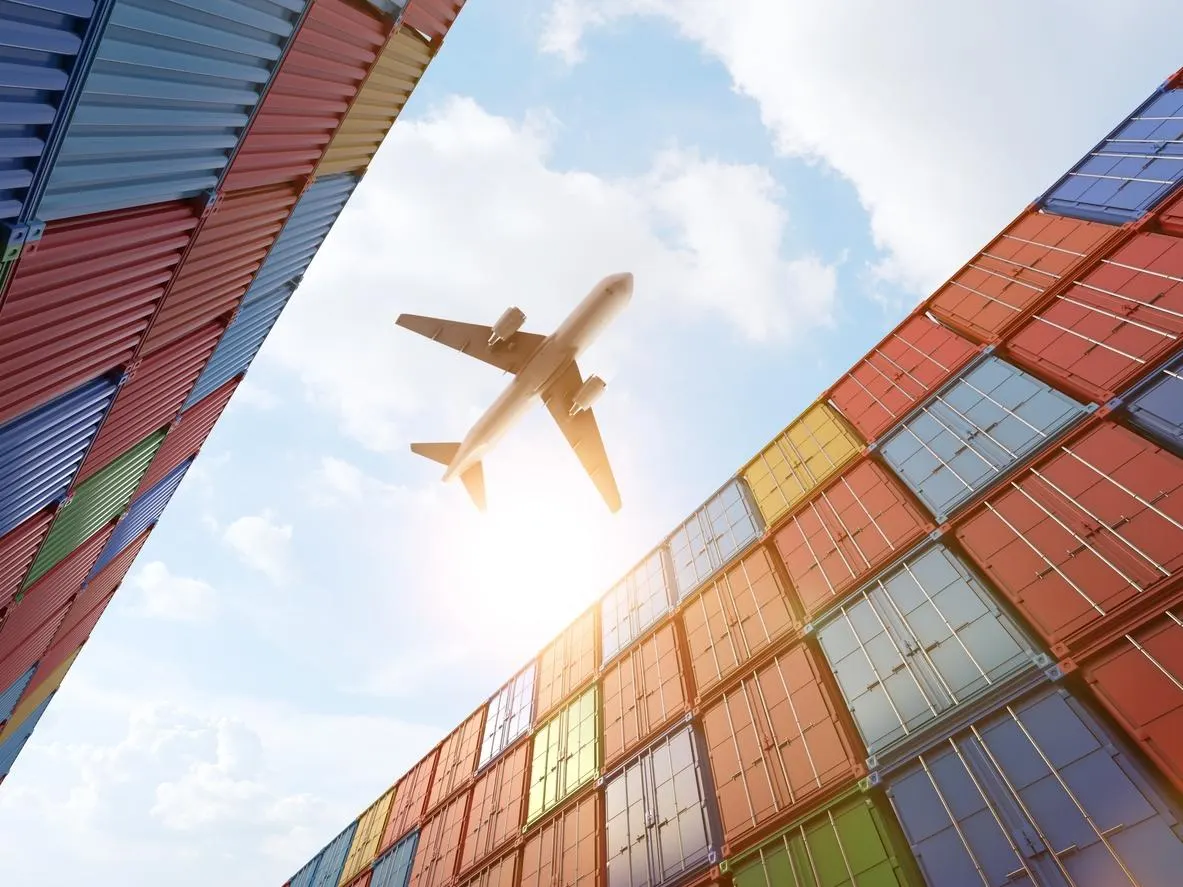

Cargo plane flying above a stack of containers at a port
iStock — PhonlamaiPhoto
Ask most founders who their importer of record is and they can’t tell you. I’ve had this conversation dozens of times. They know their factory, their freight forwarder and their landed cost to the dollar. But ask who takes legal responsibility for those goods at the U.S. border and they draw a blank. For years that didn’t matter. Now an executive order signed on June 3 is about to change that.
Most of the cross-border conversation this past year has been about IEEPA tariffs and the end of de minimis, the rule that let shipments under $800 enter the U.S. duty-free. CBP processed more than 1.36 billion de minimis shipments in fiscal 2024 (over four million parcels a day) before the duty-free treatment was suspended on orders from China in May 2025, then for all countries that August. This executive order is a completely different story. The tariff fight was about what’s being imported. The new executive order zooms in on who’s doing the importing, specifically the foreign carriers or overseas factories that haven’t been playing by the rules.
Every shipment entering the U.S. has an importer of record, the party responsible for duties, declarations and compliance. There are two ways goods clear customs, which I’ll call the easy way and the hard way. The easy way is informal entry (Entry Type 11), which requires lighter paperwork and no monetary bond, making it ideal for the millions of low-value parcels pouring in from China. The hard way is formal entry (Entry Type 01), which requires you to post a bond and park money with customs before anything moves. Until now it didn’t matter whether the importer of record was American or foreign, both could use the easy way. The new executive order ends that for foreign importers.
The reasoning behind it is sound and, in my opinion, long overdue. As it stands, it’s almost impossible to track down a foreign importer who lies on a declaration. In my decade moving products out of China, I’ve watched the same workaround again and again. A foreign seller or carrier sets up a foreign importer of record, or spins up a thin U.S. entity (a shell company) that lives mostly on paper and uses it to file informal entries at scale. It’s cheap and fast, and if the declaration turns out to be wrong, good luck finding anyone in the country to answer for it.
The executive order goes straight at it. It directs the Department of Homeland Security to bar foreign importers of record from using informal entry. Instead, they must use formal entry (Type 01), which requires a real bond with the CBP to act as an importer of record. Every importer must keep good standing with customs or lose the right to import. It also tells regulators to define a U.S. importer in a way that stops foreign sellers from using U.S. shell companies to look American.
None of this happens overnight. The executive order gives agencies 180 days to rewrite the rules, so the real deadline is regulatory. But the direction is clear, and anyone who watched the de minimis rollout knows how fast “proposed” turns into “enforced” once customs builds the systems.
So should a founder be concerned about these changes? If you’re compliant, no. If you’ve been importing goods where your factory was the importer of record, then yes, this matters a great deal. The question every brand has been able to sweep under the rug—who’s importing for you, and are they doing it compliantly?—is now the one that decides whether you’re exposed.
As the founder of a cross-border fulfillment company that ships directly from China, I’ve had to answer that question myself, and I made sure it was an answer I’d want to defend. Whoever handles your freight needs a legitimate U.S. importer of record or a licensed U.S. customs broker acting in that role, with transaction values declared accurately. Carriers that weren’t compliant were often cheaper, especially back when shell-entity importers and informal entry were the cheap norm and nobody was checking. But those days are ending, because that pricing was built on cutting corners customs is now closing.
At Portless, we made sure everything was compliant from the bottom up. It took more work to set up, but the bet was that compliance would eventually stop being optional. This executive order is that bet coming due.
It goes one level deeper, too. Compliance only holds if the whole supply chain holds it, so the carriers a brand ships with matter as much as the name on the customs paperwork. I’ve walked away from some of the largest Chinese carriers over exactly this. It’s not a fun call to make, but it’s a lot less painful than the one customs makes for you.
So my advice for any brand selling into the U.S. is simple. Find out who your importer of record is, and ask whether it would survive this executive order. If the answer is a foreign entity or a company that’s mostly a mailbox, you’ve got a few months to move to a real U.S. importer of record before the rules catch up.













Leave a comment