


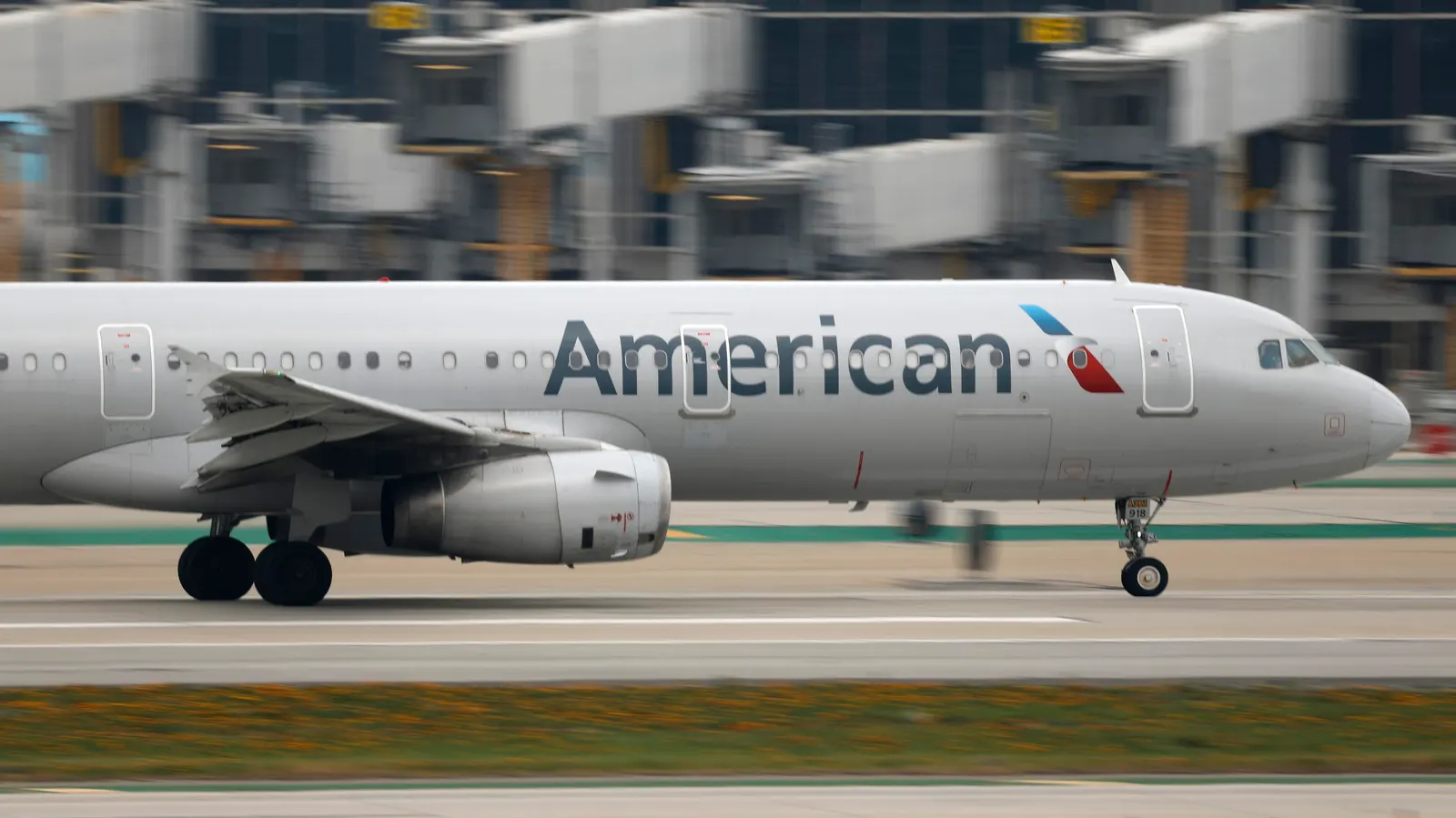

An American Airlines Airbus A321 departs LAX in January 2025. The A321s will all get Starlink internet. (Photo by Kevin Carter)
Getty Images
Joining in the airline industry race to use Starlink as an inflight WiFi provider, American Airlines says it will install the technology on more than 500 narrowbody aircraft, starting in the first quarter of 2027.
The carrier said this morning that it plans to update its Wi-Fi offering on its fleet of more than 500 Airbus aircraft, including new A321XLR and A321neo deliveries.
American joins Alaska, Southwest and United, as well as two dozen airlines around the world, in promising to use the technology, which is operated by Space X, an aerospace manufacturer founded by Elon Musk. The primary future alternative is Amazon WiFi, which will not be available until 2028. Delta said in March that it had chosen Amazon, as has JetBlue.
Internet access has become increasingly important to airline passengers. In an independent customer satisfaction survey released last month, the ongoing availability of inflight internet access was a key factor in increasing airline customer satisfaction, which was up 3% since last year. That survey was conducted by ACSI, an Ann Arbor, Mich.-based provider of customer analytics products.
“Starlink is widely regarded as the world’s most advanced satellite constellation,” American said.
The carrier linked the selection to its quest to become as highly regarded as competitors Delta and United. Heather Garboden, American’s chief customer officer, was quoted as saying “As a premium global airline, we are continuously seeking out world-class partners like Starlink to deliver what our customers need and want. “The addition of Starlink solidifies American as a leading airline in keeping passengers connected in flight.”
American has been gaining ground in its quest. It scored a surprising recognition in the ACSI
Delta was first in the ACSI survey. In the JD Power customer satisfaction survey, released early this month, Delta, JetBlue and Southwest topped various categories of airline passengers. That survey also showing increased satisfaction among airline passengers, particularly passengers who bought premium seats.
Just over three weeks ago, Garboden said in an interview that American’s gains were partially related to the inflight internet it currently provides. That service is offered as part of a partnership with AT&T. That partnership was announced in April 2025, and American already has free Wi-Fi on 1,400 mainline and regional aircraft. “We have free Wi-Fi on more aircraft than any other airline, and we delivered it faster,” Garboden said in an interview last month.
On six recent flights, I have found American’s AT&T WiFi to be more than adequate. Now they tell me Starlink is better. United demonstrated its Starlink during a one-hour demonstration flight for reporters during its media day in Los Angeles in March. United already has 50 mainline aircraft equipped with Starlink.
“The world is rapidly adopting Starlink as a standard,” airline blogger Gary Leff wrote three weeks ago in his View From The Wing blog. He cited two dozen global airlines who are installing Starlink. They include Aer Lingus, British Airways, Iberia, Lufthansa, SWISS, Austrian Airlines, Brussels Airlines, ITA Airways, Korean Air, Asiana Airlines, Jin Air, Air Busan, Air Seoul, airBaltic, Air France, Air New Zealand; Emirates; flydubai; Gulf Air; Qatar Airways; SAS; Virgin Atlantic; WestJet; and ZIPAIR.
In the press release, American says it will implement “a sweeping modernization of its narrowbody inflight customer experience with the installation of Starlink.” It said that Starlink uses “a low earth orbit to deliver broadband internet capable of supporting inflight streaming, online gaming, collaborative meeting tools and more.
“With thousands of satellites in low earth orbit, Starlink can deliver multigigabit connectivity to aircraft using its Aero Terminal, which can support up to 1 Gbps per antenna,” American said.
Garboden said, “Starlink’s high speed and low latency make the Wi-Fi more reliable, which matters when customers are trying to load pages, join real-time collaboration tools or stay connected consistently throughout a flight.”















Leave a comment