


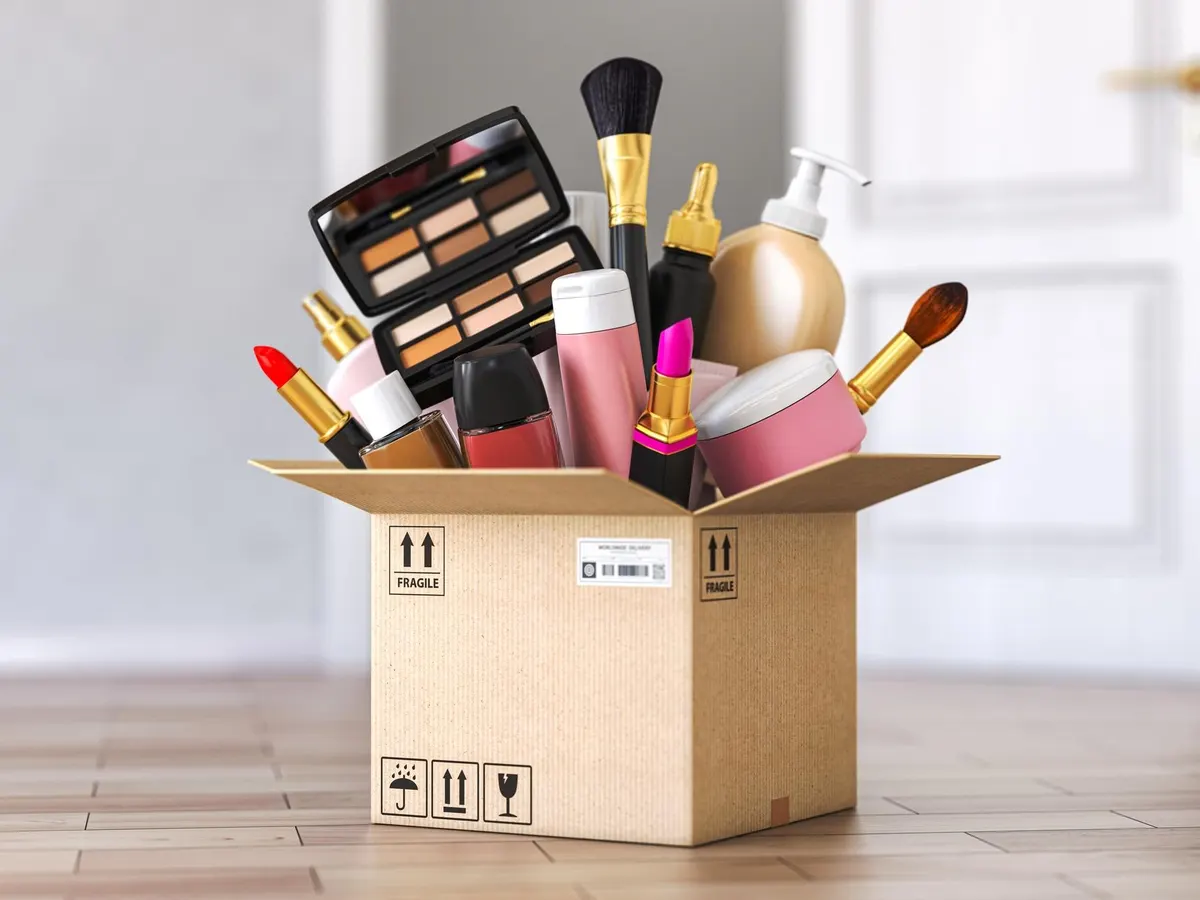

Beauty edits have become one of the smartest psychological plays in modern retail, allowing consumers to explore prestige skincare and makeup with less financial risk and more emotional justification.
getty
This summer it seems there are more choices than ever to buy into luxury brands at a snip of the price via the latest ‘beauty edit’ box. Retailers globally have quickly adopted the trend, which allows consumers to feel smarter in their shopping – being both self-indulgent and financially responsible at exactly the same time.
That combination is far more psychologically powerful than the industry sometimes admits.
A shopper spending $50 can secure a value of $180 worth of prestige beauty served up in colourful vanity bags and packaging. They discover products they may never have risked buying individually. They gain access to luxury brands without the emotional friction of a full-sized commitment. Most importantly, the experience feels curated rather than random -a distinction that transformed the category from a pile of samples into one of beauty retail’s smartest commercial mechanisms.
The economics behind it are equally smart. The global beauty subscription and discovery-box market is projected to exceed $7 billion by 2030, while prestige beauty itself continues outperforming many wider retail sectors despite ongoing pressure on discretionary spending. Consumers may hesitate over a £72 serum in isolation. Place it inside an expertly assembled “edit” beside nine other aspirational products and the psychological equation changes completely.
That shift says something revealing about how modern consumers now want to shop for beauty.
Why Consumers Trust The Edit
Though there have been many early forms of ‘the beauty box’ some of the original brilliance can be placed at the birth of Birchbox, launched in 2010 by Harvard Business School graduates Katia Beauchamp and Hayley Barna, on the understanding that modern beauty consumers did not simply want products. They wanted guided discovery. Birchbox are credited with effectively creating the modern beauty-subscription economy, pioneering the now-global model of curated discovery through monthly premium beauty sampling. At its peak, the business was valued at more than $485 million and helped reshape how prestige beauty brands approached customer acquisition and trial.
The insight arrived at precisely the right cultural moment. Beauty was becoming increasingly digitised, increasingly crowded and increasingly overwhelming. Consumers were suddenly exposed to thousands of products, routines and recommendations across YouTube, Instagram and later TikTok. Choice expanded dramatically. Confidence often did not.
The beauty box solved that anxiety elegantly.
Instead of asking consumers to spend £85 blind on a luxury cream, retailers invited them into a lower-risk relationship with the brand itself. Discovery became entertainment. Sampling became aspiration. The transaction no longer felt purely functional.
Other legacy retailers realised something else too: consumers preferred curation over surprise.
The early subscription model eventually evolved into limited-edition “edits” because shoppers increasingly wanted visibility and perceived control. The strongest boxes now function almost like editorial products. Summer skin edits. SPF collections. French pharmacy edits. Bridal edits. Sleep edits. Vacation edits. Consumers are not only buying products; they are buying a version of themselves attached to the theme and that emotional framing matters enormously.
The Bargain Is Only Half The Story
Beauty boxes are often discussed through the lens of value. The better explanation is perceived intelligence.
A box offering 3x value activates several consumer instincts simultaneously: achievement, exclusivity, efficiency and self-reward. The shopper feels they have outperformed the system slightly and the industry economics make that easier than consumers realise.
Beauty remains one of retail’s highest-margin sectors. A prestige serum retailing at $80 costs only a fraction of that to manufacture. Brands therefore view beauty edits less as lost margin and more as sophisticated customer-acquisition infrastructure.
Rather than spending heavily on digital advertising with uncertain conversion, brands place hero products directly into the hands of highly engaged beauty consumers already in purchasing mode.
The strongest edits are carefully engineered around this psychology. One “hero” product usually justifies the purchase emotionally on its own. The remaining products create abundance around it. Consumers understand this dynamic at some level and enjoy the thrill of the find.
That is because the experience itself mimics the emotional rhythm of discovery shopping without carrying the same financial exposure. In a cost-of-living climate where many consumers still struggle to comfortably prioritise themselves, the beauty edit becomes a psychologically easier “yes.” It reframes indulgence as value, self-care as practicality and premium beauty as something cleverly accessed rather than recklessly spent on.
Beauty Retail Learned To Behave Like Entertainment
The smartest beauty edits now function remarkably similarly to streaming platforms or entertainment franchises. They create anticipation, scarcity and conversation.
Limited drops generate urgency whilst waitlists build status. Social media unboxings extend the lifecycle far beyond the initial transaction. Entire communities now discuss edits strategically: whether the value is “worth it,” which hero products justify the spend and how quickly certain launches will sell out.
Retailers understand this theatre and generous amplification extremely well.
1. Cult Beauty offer The Sunny Escapes Edit – a curated offer to appeal to beauty lovers who are ready to jet-set. The Sunny Escapes Edit Priced at £45 with a claimed value of more than £140, Cult Beauty’s Sunny Escapes Edit is anchored by gison and Kosas products.
Cult Beauty
Cult Beauty became particularly effective at transforming edits into cultural events because it recognised that authority matters in beauty retail. Founded in London in 2008 by former beauty journalist Alexia Inge and entrepreneur Jessica Deluga, Cult Beauty became one of Britain’s most influential prestige beauty retailers by positioning itself as a highly edited authority rather than a mass marketplace. The business was acquired by THG (The Hut Group) in 2021 for approximately £275 million, underlining the growing commercial value of curated online beauty retail.
Consumers increasingly trust retailers that edit aggressively on their behalf. The modern beauty customer does not necessarily want infinite choice. They want informed filtration.
The “edit” language itself is revealing. It borrows from publishing, fashion and editorial authority rather than straightforward commerce. Consumers are not merely purchasing stock. They are buying into someone’s taste architecture, and that distinction helped to elevate the category dramatically beyond old department-store gift-with-purchase culture.
Why Summer Edits Perform So Well
Seasonal beauty boxes perform especially strongly because they align neatly with moments when consumers already feel psychologically open to reinvention. Peak offerings around Black Friday, Eid Mubarak and Christmas have created significant demand – and often have smart marketing mechanics such as the Beauty Advent Calendar.
Summer beauty carries its own visual language: glow, hydration, skin visibility, travel convenience, lighter textures and simplified routines – and of course, vacations and travel. Consumers become more experimental because the season itself feels transitional.
2. Look Fantastic Summer Edit with Living Proof Dry Shampoo, Supergoop Glow Screen and NARS all as hero products designed for modern travel beauty.
Look Fantastic Summer Edit
Cult Beauty’s Sunny Escapes Edit leans heavily into practical vacation beauty rather than fantasy glamour, combining travel-ready staples with prestige makeup and SPF-adjacent utility.
Founded in the UK in 1996 and now owned by THG, LookFantastic has evolved into one of Europe’s largest online beauty retailers, operating across dozens of international markets with a strategy heavily focused on accessible premium beauty, exclusives and high-frequency editorial-style beauty edits. It’s summer offer is the LookFantastic’s Summer Edit focussing on heat-proof longevity and skin preparation and travel sizes for convenience when packing for summer travels.
3. Here Comes The Sun: Boots’ SPF & Skin Beauty Box costs £49 yet carries a claimed value of £261.79, featuring products from Ole Henriksen, Rituals and Grown Alchemist as SPF-led skincare continues booming globally.
Boots
Founded in Nottingham in 1849, Boots remains one of the UK’s largest health and beauty retailers, with more than 1,800 stores nationwide. Now owned by Walgreens Boots Alliance, the business has increasingly leaned into beauty-box culture as a way of competing with younger, digitally native beauty retailers while reinforcing authority in skincare and wellness. The Boots’ SPF & Skin Beauty Box taps directly into the growing sophistication around daily sun protection and Korean skincare influence whilst offering the best ‘value’ of offers in the UK with a £49 ($66 approx) price-point for £261.79 ($352 approx)of beauty products featuring brands such as Shiseido and Ole Henriksen.
4. Vacay All Day Edit: Sephora’s Vacay All Day edit, priced with a claimed value exceeding $150, combines summer-ready hero products from brands including Glossier, Rare Beauty and REFY is designed for heat-proof glow, travel beauty and long-wear skin prep.
Sephora
Sephora was founded in France in 1969, with its first store in Paris in 1970 and is now owned by luxury conglomerate LVMH. The brand was pivotal in how it transformed modern global beauty retail through open-sell merchandising, experiential shopping and highly sophisticated loyalty-driven discovery culture.
It’s famous “Sephora Favorites” edits has become some of the most commercially successful curated beauty boxes in the US market, helping cement discovery-led shopping as a mainstream consumer behaviour. In the United States, Sephora’s current ‘summer’ edits continue to dominate the category in the non-subscription space, through highly targeted edits built around specific consumer identities: clean beauty, no-makeup makeup, beach-to-evening transitions and “summer survival” routines designed for humidity, sweat and long-wear performance.
The Real Pay-Off Arrives Later
What makes beauty edits commercially fascinating is that the box itself is rarely the real win. The deeper value sits in customer lifetime behaviour.
If a shopper discovers a $90 night-cream through a $40 curated edit and later repurchases it twice a year for the next four years, the acquisition economics become extraordinarily attractive. Retailers also benefit from larger baskets, loyalty-programme sign-ups, email capture and highly valuable first-party consumer data.
The beauty box therefore operates simultaneously as:
- marketing campaign
- sampling programme
- loyalty engine
- data acquisition strategy
- basket-building tool
- brand discovery platform
Very few retail formats perform all those functions at once while still feeling pleasurable to the customer, a huge win for retail – and why the category continues expanding even as wider consumer spending becomes more cautious.
Consumers Still Want Permission To Indulge
Perhaps the most interesting aspect of the beauty-box boom is what it reveals about contemporary spending psychology more broadly.
Consumers have not stopped seeking pleasure during economically uncertain periods. They have simply become more strategic about how they justify it.
A curated beauty edit allows someone to participate in prestige beauty culture while still feeling measured, informed and value-conscious. The purchase becomes easier to defend emotionally because it arrives wrapped in practicality and perceived savings.
The customer is not simply buying products – but buying experimentation without full commitment. Luxury without full guilt – and discovery without overwhelm.
And in a beauty industry built increasingly around emotional reassurance, that may be one of the smartest formulas of all.
4 Of The Best Summer Beauty Edits, Available Right Now
1. Cult Beauty – The Sunny Escapes Edit
Price: £45
Claimed value: Over £130
Cult Beauty remains one of the smartest operators in the edit space because it understands that consumers no longer want random abundance. They want intelligent curation. The Sunny Escapes Edit succeeds because it feels genuinely useful for modern travel: heat-proof beauty, hydration, brow-setting and portable glamour rather than a box filled with filler products.
2. Look Fantastic – The Summer Edit
Price: £45
Claimed value: Over £140
LookFantastic has become particularly effective at positioning beauty edits as accessible luxury rather than insider-only beauty culture. This summer box leans heavily into long-wear performance and “melt-proof” beauty – exactly the sort of practical psychology consumers increasingly reward during warmer months.
3. Boots – Here Comes The Sun – SPF & Skin Beauty Box
Price: £49
Claimed value: £261.79
Boots recognised early that SPF sophistication has moved into mainstream beauty culture. This edit taps directly into the Korean skincare influence currently shaping Western beauty routines, with an unusually high number of full-sized products that make the purchase feel substantial rather than sample-led.
Price: Around $52
Claimed value: $150+
This is the “event beauty” version of the summer edit: glow, radiance, setting sprays and products designed to transition easily from daytime beach culture into evening socialising. Sephora understands particularly well that beauty edits now function partly as fantasy-building tools — consumers buying into a version of summer as much as the products themselves.














Leave a comment