


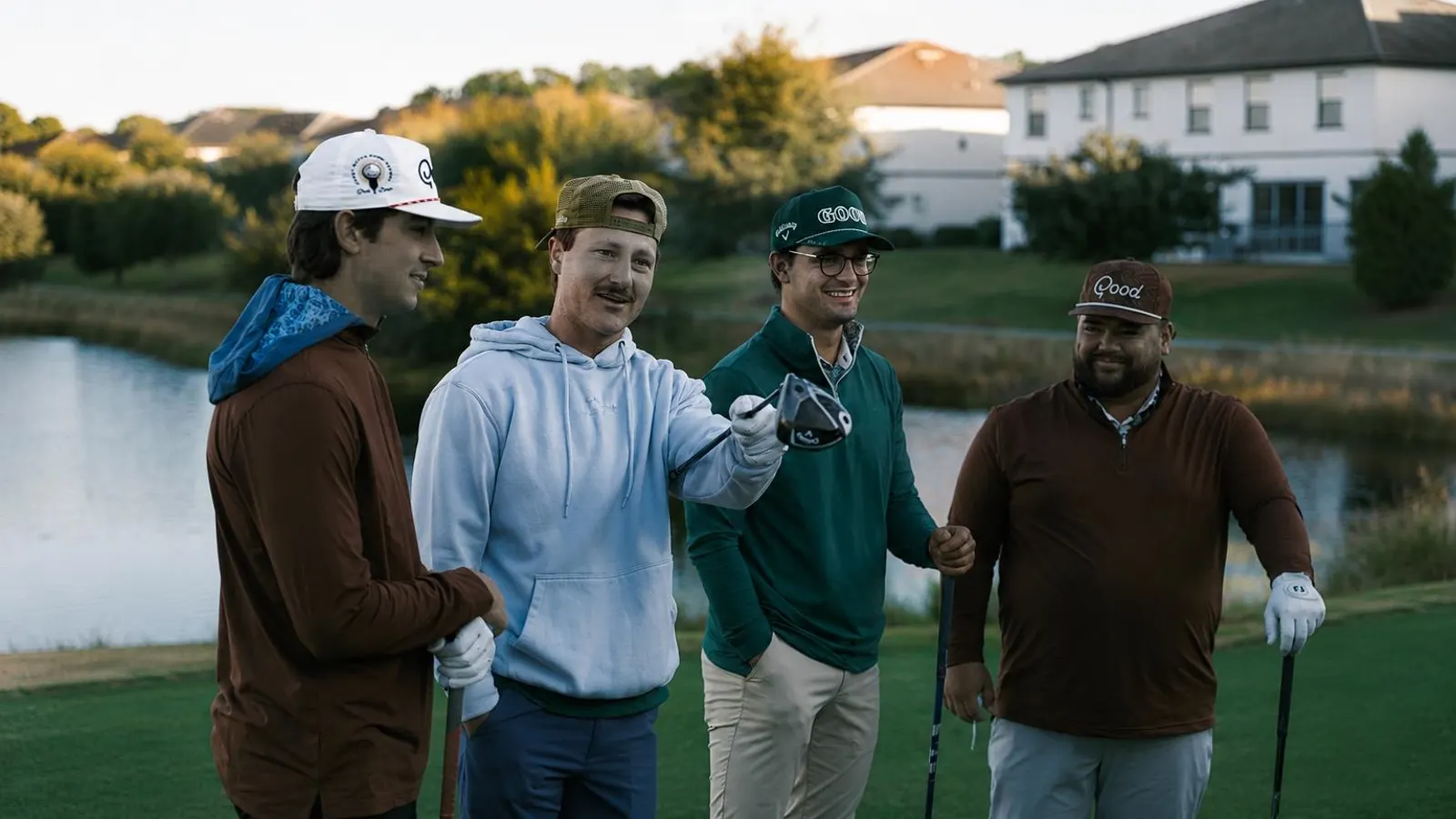

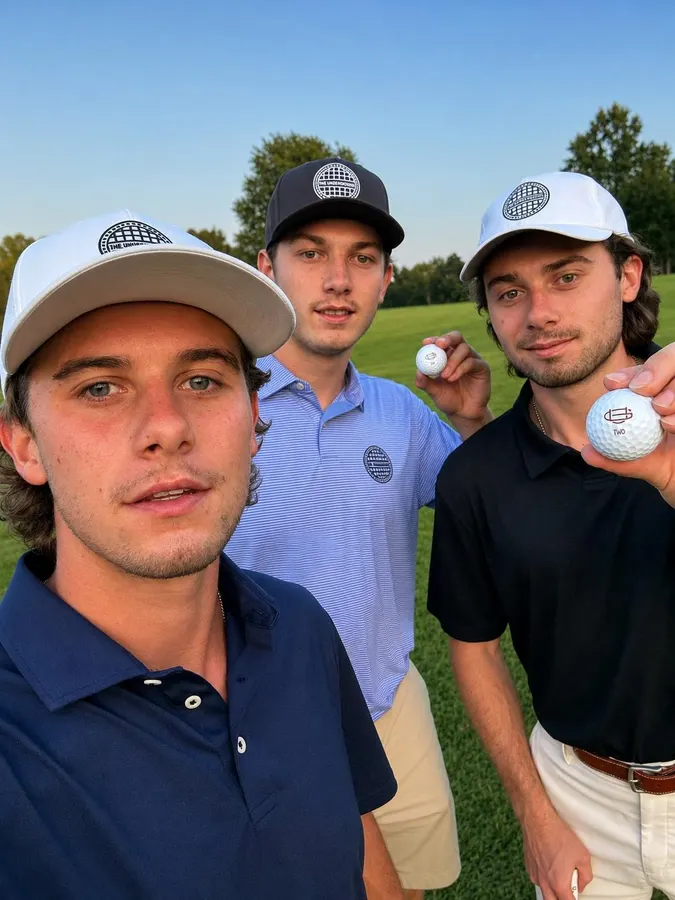
The Good Good crew during a content shoot. The creator collective has parlayed its online audience into one of golf’s fastest-growing lifestyle brands.
Good Good
Good Good has grown well beyond its roots as a YouTube first golf brand into a vertically integrated business spanning media, apparel, accessories and live events. Yet the engine powering that expansion remains one of golf’s largest owned digital audiences, with nearly 4 million social media followers. Its reach extends even further through the sizable individual audiences of personalities like Garrett Clark and Matt Scharff.
Even former Good Good members continue to strengthen the brand’s orbit. The individual success of alumni such as Grant Horvat and Brad Dalke reinforces the original collective in much the same way the success of Saturday Night Live alumni continues to elevate the institution that launched them. That expanding media ecosystem has become the flywheel behind a broader business that last year attracted a $45 million growth investment led by Creator Sports Capital, with participation from Peyton Manning’s Omaha Productions and Manhattan West Private Equity.
If audience growth fueled Good Good’s first chapter, product development appears to be central to its next. The company’s latest move is hiring former TaylorMade and Sun Day Red product designer Alex Criscuolo, underscoring its ambitions to level up its apparel business.
“His background at the highest levels of golf design shows we’re serious about becoming a top brand in the sport, while still keeping the fun, creative spirit that defines Good Good,” company CEO Matt Kendrick said.
The product pipeline continues to expand as well. Later this year, Good Good plans another collaboration with High Noon, along with an exclusive hoodie program for Golf Galaxy.
For Criscuolo, who made his in-office debut Monday, the attraction was helping shape the next phase of a company he believes has ambitions well beyond creator merchandise.
“We are being strategic about who we are bringing in,” Criscuolo said. “We want to make a serious play at becoming one of the best apparel brands in the golf industry—not just in YouTube golf, but in all of golf.”
Good Good’s product strategy diverges from the traditional golf apparel playbook, where brands purchase credibility by paying tour professionals to wear their apparel during competition. Instead, it builds affinity through what psychologists call parasocial relationships, where viewers develop a genuine connection with creators they’ve spent countless hours watching.
“It is different than the other companies and seeing guys play on TV on the PGA Tour,” Criscuolo said. “What the Good Good community has allowed is bringing people together and staying true to their authentic selves. All the content creators are themselves—they’re funny, they’re witty—and I think our viewership really appreciates that and it connects them to our product.”
Given long development cycles in apparel, Criscuolo’s influence on Good Good’s collections won’t be fully felt until 2027. Whether those products vault Good Good into golf’s top tier of consumer brands may determine whether the company can accomplish one of the creator economy’s most difficult feats—transforming audience attention into lasting enterprise value.
Hasbro showed with Transformers that storytelling could elevate a product into an enduring intellectual property franchise. Good Good is wagering that a creator-first version of that playbook, one built on YouTube rather than Saturday morning television, can produce that same commercial flywheel.




Leave a comment