


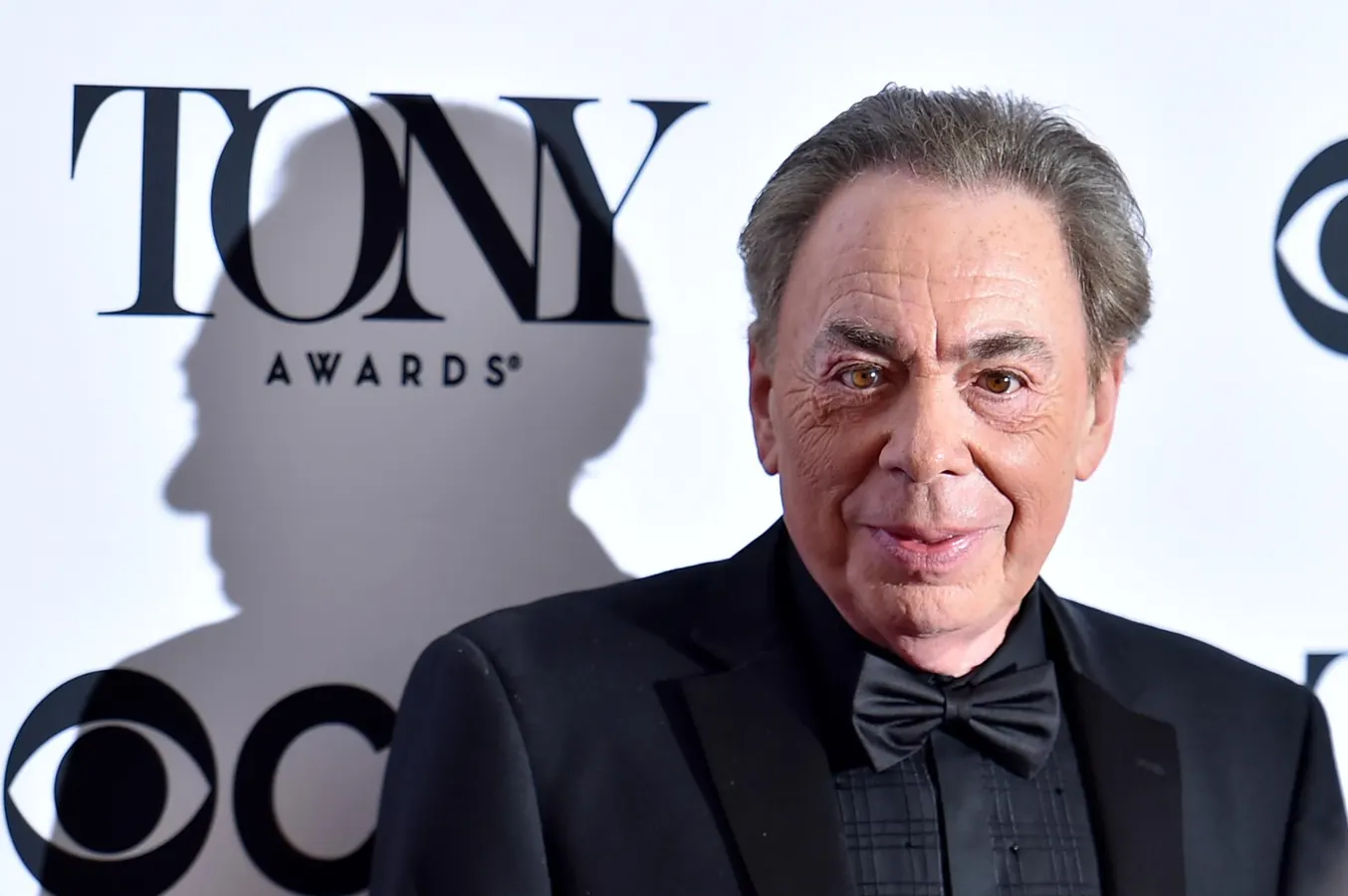

NEW YORK, NY – JUNE 10: Andrew Lloyd Webber, winner of the award for Lifetime Achievement in the Theatre, poses in the 72nd Annual Tony Awards Media Room at 3 West Club on June 10, 2018 in New York City. (Photo by Mike Coppola/Getty Images for Tony Awards Productions)
Getty Images for Tony Awards Productions
Andrew Lloyd Webber Calls On Theater Owners, Unions And Producers
The financial cost of producing theater on Broadway has become so high, famous musical writer Andrew Lloyd Webber claims, “For any show, it makes practically no financial sense to come to Broadway.”
In his post, Webber lamented the close of Cats: The Jellicle Ball, but his words bring to light a much larger issue. When Webber opened his first show on Broadway in 1971, Jesus Christ Superstar, it cost $700,000 at the time, roughly $5.7 million today. By comparison, Webber’s most recent show on Broadway, Cats: The Jellicle Ball, cost $18 million to produce, a number that sits comfortably in the middle of capitalization costs for modern Broadway musicals.
Webber directly holds “theater owners, unions, and producers” responsible for correcting this financial “crisis.” As a major player on Broadway for the last five decades, Webber is a person whose perspective on this issue should not be quickly ignored.
But are theater owners, unions and producers the only groups capable of making a meaningful difference?
Theater Owners
Looking first at the theater owners, it is evident that they hold a significant amount of power in establishing the baseline price of a Broadway show. Theater owners charge rent, both at a fixed fee and a percentage of the weekly box office grosses. Higher rent increases the overall cost of producing a Broadway show. So if theater owners were inclined to charge less rent, they could meaningfully reduce a portion of the shows’ budgets.
While this option may appear intriguing to Broadway at large, it lacks a clear motivation for theater owners. As long as new shows are willing to pay the rent prices they set, why would they lower their rates? Webber may say there is no financial reason for shows to come to Broadway, and yet 18 new shows have announced their opening dates between August, 2026 and April, 2027. The shows continue to come, so the theater owners are able to continue charging what they will.
Unions
Webber also calls upon the unions. While it is true that Broadway shows employ a large number of unions, imploring them to make Broadway more affordable feels unproductive, particularly in the wake of the recently avoided cleaners union strike. Considering how close the cleaners union came to striking against its current salaries and benefits, it seems highly unlikely an agreement would be reached that removed these terms in favor of cheaper productions.
Producers
Finally, Webber turns to the producers. Lead producers make choices on behalf of each production that can contribute directly to the show’s financial success or failure. Choosing to spend less money on marketing, for example, could deflate the show’s budget but result in early closing if not enough audience members buy tickets.
Co-producers, a category of producer that has arisen in response to the growing costs of productions, do not have the same authority as lead producers. Co-producers’ main responsibility lies in raising money through investors. The greatest influence co-producers have over Broadway’s economics is deciding which productions to finance.
Nonetheless, any individual co-producer does not have significant say over what Broadway chooses to do, as it takes many co-producers to stage a single production. Cats: The Jellicle Ball had 61 co-producers.
Because co-producers receive compensation for their work only after a show recoups, their goals in some ways align with choosing pieces that have low capitalization costs.
However, in an industry where 80% of shows do not recoup at all, many co-producers have other benefits aside from a means of making money. Part of the allure of becoming a co-producer lies in their opportunity to win a Tony Award.
NEW YORK, NEW YORK – JUNE 07: Lea Michele, Leiomy, Dylan Mulvaney, Megan Thee Stallion, P!NK, Neil Patrick Harris, Shoshana Bean and Alex Brightman perform onstage during The 79th Annual Tony Awards at Radio City Music Hall on June 07, 2026 in New York City. (Photo by Kevin Mazur/Getty Images for Tony Awards Productions)
Kevin Mazur/Getty Images for Tony Awards Productions
Tony campaigns are expensive, and co-producers more interested in prestige than money might agree to a show with a large budget if they believe the costs will go toward creating a spectacle worthy of the award.
The Missing Player: Government Subsidy
Webber limited his scope to theater owners, unions and producers. It is evident that each of these groups has some power to influence Broadway’s financial crisis; he overlooks another important player whose support, or lack thereof, makes a marked difference to the ecosystem of the theater industry: government subsidy.
Broadway experienced a brief moment of support. Following the pandemic, New York provided a tax credit for qualifying costs up to 25% of a show’s budget, but that fund has already run out of money. The lack of a continued government subsidy for the arts means that the cost of recoupment falls heavily on the shows themselves.
In contrast, theatrical productions on the West End, Broadway’s equivalent in the U.K., continue to receive 40% of qualifying costs back as tax credit, thanks to the Theater Tax Relief program. As a result, the West End produces shows for significantly less money than Broadway spends and yet charges significantly less for tickets. Operation Mincemeat (a show I co-produce on Broadway) opened on the West End with a budget of £2 million, roughly $1.6 million, but it cost $12.2 million to produce on Broadway, with the exact same cast.
Of course, the Theater Tax Relief program is not the only reason that theater is cheaper to make in the United Kingdom. There are fewer unions, and the West End artists are paid less money than their equivalents on Broadway. However, government support for artists in the U.K. comes in another form that may account for this difference.
Due to the National Health Service, employers are not responsible for providing employer-sponsored health insurance in the same way they are in the United States.
Sign for the NHS National Health Service outside a pharmacy on 4th August 2025 in London, United Kingdom. (photo by Mike Kemp/In Pictures via Getty Images)
In Pictures via Getty Images
Health insurance was one of the key points in the recent cleaners union negotiations, and paying for health insurance for all employees and their families puts a significant cost on the theatrical productions. Affordable healthcare for employees is not an easy problem for Broadway to solve. Indeed, it is something the entire country continues to grapple with.
Nonetheless, it would make a significant impact on Broadway if artists were able to receive healthcare for themselves and their families without relying on their shows’ budgets.
In the current administration, Trump’s focus on defunding the arts does not bode well for a solution that comes in the form of governmental support. But until that kind of support comes, Broadway may well continue to see higher and higher capitalization costs, with little hope of abatement.












Leave a comment