


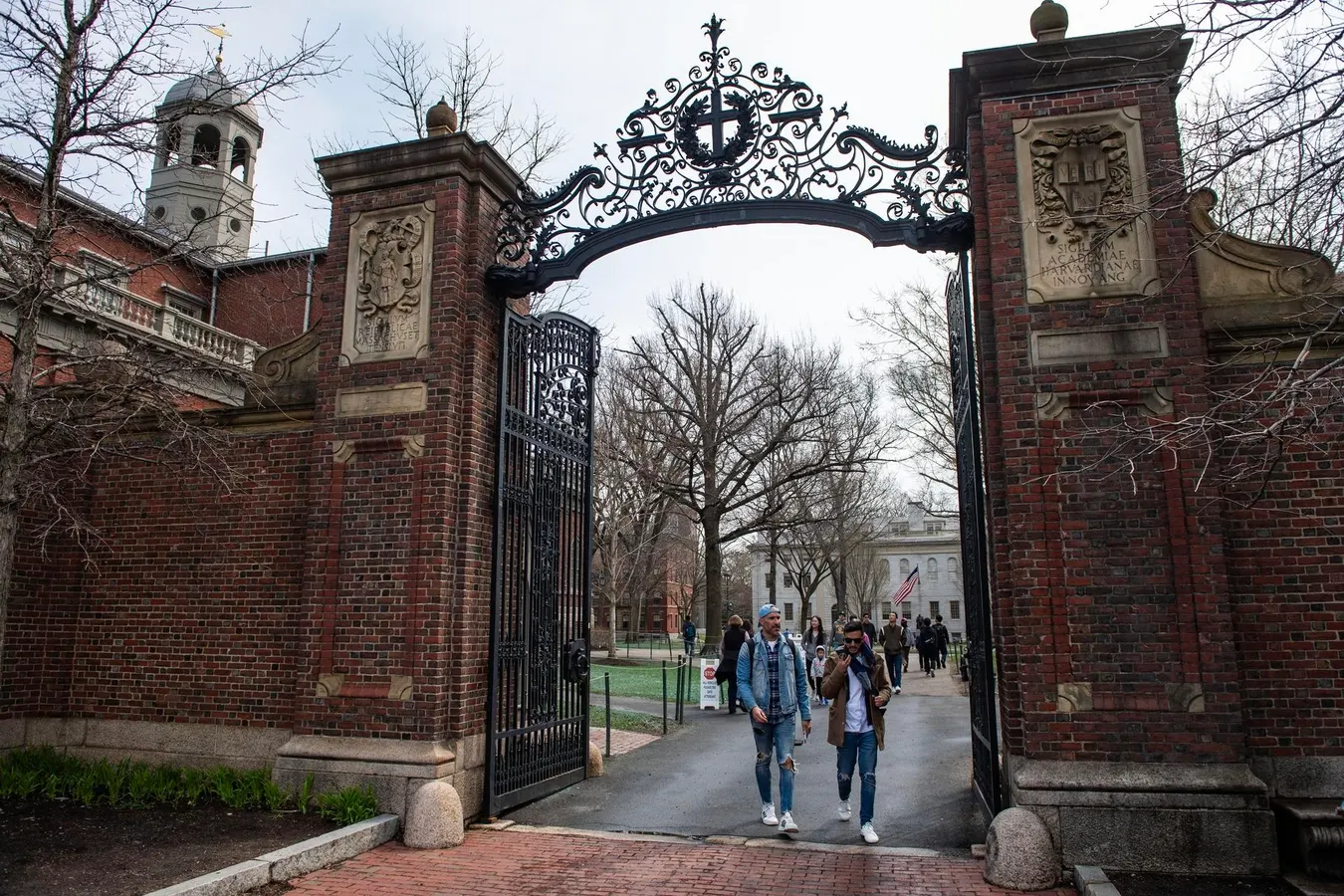

Harvard University
AFP via Getty Images
The U.S. Treasury Department and the IRS just proposed a rule that could reshape the finances of thousands of private educational institutions overnight. The proposed regulation would strip the federal tax-exempt status from private schools that engage in racial discrimination. In their proposal, the agencies estimate the change could impact as many as 18,000 educational institutions in the U.S. The non-profit status of schools can be viewed as instrumental to their success, meaning that this pronouncement might become an existential threat to their future.
How Tax-Exempt Status Powers The Non-Profit Education System
Most private schools, colleges, and universities in the United States operate as 501(c)(3) organizations. This status means that they are exempt from federal income tax. That exemption is a major financial benefit as it allows the university to operate with significantly fewer tax consequences relative to similar for profit enterprises.
Tax-exempt status also allows donors to deduct their gifts, naturally leading to more donations. For instance, the University of Illinois and University of Kansas both received nine-figure donations last year as part of capital campaigns. The donors were able to reduce their tax liabilities from these gifts because the money was given to a non-profit. On top of that, exempt institutions can issue tax-exempt bonds at lower interest rates and without paying tax on investment income.
If the schools lose that status, the finances quickly become less beneficial. Donors lose their deduction incentive, borrowing costs rise, and investment gains go from compounding tax-free to facing annual taxation.
How The Proposed Rule Strips Tax-Exempt Status And Why It Impacts Their Financials
The proposed regulations would deny or revoke 501(c)(3) status for private primary and secondary schools, colleges, universities, professional schools, and trade schools that adopt or enforce policies discriminating on the basis of race, color, or national or ethnic origin.
The rule reaches admissions, scholarships, loans, and athletics. One aspect of this pronouncement that is particularly impactful is that it is grounded in Supreme Court precedent: Bob Jones University v. United States and Students for Fair Admissions v. Harvard. Based on these prior cases, the IRS and the U.S. Treasury argue that tax exemption and compliance with nondiscrimination are a matter of public policy that is enforceable under their jurisdiction.
The Students for Fair Admissions case is a central point for this pronouncement. In June of 2023, the Supreme Court ruled against Harvard and the University of North Carolina, holding that both schools’ admissions policies violated the Equal Protection Clause. These decisions effectively ended affirmative action as it had been practiced in U.S. college and university admissions for almost 50 years.
Because Harvard is a private institution that accepts federal funding, the Court applied the same equal protection standard to it under Title VI of the Civil Rights Act as it applied to UNC as a public university. This is now the same legal bridge the pronouncement is using to argue that private schools’ tax exemptions can be removed for race-based discrimination. This move follows the Trump administration’s earlier scrutiny of Harvard, whose tax-exempt status the administration had been separately threatened over other conduct.
Schools found in violation would face taxable income, a lost deduction incentive for donors, and the potential loss of access to tax-exempt bond financing. The aggregate of these consequences could have a material financial impact, especially as many universities are seeing declining enrollments.
From a non-financial perspective, schools would need to overhaul admissions criteria, scholarship programs, and athletics policies. However, the proposed rule preserves race-neutral tools like income, geography, first-generation status, and military-family status, and it explicitly protects religious schools’ ability to select students based on genuine religious affiliation.
What Comes Next And Will Schools Actually Lose Their Tax-Exempt Status?
The IRS and Treasury pronouncement is still just a proposed rule. It now enters a formal notice-and-comment period where schools, non-profit law practitioners, and advocacy groups will weigh in before Treasury finalizes anything. Legal challenges can be expected at near-certainty. Commentary before the rule’s release from tax-exempt-organization specialists like NEO Law Group has already raised First Amendment and administrative-law concerns about using a broad “public policy” standard to determine tax exemption. They argue that such a condition could struggle to survive judicial scrutiny.
However, if the pronouncement does, in fact, survive, it would apply to tax years beginning on or after May 31, 2027, giving tax-exempt institutions roughly a full academic cycle to audit and revise their policies. Given the scale of the proposal, expect this to become a closely watched tax-exempt status fights. Its ultimate fate may rest as much on the courts as on the regulatory process itself.















Leave a comment