


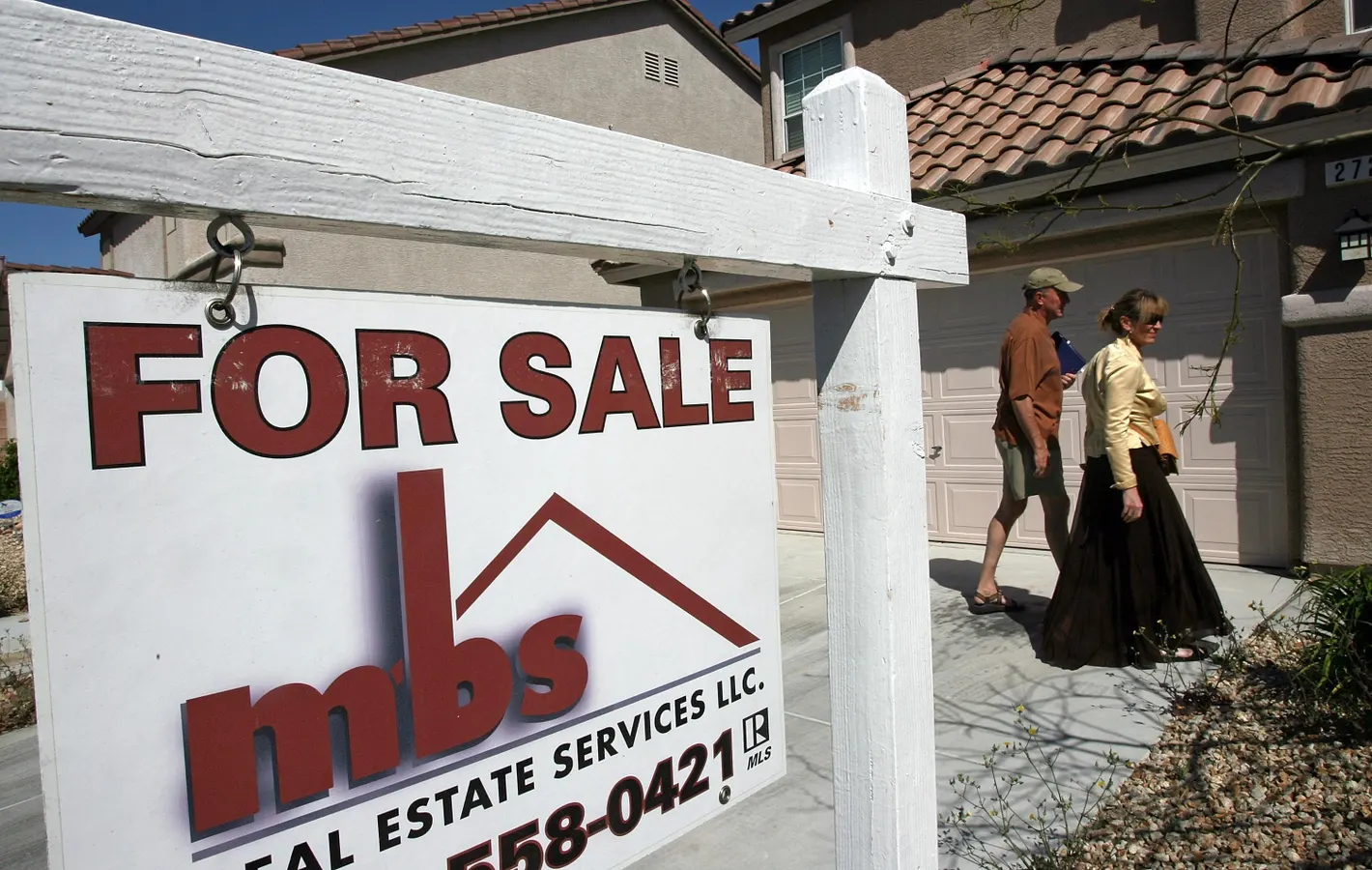

HENDERSON, NV – APRIL 6: Dan Eckles (L) and his wife Jeannine Eckles of Colorado take a bus tour of bank-owned homes April 6, 2008 in the Las Vegas suburb of Henderson, Nevada. The Prudential Americana Group began operating Repo Tours Las Vegas recently to try to help sell the increasing number of repossessed homes. The number of foreclosures, and homes on the brink of being foreclosed on in the Las Vegas area, continues to be among the highest in the nation while the ongoing subprime mortgage crisis spreads throughout the country. (Photo by Ethan Miller/Getty Images)
Getty Images
“Happy families are all alike; every unhappy family is unhappy in its own way.” What Leo Tolstoy observed about families, particularly the unhappy ones, is frequently true about struggling corporations.
Tolstoy’s insight is useful to contemplate when analyzing United Wholesale Mortgage (UWM). As readers are perhaps aware, the U.S.’s largest wholesale mortgage lender was rescued last month by Oaktree Capital and CEO Mat Ishbia’s family. Media accounts have given the impression that UWM’s challenges were and are industry related as opposed to challenges endemic to UWM, thus giving life to a “contagion” narrative in the mortgage lending space.
Throw in rising mortgage rates overall, and that have instigated the Federal Reserve’s own increases in the Fed funds rate, and suddenly what ails UWM is said to ail its competitors. This is a mistaken notion rooted in the contagion myth, along with a mistaken assumption that mortgage lenders are all alike in how they operate.
The thinking is wrongheaded. UWM instructs on the matter.
Consider most prominently its attempted, early 2026 acquisition of Two Harbors Investment Corp. With an eye on mitigating interest rate risks related to acquiring Two Harbors, UWM hedged the acquisition substantially. Only for the transaction to fall through altogether.
UWM suffered a $600 million loss on the hedge, which wasn’t the only problem. So sizable was the setback that UWM had to subsequently suspend its dividend while reporting a $451 million net 2nd quarter reversal.
What’s important about the ill-fated acquisition, and the eventual collateral damage, is that these errors were endemic to UWM. Channeling Tolstoy, UWM erred in its own way, as opposed to its problems reflecting those of its competitors and the industry more broadly. How we know this can paradoxically be found in UWM’s rescue itself.
Success or failure, the rescue is strong evidence that the media narrative about UWM’s troubles is incorrect. If they were industry related as opposed to being unique to UWM, then it’s safe to say that Oaktree and the Ishbia family wouldn’t be committing so much capital to UWM’s revival.
Taking it further, it’s useful to consider Rocket Mortgage, a UWM competitor that should be viewed for the purposes of this piece as a “comp.” While it’s no doubt true that there are interest rate and mortgage origination challenges faced by the industry in total, the fact that Rocket isn’t similarly distressed additionally questions the notion that UWM’s problems are industry specific instead of its own.
Furthermore, corporate implosions are the economy-enhancing norm in a country as economically dynamic as the U.S. As opposed to evidence of economic decline, business implosions signal economic recovery as mismanaged assets are acquired, and subsequently rehabilitated. That’s how UWM’s situation should be viewed.
As opposed to a signal of worsening problems in the mortgage industry itself, UWM’s struggles signal a company-specific reckoning. The good news is that Oaktree’s track record signals eventual recovery for United Wholesale Mortgage. The curative powers of capital are well established.













Leave a comment