


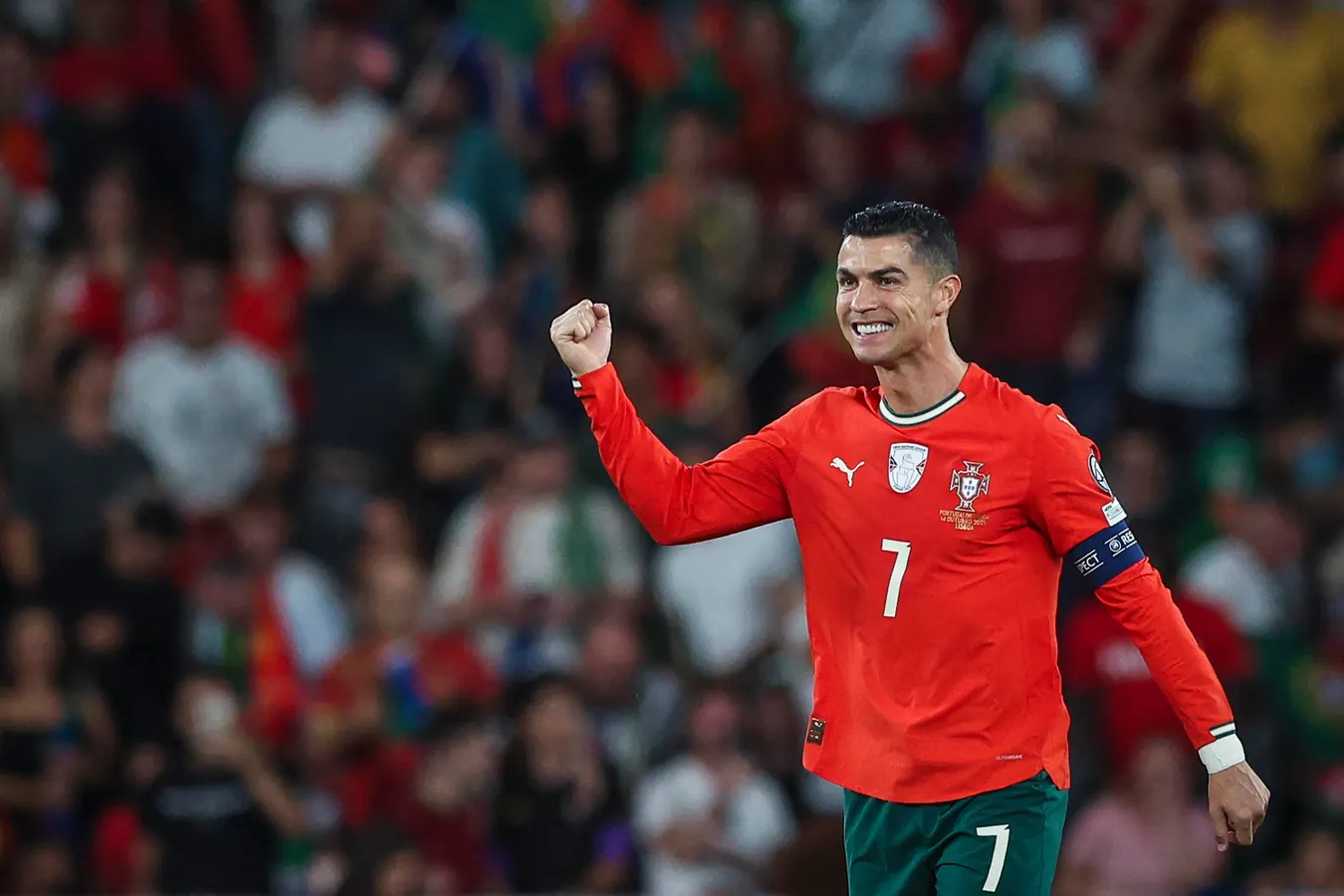

LISBON, PORTUGAL – OCTOBER 14: Cristiano Ronaldo of Portugal celebrates after scoring his team’s first goal during the FIFA World Cup 2026 qualifier match between Portugal and Hungary at Estadio Jose Alvalade on October 14, 2025 in Lisbon, Portugal. (Photo by Carlos Rodrigues/Getty Images)
Getty Images
Cristiano Ronaldo has spent more than two decades building a legacy defined by extraordinary scoring records, relentless ambition and an unwavering belief in his own abilities.
A recent dispute with Portugal’s national team has placed the 41-year-old superstar in an uncomfortable position: Confronting the possibility that the qualities that made him one of soccer’s greatest players could also complicate the final chapter of his career.
The Portuguese Football Federation has suspended Ronaldo and initiated disciplinary proceedings after he left the national team camp during the recent international break. The case has been referred to the federation’s disciplinary investigation committee, with its findings to remain confidential until the probe is concluded.
At the center of the controversy is Ronaldo’s frustration with his reduced role under new manager Jorge Jesus. Yet the incident has developed into something larger than a disagreement over minutes on the field. With Portugal continuing to win without him, Ronaldo faces uncomfortable questions about his place in the team, his relationship with the national setup and the legacy he hopes to leave behind.
Dispute over playing time
Ronaldo’s departure followed a series of matches in which he was either an unused substitute or absent from the squad. His only involvement during the international window came in Portugal’s opening Nations League game, a 1-0 victory over Wales. He was replaced by Gonçalo Ramos, who subsequently made the most of his opportunities.
Ronaldo then watched Portugal’s 2-1 win over Norway from the substitutes’ bench before leaving the camp. The team went on to secure victories over Denmark and Norway, booking a place in the quarterfinals without their most recognizable player.
Ramos scored three goals during the period, strengthening the argument that Portugal possesses attacking options capable of delivering results without relying on Ronaldo.
For a player accustomed to being the focal point of every team he has represented, the situation represents a significant adjustment. Ronaldo has built his career around setting demanding standards, expecting excellence from himself and pushing to remain central to the action. Being asked to accept a secondary role is a different challenge, particularly when his international career is approaching its end.
His frustration may be understandable. Elite athletes often struggle with the transition from indispensable star to experienced squad member. But how that frustration is expressed can determine whether a difficult sporting moment becomes a lasting reputational problem.
Ronaldo takes his grievance public
After leaving camp, Ronaldo addressed his 679 million Instagram followers in a lengthy post. He criticized the decision to ask him to warm up on the sidelines in Oslo before ultimately leaving him on the bench, arguing that the coach should acknowledge the mistake.
Jesus did not publicly concede that he had made an error.
Ronaldo also acknowledged that he expected to face disciplinary consequences, while promising supporters that “we will have one or more farewell matches.”
That promise suggests he recognizes that his international career is nearing its conclusion. However, the circumstances surrounding the statement risk overshadowing the farewell he appears to want.
Rather than allowing his performances and contributions to Portugal to dominate the conversation, Ronaldo has found himself at the center of a dispute about authority, team discipline and whether his status entitles him to special consideration.
The federation’s regulations state that a player who abandons or fails to attend a national-team training session, match or activity without justification can receive a suspension of one to six months, in addition to a fine. Ronaldo informed the federation that he was leaving, but it remains unclear whether his decision will be considered justified under those rules.
He has already apologized, writing that he understands actions must have consequences and that the rules should apply equally to everyone, regardless of a player’s status. That acknowledgment could help him demonstrate accountability. Still, the investigation’s outcome will determine how seriously the federation views his conduct.
How the controversy could hurt his legacy
Ronaldo’s achievements are not easily diminished. His extraordinary scoring record, longevity at the highest levels and influence on Portugal’s international standing have secured his place among the sport’s most celebrated figures.
But legacy is about more than statistics. It is also shaped by leadership, adaptability and how an athlete responds when circumstances change.
For Ronaldo, the danger is that the walkout reinforces a perception that personal recognition has become more important than collective responsibility. Such a judgment would be unfair if based solely on one incident, but the public nature of the dispute gives critics an opportunity to question whether he can accept a role that no longer revolves around him.
Portugal’s results make the situation particularly complicated. The victories achieved during his absence do not prove the team is better without him, nor do three goals from Ramos settle the question of who should lead the attack. Different opponents, tactical considerations and match circumstances all matter.
Nevertheless, the results demonstrate that Portugal can compete successfully without depending entirely on its veteran superstar. That reality makes the coach’s selection decisions easier to defend and Ronaldo’s frustration harder to justify publicly.
At this stage of his career, his response to reduced playing time may matter almost as much as the goals he scores. Accepting a smaller role, mentoring younger teammates and supporting decisions made for the team’s benefit could strengthen his standing as a leader. A prolonged public confrontation could have the opposite effect.
Ronaldo’s desire for a farewell on his own terms is understandable. Few players have given as much to the international game, and his ambition has been central to his extraordinary career. The most meaningful ending may not be one in which he plays every minute or receives unquestioned recognition. It may be one in which he demonstrates that the same competitive spirit that drove him to greatness can coexist with humility and acceptance.












Leave a comment