


Everyone knows just how smart AI is. It can pass multiple bar exams and the MCAT. It can write code and even explain the trickiest calculus problems. It’s like a brilliant child who has read every single book and yet still lacks the senses that a toddler takes for granted to navigate reality.
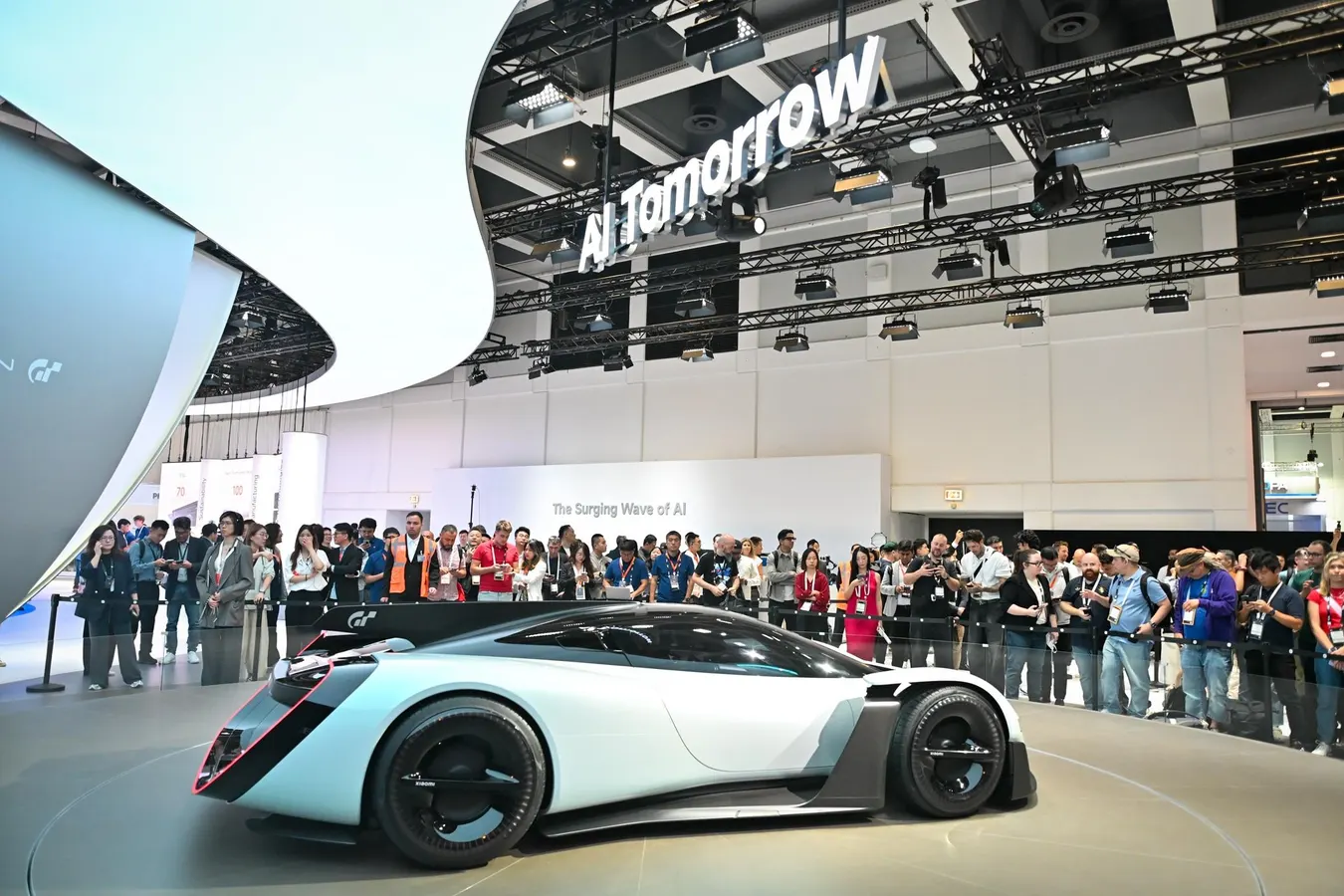
Many of the gadgets at this week’s Innovation For All (IFA) 2026 in Berlin, one of Europe’s biggest tech events, seek to tackle this deficit. In other words, disembodied AI is getting eyes for seeing and a body for navigating physical reality. With the conference kicking off Friday, September 4, I took a look at three companies exploring the leap from AI sequestered in chat boxes to embodied intelligence, revealing the shift is more profound than any single product.
But first, there’s ample reason for companies to pursue embodied AI as a highly lucrative sector. “Morgan Stanley Research estimates the humanoids market is likely to reach $5 trillion by 2050, plus related supply chains as well as repair, maintenance and support. There could be more than 1 billion humanoids in use by 2050,” according to the company site.
On Land: A Robot That Lives Beside You
“In our estimation, the first robot most people will own will not be a worker bee. Instead, it may reside in your own living room as a consumer-grade personal robot,” Tian Hua, CEO of PrimeBOT told me. To this end, the company is presenting two models at IFA: PrimeBOT Q1, “a compact programmable personal humanoid robot focused on personalized interaction, creativity and learning experiences” and PrimeBOT T1, “a transformable personal robot designed for intelligent companionship, mobility and life assistance.”
Nestled within these offerings is the promise of science fiction lore espoused in popular novels of the twentieth century like Isaac Asimov’s I, Robot and The Bicentennial Man. Similarly, the 2012 film Robot and Frank presaged such a symbiotic arrangement whereby humans and machines coalesce in ways popular entertainment has long hinted at yet is now coming online.
“Despite the looming challenges training embodied AI still presents, we anticipate a not-so-distant future in which personal robots serve as novel conduits for greater creativity and personal expression that are just beginning to emerge as humanoids engage in ever more personalized interactions,” said Hua.
In the Field: Smart Binoculars That Know What You’re Looking At
There is more that goes into embodied AI than well… a body. Synthetic eyes that can see and react intelligently occupy the next category of presenters. MatataXplore, a technology hardware company, is exhibiting Solvia 8×32, which superficially appears to be an ordinary pair of binoculars.
Should we look deeper, no pun intended, it offers an intelligence layer intended for bird-watching hobbyists who have long had to rely on their own expertise to identify species in the wild. Capable of accurately recognizing over 10,000 species, it serves as another set of eyes, with a brain attached. “Binoculars have helped people see farther for centuries. With AI, they can now also help users identify and better understand what they are seeing,” said COO Xiaoxiong Zheng, in a statement. “Our goal is to make nature exploration more accessible without allowing technology to distract from the experience itself.”
The implications are worth consideration. It is no secret that as technology continues to play an outsized role in our lives, many of us live apart from nature and lack the physical literacy our ancestors possessed. To this point, a peer-reviewed study of Dutch school children in Biological Conservation found that, “A considerable gap in species literacy was found between professionals and laypeople. Knowledge about common, native animals was particularly low in children, who on average identified only 35% of the species correctly.”
Technologies such as Solvia 8×32 suggest that, as embodied AI becomes more prevalent, it may lead to a resurgence of knowledge and interest in the natural world. Much like domestic humanoid encounters, we may soon expect to see yet another kind of symbiosis in which technology enables greater immersion between so much flora and fauna.
Under the Sea: An Intelligent Dive Mask
Continuing with the topic of embodied AI, it is worth asking how else could tech support such physical exploration. Zeroing in on another cadre of hobbyists, this time divers, we can glimpse what the future of intelligent sports might look like freed from the encumbrances of a phone. For years, diving enthusiasts have run into a vexing problem: you cannot bring your phone into the ocean’s depths to monitor the very things that keep divers alive, such as depth and remaining air.
Underwater technology company AREX leaned into augmented reality (AR) to solve the challenge, developing a dive computer built into the mask itself. Similar to how the app Cluely offers a smart screen overlay that whispers real-time answers in meetings, interviews, calls and even dates, this technology floats at the edge of your vision, giving divers needed information via a heads-up display. “We didn’t want to simply put another screen underwater,” said Maxime Cheminade, Head of Business Development and Marketing in a statement. “We wanted to rethink how divers interact with information in the first place.”
Extrapolating from the use of this technology to navigate reef dives to cave expeditions we can imagine how such embodied AI usage may soon transform how dangerous work gets done. Policing and firefighting share similarities with diving. When it comes to these activities, there is an existential risk in not being 100% present.
Not long ago, the Department of Homeland Security announced that fire departments around the country can now apply to test “a helmet-mounted, indoor visualization and navigation device that allows first responders to see through dark smoke. Developed by Austin, Texas-based startup Qwake Technologies, this protype—known as C-THRU—aims to improve situational awareness, increasing the speed and effectiveness of firefighters while reducing their exposure to carcinogenic environments.”
The Race Out of the Chat Box
Looking beyond IFA, it becomes ever clearer that the AI Age is not slowing down just because frontier models are improving chatbot functions, giving corporate America better workplace tools. Instead, as the above developments reveal, the real race appears to be in the embodied AI category.
Based on projections coming out of Morgan Stanley, considerable opportunity exists to create next level technology that increasingly emulates the senses and physicality underpinning reality. What is occurring this week in Berlin suggests that the Robot Revolution is well underway. AI, that brilliant child who read every book ever written, is finally stepping out of the library and into the real world.















Leave a comment