


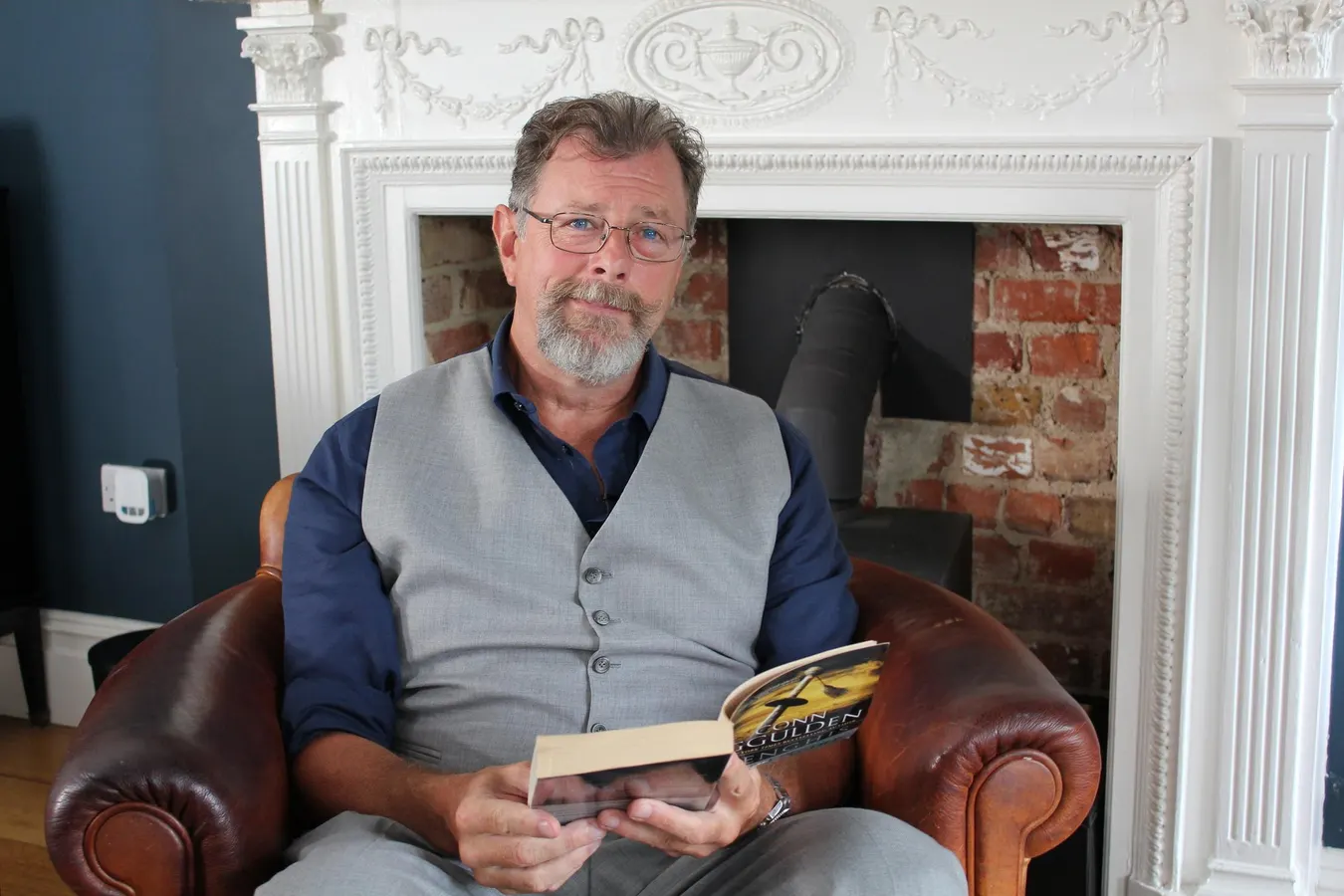

Conn Iggulden has final cut on Authors First’s adaptation of his novel Genghis: Birth of an Empire.
Christopher Lastrapes / Courtesy of Authors First
Conn Iggulden has heard the price of adapting his Genghis Khan novels before. During one of several Hollywood options on the books, a producer told him, “All we need to do now, Conn, is find half a billion dollars and we’re good to go,” Iggulden says in a video interview with me.
On Tuesday, Authors First, a New York book-to-screen studio, came out of stealth with more than $10 million in seed funding. Its first title is a six-episode adaptation of Iggulden’s novel Genghis: Birth of an Empire, which goes on sale at a later date. The company says production costs about $4,000 per finished minute. Iggulden has final cut and shares in the revenue once the company recovers a capped portion of its costs.
That changes the question facing a book like this. Cost no longer decides whether it reaches the screen. Demand does, and founder and CEO Robert Hamwee says he does not yet know how much of it there is.
The Math Behind A $14.99 Season
Robert Hamwee, founder and CEO of Authors First.
Noah Fowler / Courtesy of Authors First
Hamwee, a longtime private equity investor, says each season will sell as a single purchase, released all at once. The first season of Genghis will cost $14.99 on the company’s own streaming app, with a founding preorder price of $9.99, Authors First said in written responses.
The company expects to sell the series on other digital storefronts through Filmhub, a distributor that places independent films and series on digital platforms, and plans consistent pricing across them. It has not yet named those storefronts or a release date.
The six episodes run about 200 minutes in total. Hamwee says the cost per minute will fall to $3,000 within a month or two, which would put a season of that length at about $600,000 of direct cost.
Most of the cost is labor. Hamwee says every episode starts with a human-written screenplay and 500 to 600 hand-drawn storyboards before any image or video generation. The company employs 30 to 35 people, all from film and television production, and he says compute accounts for 20% to 25% of cost.
Founding authors receive an option fee, and the company recovers its costs at $2,000 a minute, with no allowance for marketing. On a 200-minute season, Authors First can recover up to $400,000 of production cost. Revenue remaining after that recovery is split 50/50 for the life of the series.
Authors First owns the screen series. The author shares half of any merchandise or other derivative revenue and keeps the live-action rights. “I’m not just handing over rights for a lump sum,” Iggulden said in the same responses.
Hamwee’s case is that Hollywood will not fund books like these. “It’s just really hard to make a $500 million bet on the Mongols or on Peter Hamilton’s Commonwealth universe,” he says. Authors First has three projects in production, a fourth due by year-end and releases planned through 2027.
Its announced slate includes Hamilton’s Pandora’s Star and adaptations of books by David Ball and R.A. Salvatore.
Turning Readers Into Buyers
The commercial test is units. At 10,000 purchases, a season grosses about $150,000, which Hamwee says “doesn’t work.” He puts the target at roughly 100,000. At the other end, he calls 1 million purchases “a home run.”
“It is a bet,” he says. “We just, we don’t know.”
Those economics will shape how far the series runs. Hamwee says each of the five Conqueror novels would become two seasons if the first one sells. Work on the second has already started.
Authors First is targeting existing readers first. Hamwee says the company’s advertising, run through standard digital ad networks, will start with people who have read the novels, followed by genre fans and viewers curious about the technology.
Hamwee also acknowledges limits in the finished product. “No one’s going to win the Academy Award for best acting anytime soon,” he says. For Iggulden, those limitations have not diminished the experience. “To have it turned back into a visual medium is just joyous,” he says.
Authors First has made one part of the adaptation problem cheaper and given Iggulden considerably more control over the version that gets made. The remaining question is whether that combination can convert readers into paying viewers.
Final cut settles whose version of Genghis reaches the screen. It does not settle how many readers will choose to watch it.














Leave a comment