


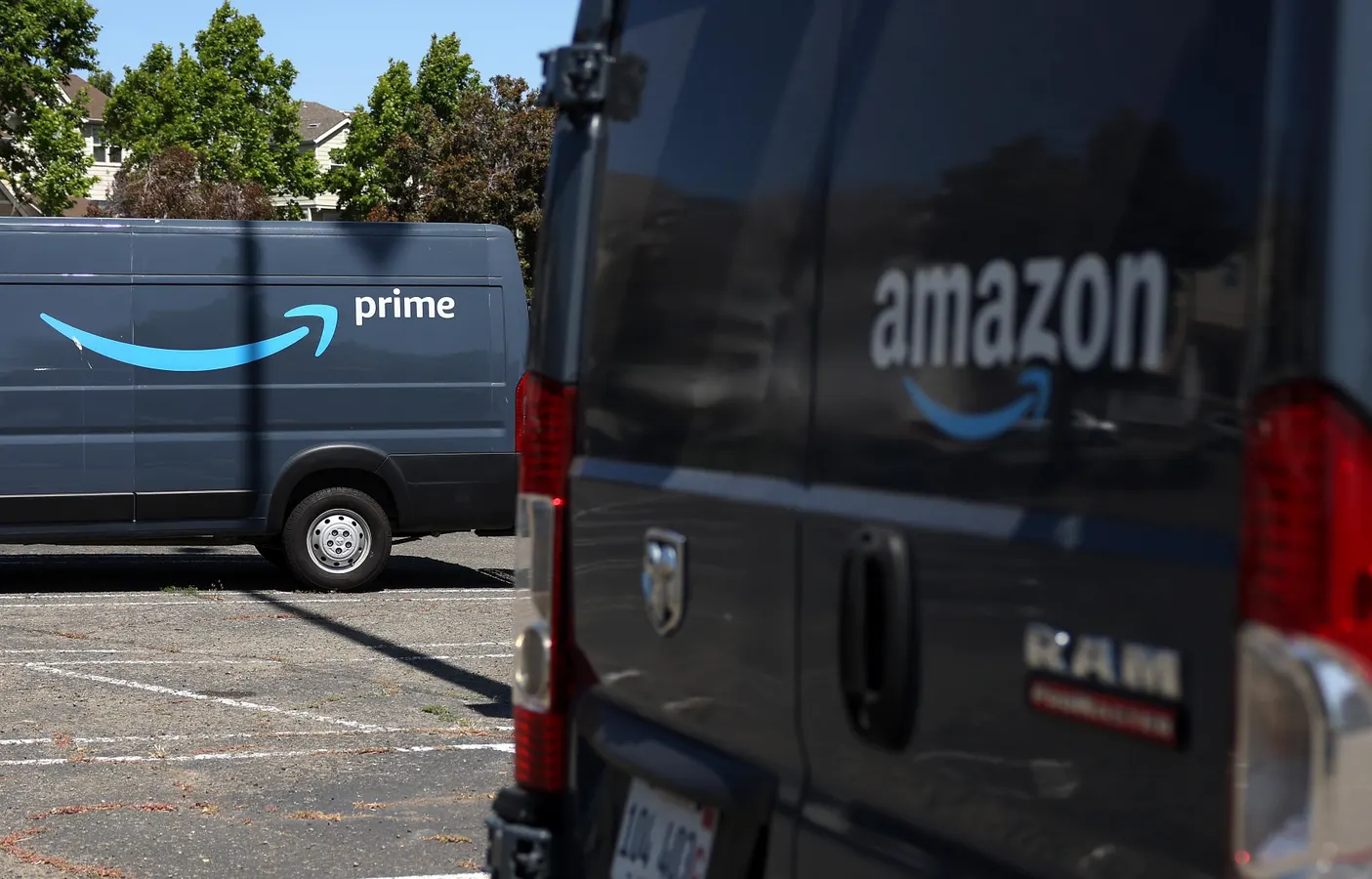

RICHMOND, CALIFORNIA – JUNE 21: The Amazon Prime logo is displayed on the side of an Amazon delivery truck on June 21, 2023 in Richmond, California. The Federal Trade Commission (FTC) sued Amazon alleging that company has deceived millions of customers into signing up for Prime subscription services and intentionally complicated the cancellation process. (Photo by Justin Sullivan/Getty Images)
Getty Images
The extraordinary popularity of Amazon with sellers and buyers puzzlingly has it in the sights of the Federal Trade Commission (FTC). The federal agency alleges that Amazon has inflated seller ad prices meant to attract the eyeballs of Amazon customers. The FTC’s allegations are difficult to countenance.
While it claims that Amazon has since 2018 “manipulated the ‘auctions’ it uses to set ad prices on its platform,” the reality is that Amazon has brought price transparency to a market good that was and is already highly desirable. In other words, would-be sellers well know that “sponsored products” and “sponsored ads” on Amazon are the path to substantially more clicks on their products, and subsequent sales, at which point they want to lock in an ad price.
Explicit in the FTC’s charges is that Amazon controls the market for ads on Amazon.com, but in reality it’s the sellers who increase or shrink their bids for advertisement based on past performance. They further adjust their bids given ever changing consumer buying habits for all manner of reasons including day, time, time of year, along with the timing of Amazon’s own promotions. Said another way, it’s the success of sellers in the past and the expectation of sales success in the future that informs the seller’s bid for ad space, not what Amazon wants it to be.
All that, plus a seller is logically going to bid more for sponsored product and ad space depending on when their own products and services are most needed, the times during which their products and services are most likely to be searched for, not to mention that the dollar cost of the seller’s ad bid will be informed by the size of the economy itself: if booming, proverbial shelf space on Amazon is more valuable than if unemployment ticks up to 10%. It’s worth adding that the mix of sponsored ads and products changes as the vitality of the economy does. What’s important is that Amazon can’t control these prices as much as it can inform them.
Unfortunately, it’s in return for Amazon bringing its proprietary knowledge to the marketplace that the FTC is targeting it. The federal agency believes that Amazon’s “second price auctions,” in which the seller bids the maximum it will pay for ads, have positioned Amazon to boost ad prices. See above. Amazon doesn’t control prices.
Still, the FTC alleges Amazon has been inflating the prices that sellers will pay by “inventing” an auction participant that is Amazon itself. More realistically, Amazon is bringing its intimate knowledge of the market to ensure the arrival of serious, informed bids for ad space. Exactly because it has the keenest sense of buyer habits, it can ensure that the buyers of the sponsored ads enter with bids that broadly reflect the market for when they want to feature their goods.
It’s worth adding that as the nature of “second-price auction” attests, sellers aren’t just communicating the maximum amount they’ll pay for ads on Amazon. They’re also assured that at worst, they’ll only pay one cent more than the second highest bid. This protects sellers from overpaying.
Amazon’s role in all this is that in bringing crucial information to the marketplace, sellers have better knowledge of what they should bid to be successful in securing ad space. Lest the FTC forget, the aim of sellers is to secure ads meant to maximize sales.
By inserting its market knowledge into the bidding process Amazon isn’t gouging sellers or buyers, rather it’s making sure that sellers have their ads up at the right price and time to maximize sales. Amazon prospers when its sellers do.












Leave a comment