


Topline
A federal judge will consider Thursday whether to approve the proposed settlement between Democratic-led states and Paramount Skydance over the media giant’s merger with Warner Bros. Discovery, as the judge said “outstanding questions” still remain about the settlement and as film groups make a last-minute effort to oppose the agreement in court.
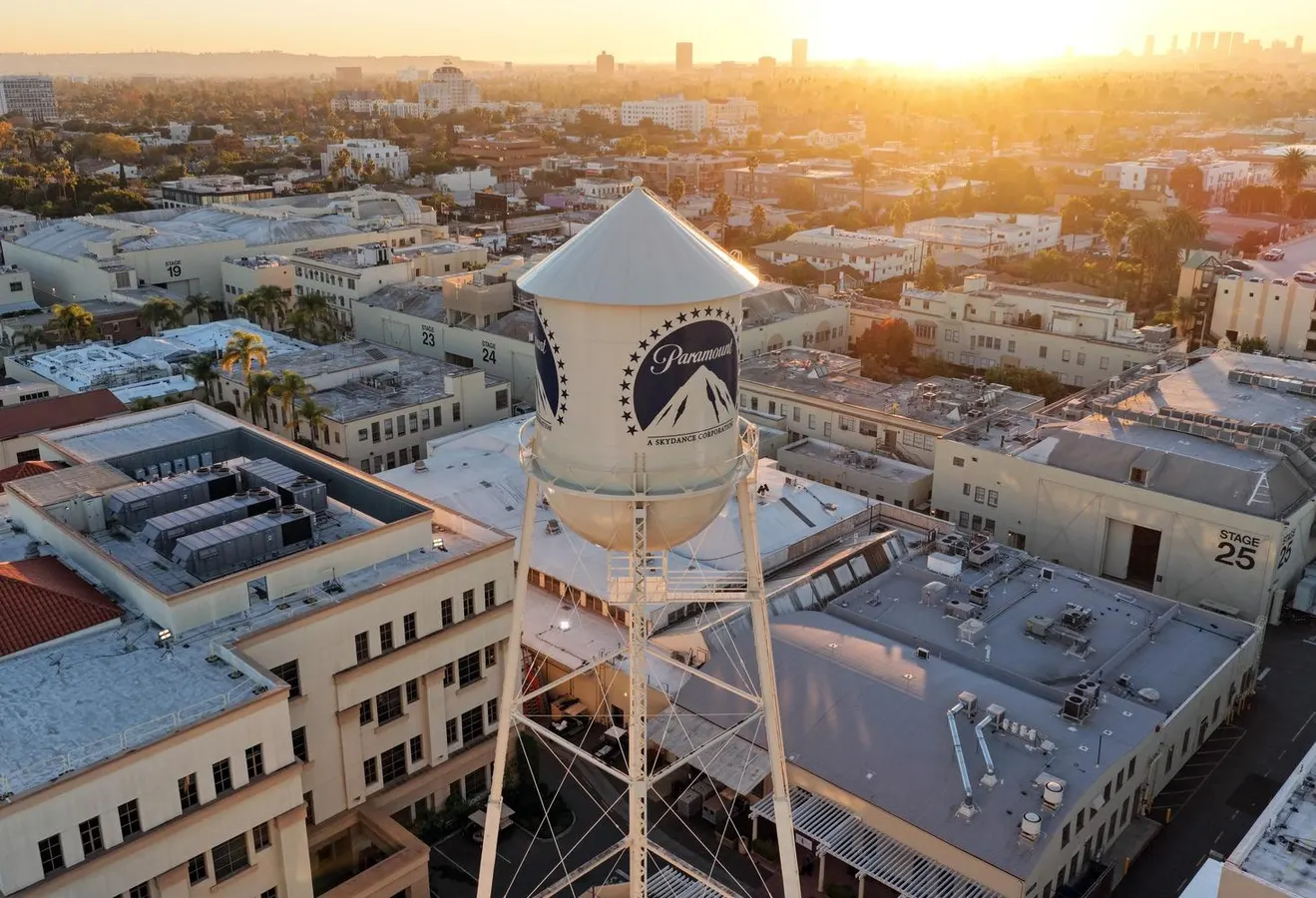
Paramount Studios is pictured on December 8, 2025 in Los Angeles, California.
Getty Images
Key Facts
Judge Araceli Martinez-Olguin will hold a hearing at 11 a.m. PDT on Thursday, after the states and Paramount announced Monday they’d reached a settlement in the states’ antitrust lawsuit, paving the way for the merger to go through.
The settlement, which has been broadly criticized by opponents of the merger, does not force Paramount to divest any assets or reduce its control over the media industry, but rather forces the expanded company to meet certain quotas for film production, establishes an “independent editorial board” to oversee CNN and CBS News, and imposes other limited guardrails for a five-year period.
Martinez-Olguin will still have to approve the settlement before it can be finalized, and could still order that changes be made to it or force the two sides to draw up a new agreement.
The Biden-appointed judge set Thursday’s hearing rather than immediately approving the settlement, saying the hearing would be used to “address certain outstanding questions regarding the factual and legal underpinnings of” the agreement, “as well as [its] implementation.”
That doesn’t necessarily mean the settlement won’t be approved, and it remains to be seen what questions the judge has about it.
A coalition of outside film groups and the League of United Latin American Citizens, or LULAC, have also asked to file briefs in the case that would formally oppose the settlement agreement, with the judge granting those requests Thursday—though it remains to be seen how their arguments could affect her thinking.
What to Watch for
Martinez-Olguin is unlikely to issue a final ruling on the settlement’s fate at Thursday’s hearing, as the judge asked for the other groups opposing the settlement to file their briefs against it by 12:01 a.m. on Friday. That means a ruling on the settlement could come anytime from Friday onward. It’s in Paramount’s best interest for the settlement to be approved swiftly, as the company will owe Warner Bros. shareholders a combined $7 million per day if the deal doesn’t go through by Oct. 1.
What Does The Settlement Agreement Say?
The proposed settlement, which will only be in place for the first five years of Paramount and Warner Bros.’ joint operations, commits the new larger media company to make at least 30 films per year for the first two years of the agreement, and 32 films for the three years after that. Paramount had already committed to that 30-film quota, but the settlement added penalties if the company doesn’t meet it, including paying a $30 million fine per film that’s not produced and potentially having to divest from film studio Miramax. At least four films each year must be “independent” films, which the settlement filing defines as either being “based on an original screenplay” or produced by a non-major studio, and 20% of each year’s films also have to be “tentpole films” with a production budget of $50 million or more. Paramount must produce at least 20% of its films in the U.S. for two years, and then 30% in the U.S. for the following three. That number will increase to 40% should California and New York pass more lenient tax incentives for film production. The settlement also requires Paramount to establish an indie film fund and invest $9.5 million annually for workforce training and development and in community arts organizations, and prohibits Paramount and Warner Bros. from closing their lots in Los Angeles. For CNN and CBS, the “independent editorial board” will be made up of “established” journalists appointed by Paramount’s board. The editorial board will establish editorial principles for CNN and CBS’ operations, settle any disputes journalists have regarding the company allegedly infringing on their journalistic independence, and “[monitor] adherence to ethical journalism.” An independent monitor will also be appointed to ensure that Paramount is complying with the full terms of the settlement agreement.
Why Has The Settlement Agreement Been Criticized?
Opponents of the Paramount-Warner Bros. merger have been broadly critical of the settlement, arguing it’s overly deferential to Paramount and doesn’t sufficiently address concerns associated with Paramount-Warner Bros. gaining control over a large swath of the entertainment industry. “Based on all reports, this weak deal contains nothing but unenforceable, empty Paramount promises,” Jessica J. González, co-chief executive of the nonprofit Free Press, said in a statement, arguing the merger “will cut jobs and raise prices.” Critics have also been particularly opposed to the merger bringing CBS News and CNN under the same umbrella—and being overseen by Trump-friendly Paramount leader David Ellison—with even Connecticut Attorney General David Hong, a party to the lawsuit, saying Monday he was “deeply disappointed that we could not do more” to keep the news institutions independent during the settlement negotiations.
What Are The New Parties Arguing Before The Court?
In their filing asking to submit a full brief opposing the settlement, a coalition of film industry groups—known as “Block the Merger”—argued the settlement presents “serious and complicated questions” that have yet to be resolved. The groups raised issues like the fact the agreement requires the new merged studio to produce fewer films per year than Paramount and Warner Bros. already do independently. A requirement in the settlement for Paramount and Warner Bros.’ cable networks to negotiate cable packages separately may also be “unworkable,” the coalition argued, and it alleged the editorial board that would oversee CNN and CBS may “present free speech problems” since it will be partially overseen by the court. LULAC also argued in its initial filing to the court that the agreement “fails to adequately address the serious harms” the merger could pose—namely that it would result in fewer films being produced, and of lower quality. The settlement only imposes “quantitative” requirements for film production, LULAC argued, while also getting rid of the competition between studios that would typically incentivize them to create higher quality programming. That could result in the merged companies meeting the minimum quotas “while reducing investment in documentaries, films by and about Black and Latino communities, or other distinctive projects that might have been greenlit by the independently competing studios,” LULAC warned.
Tangent
Thursday’s hearing also comes after Semafor reported Wednesday that Paramount could controversially seek investment from billionaire Elon Musk in the merged Paramount-Warner Bros., as Ellison and father Larry Ellison continue to seek equity to finance the deal. The Trump administration has also allowed at least 49.5% of the expanded media company to be financed through government-owned sovereign wealth funds in the Middle East, though Paramount has alleged they will not have any voting power over the company.
Key Background
The state attorneys general settled with Paramount this week after first suing to block the Warner Bros. merger over the summer, alleging it violated antitrust laws and would result in fewer films being produced, job losses and higher prices for consumers. The case had initially been slated to go to trial in March 2027, but after initially agreeing to delay the merger amid the litigation, Paramount started putting pressure on the states to settle as the Oct. 1 deadline for its $7 million “ticking fee” to kick in got closer. Paramount threatened to pull its operations out of California—whose AG Rob Bonta led the litigation against the merger—which would harm the state economically and result in widespread job losses, and the media company also asked the court to force states to pay the $1.9 billion in losses Paramount would incur by delaying the trial. Bonta had held firm against Paramount’s tactics, cancelling planned settlement talks in August after he alleged the company was leaking details to the media—which Paramount denied—but the two sides ultimately started settlement negotiations last week, culminating in the agreement. In a news conference announcing the settlement, Bonta told reporters the agreement “is not a vote of support for this merger,” but claimed the deal would result in “more production, more choice” and “more guardrails.”
Further Reading
States Settle Paramount-Warner Bros. Lawsuit—Clearing Way For Merger To Go Through (Forbes)











Leave a comment