


The 69th Grammy Awards eligibility window closes this fall, with nominations landing Nov. 16 and the ceremony set for Feb. 7, 2027, at Crypto.com Arena. This year’s race carries extra intrigue thanks to a rule change that lets Best New Artist candidates submit up to four times instead of three, reopening the door for several acts who would have aged out under the old system. Here’s where the four general field categories stand right now.

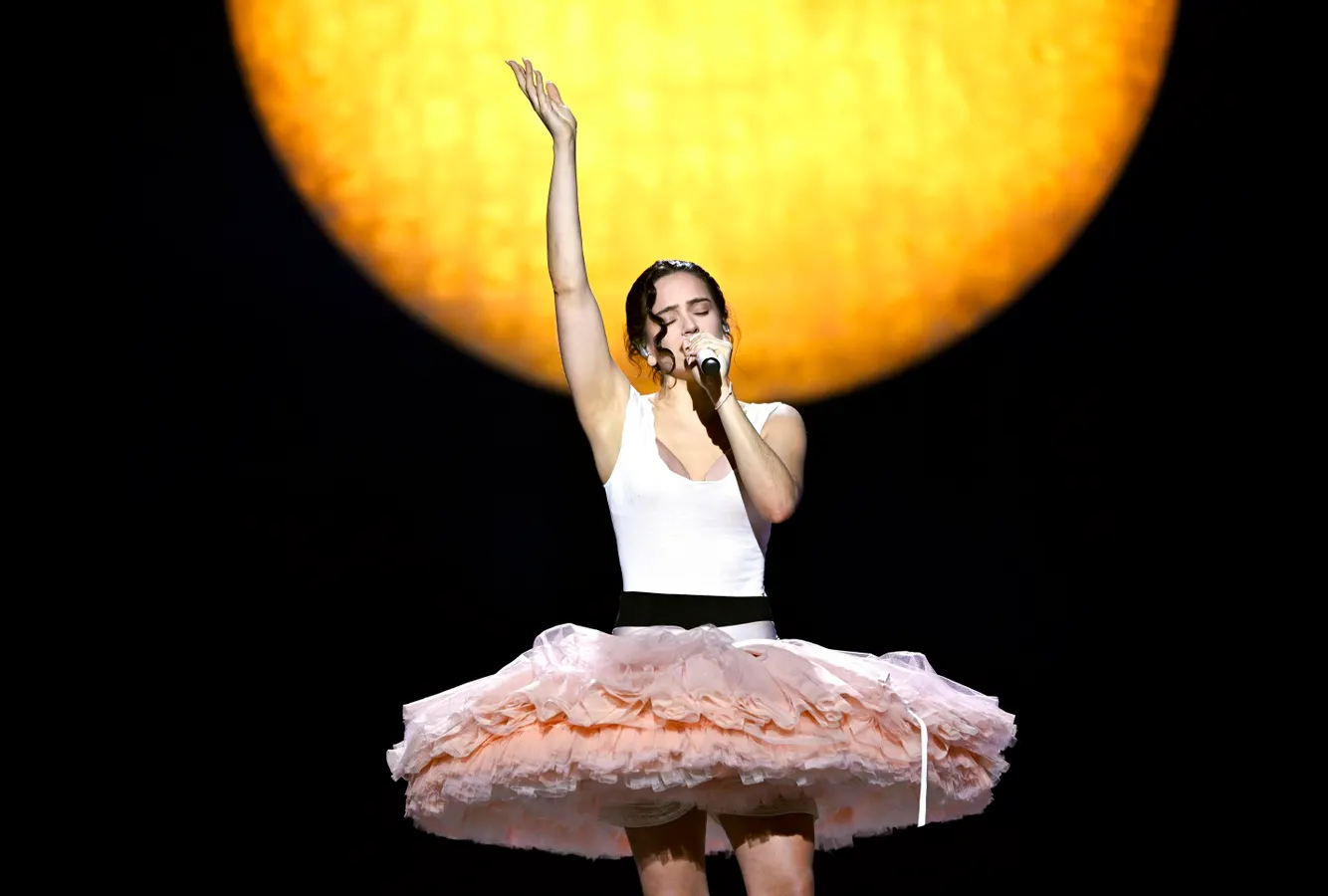
LYON, FRANCE – MARCH 16: (Exclusive Coverage) Rosalía performs on stage at the LDLC Arena on March 16, 2026 in Lyon, France. (Photo by Gareth Cattermole/Getty Images for Live Nation)
Gareth Cattermole/Getty Images for Live Nation
Album of the Year
Frontrunner: Rosalía, LUX. This is the album the Recording Academy has been waiting for her to make. She was already a Grammy darling off her last cycle, particularly at the Latin Grammys, and LUX is the kind of ambitious, genre-hopping record that tends to win over voters looking for a prestige pick. She sings in 13 languages here, working with the London Symphony Orchestra and Daft Punk, sometimes on the same track. The album missed last year’s eligibility window, which means voters have had a full cycle to sit with it. Bad Bunny’s win in this category last year also matters here: it signaled that voters are willing to hand the top prize to a non-English album, which removes one of the traditional arguments against Rosalía’s chances.
Sleeper hit: Olivia Dean, The Art of Loving. Dean won Best New Artist earlier this year, and reigning Best New Artist winners have a strong track record of following up with a Big Four nomination the next cycle. The Art of Loving has generated quieter industry buzz than Rosalía or Olivia Rodrigo, but it’s real, and voters like rewarding a fast follow-up from someone they just introduced to the world.
Longshot: Ella Langley, Dandelion. The new four-entry Best New Artist rule was designed with artists like Langley in mind, and there’s a real scenario where she gets nominated across all three general field categories plus Best New Artist, which would make her the first country crossover artist to pull that off since Bobbie Gentry in 1968. An Album of the Year nod specifically is still a stretch, but watch this one.
Nomination snub: Geese. Acclaimed, distinctive, and exactly the kind of act that critics will be citing in year-end lists that the Grammys ignore. The band’s albums have been well-reviewed for years, but this category still tends to reward scale and pop crossover over cult favorites.
Most likely winner: Rosalía. Between the Bad Bunny precedent and her Latin Grammy pedigree, she has the cleanest path to the trophy.
Another possible winner: Olivia Rodrigo. If voters want a more conventional, mainstream pop choice over an experimental non-English record, she’s the one positioned to beat Rosalía.
Likely snub for the win: Ella Langley. Even in the best case where she pulls four nominations, the Academy has historically been reluctant to hand its top prize to a crossover country act this early in her arc.
Record of the Year
Frontrunner: Olivia Rodrigo. The competition within her own catalog is “drop dead” versus “the cure,” and “the cure” is the stronger bet here. Ballad-driven, vocally forward singles tend to perform better in this category than uptempo cuts, and Rodrigo has the industry momentum to carry either.
Sleeper hit: RAYE, “Where Is My Husband!” RAYE already has four Grammy nominations to her name, and this single blends old and new R&B sounds in a way voters have responded to before. If it lands a nomination, it would also continue a small pattern: In 2025, Chappell Roan’s “Good Luck, Babe!” was nominated in this category, and titles ending in exclamation points seem to have a moment right now.
Dark horse: Rosalía, “Berghain.” The lead single from LUX hit No. 1 in Spain and charted on the Billboard Global 200, giving her a real Record of the Year case that stands apart from her Album of the Year momentum. A double nomination across both categories would be a real statement from voters about how seriously they’re taking the album.
Longshot: Taylor Swift, “The Fate of Ophelia.” Reviews of The Life of a Showgirl were mixed compared to her prior work, but the Recording Academy has nominated her almost reflexively in recent cycles, and this single is being floated as her best shot at a nomination if not necessarily a win.
Even longer shot, but well reserved: Rosalía, “La Perla,” featuring Yahritza Y Su Esencia. This one feels like a more niche possibility, but it may be more likely to land in the brand-new Best Latin Song category than to break into the general field, especially as a duet rather than a solo record.
Nomination snub: A strong Latin single getting left out of the general field. With Best Latin Song now a standalone category, there’s a real risk that voters treat it as the designated place for Latin music rather than a reason to also consider those songs for the general field, which would be a step backward even as the Academy expands its Latin categories.
Most likely winner: Olivia Rodrigo.
Another possible winner: RAYE. She has a strong nomination case, but her four prior nods without a win in this category suggest a pattern that’s likely to continue.
BARCELONA, SPAIN – MAY 8: (EXCLUSIVE COVERAGE) Olivia Rodrigo performs on stage during an exclusive Billions Club Live show to celebrate the partnership between Spotify and FC Barcelona before El Clásico on May 8, 2026 in Barcelona, Spain. (Photo by Xavi Torrent/Getty Images for Spotify)
Getty Images for Spotify
Song of the Year
Frontrunner: Olivia Rodrigo, “the cure.” This would be her third hit nominated in this category, following “drivers license” and “vampire,” all three produced by Dan Nigro. “The cure” also benefits from timing: it’s the second single off her third album, following “drop dead,” and it arrives into a field that’s thinner on obvious juggernauts than in past years.
Sleeper hit: Olivia Dean, “So Easy (To Fall In Love).” The real story here is co-writer Amy Allen, who has been nominated three times in this category and just won Songwriter of the Year, Non-Classical in back-to-back cycles. Voters in this category tend to follow songwriters they’ve already decided to reward, which makes this a shrewder entry than it might look on the surface.
Longshot: Ella Langley, “Choosin’ Texas.” Co-written with Miranda Lambert, who already has seven Best Country Song nominations to her name, and Luke Dick. This would be Langley’s first songwriting nomination at the Grammys. It would also be the fourth song with a state name in the title to land a Song of the Year nod, following “Hotel California,” “Theme From New York, New York” and “Texas Hold ‘Em,” which is either a fun pattern or a coincidence depending on how superstitious you want to get about it.
Dark horse: Ariana Grande, “hate that i made you love me.” This is a pivot for her, a lower-register, more confessional single written with Max Martin and Ilya Salmanzadeh that’s explicitly about public scrutiny rather than a typical pop hook. It debuted at No. 1, her tenth Hot 100 chart-topper. Grande has real Grammy history in Record of the Year and pop categories but has been underrepresented in Song of the Year specifically, which makes this an interesting wild card rather than an obvious pick.
Nomination snub: Noah Kahan, “The Great Divide.” It’s exactly the kind of diaristic, personal songwriting this category claims to reward, but Kahan’s work tends to get boxed into folk and Americana categories rather than pulled into the general field, which has been a recurring pattern for him.
Most likely winner: Olivia Rodrigo. The field lacks a single dominant, undeniable competitor this year, and that tends to favor an artist voters already like and trust.
Another possible winner: Olivia Dean. Amy Allen’s back-to-back Songwriter of the Year wins give this one real credibility with the specific voting bloc that decides this category.
Likely snub for the win: Ella Langley. Strong, meaningful nomination case as a first-time songwriting nominee, but this category has historically been reluctant to hand the win to a country crossover artist on her first time in the room, no matter how big the single was commercially.
Best New Artist
Frontrunner: Ella Langley. The expanded eligibility rule exists partly because of artists like her, and she’s now positioned to be one of the biggest stories of this Grammy cycle regardless of category.
Sleeper hit: Sienna Spiro. Her breakout hit “Die on This Hill” got an extra push when “Material Lover” landed in The Devil Wears Prada 2, and she’s in position to become the second English woman in a row to win this category, following Olivia Dean.
Longshots, but made real waves this year: Elyanna and Omar Courtz, for different reasons, and with an interesting wrinkle worth knowing either way. Both had transformative breakout years and both come with an eligibility asterisk. Elyanna’s discography stretches back further than a typical Best New Artist case, which makes her standing worth confirming, though her 2026 crossover run, from a Coldplay collaboration to a FIFA World Cup 2026 soundtrack feature to a Coach campaign, would make her a compelling Arab pop nod if it holds up.
Omar Courtz, a Puerto Rican reggaetón artist, was a featured performer on Bad Bunny’s Debí Tirar Más Fotos, which won Album of the Year in 2026, and that kind of prior credit would normally disqualify someone from this category. But the rulebook carves out an exception specifically for featured artists on Album of the Year nominees, which may actually preserve his eligibility here rather than end it. Worth a confirmation call before print on both names, but either one would be a deserving nominee off the year they’ve had. Omar Courtz had a notable breakout year, and is currently on an arena tour rivaling many of the previously mentioned Grammy winners and likely nominees. His explosive growth and deeply engaged fan base make him a standout this year.
For comparison, Young Miko doesn’t get the benefit of a similar exception. She’s had one of the most creatively significant years of any Latin artist right now, but her own 2025 nomination for Best Música Urbana Album disqualifies her outright under the Academy’s standard rule against a prior nomination as a performer, no asterisk required.
Nomination snub: Geese. The rule change was supposed to help them as much as anyone, since they’d previously been entered enough times to age out under the old system. Early industry chatter is already predicting that Langley’s moment will crowd them out anyway.
Most likely winner: Ella Langley, especially if she pulls off the four-category sweep, since that narrative alone tends to carry real weight with voters looking for a story to reward.
Another possible winner: Sienna Spiro, if voters want to continue the recent pattern of rewarding a breakout English pop artist in this category.
Likely snub for the win: Dominic Fike. Real nomination case off his own momentum this year, but he’s competing against artists with a bigger singular cultural moment behind them.
Beyond the general fields, it’s worth watching a few more names. Karol G’s sixth album, No Me Arrepiento de Sentir Tanto, arrived August 7 with a stripped-down, breakup-driven sound and features from Drake and Bruno Mars, and it’s a real contender in the Latin genre categories this time around. The new Best Latin Song category is also worth watching closely in its debut year, as a real signal of how seriously the Academy intends to treat Latin songwriting going forward. On the Arab pop side, Elyanna’s crossover year, capped by her Coldplay feature and World Cup soundtrack spot, points to a broader moment building for Arab artists reaching global audiences, even if the Grammy infrastructure to formally recognize that movement isn’t quite there yet.
The Bigger Picture
What’s notable about this cycle isn’t just who’s positioned to win, it’s how much the Academy’s own rule changes are shaping the conversation before a single nomination is announced. The expanded Best New Artist eligibility, the new Best Latin Song and Best Asian Pop Music Performance categories, and the lowered threshold for new recordings all point to an Academy trying to keep pace with how global and cross-genre the biggest artists in music have become. Rosalía’s potential Album of the Year run and the Latin and Arab pop names circling the edges of this year’s field aren’t outliers this year. They’re evidence of where the voting body’s attention is actually headed.












Leave a comment