



Should You Keep Buying Australian Property or Look to Bali and Lombok?
By Jamie McIntyre | 27 November 2026
If I already owned a home in Australia, earned my income there and had most of my wealth tied up in Australian dollars, I’d ask myself a simple question before buying another property. Am I buying it because the numbers make sense today, or because buying Australian property worked so well for the last generation?
For many Australians, I think it’s time to look seriously at diversification. Bali and Lombok are two markets I know well. Other parts of Southeast Asia are worth a look, and Dubai shows how a city can attract capital from buyers whose lives and businesses increasingly span several countries. The decision starts with what you want the property to do for you.
Australia can stay expensive and still be a poor buy
In my view, the old Australian property playbook is cooked. Buyers have been taught to stretch for the deposit, take on a bigger mortgage and trust that rising prices will do the heavy lifting. That worked handsomely for many people who bought years ago. It’s a much harder proposition for someone entering today.
The Australian Bureau of Statistics put the national mean dwelling price at about A$1.1 million in the June quarter of 2026. Cotality estimated that repayments on a new mortgage for the median-priced home took 49.5% of median household income in September. That’s down from 50.6% in June, and still well above its 20-year average of 34.8%.
I believe high immigration gave Australian housing a sugar hit. When population grows faster than homes can be delivered in the places people need them, more households compete for scarce stock. In my view, that extra demand helped postpone a larger correction. Construction costs, planning constraints, borrowing conditions and local supply also matter, which is why different parts of Australia can move in different directions.
Prices could stay high for years while ownership slips further out of reach. They could also stagnate while inflation eats away at their value. Either outcome matters if you’re taking on a large mortgage and counting on capital growth to justify it.
My broader view is that Australia and much of the West may be past their easiest decades of growth. Without something close to an AI-driven productivity miracle that translates into stronger real wages, I struggle to see how we sustain the same confidence in rising living standards. A household can feel poorer even while the house it owns looks more valuable on paper.
Why Australians are looking beyond Australia
Living in Bali and working with Australian buyers, I’ve watched the conversation change since COVID. Some people want to move. Others want to spend part of the year overseas. Plenty are happy to keep living in Australia and still question the wisdom of keeping virtually all their assets there.
There’s also a lifestyle calculation. If you can work remotely, run a business internationally or choose where you retire, you can compare what the same budget buys in different places. You might care more about what it costs to live well month to month than about how much one more Australian property might appreciate.
Bali already has a strong connection with Australian travellers. It recorded nearly 6.95 million direct international tourist arrivals in 2025, up 9.7% from 2024, with Australia the largest source market. Tourism figures tell us how many visits took place. From my own conversations with buyers, I expect a growing share of people who first came for holidays to explore longer stays. That’s the shift I think could turn a post-COVID trickle into a much larger movement.
Dubai offers a different example. The Dubai Land Department reported that real estate transaction value reached AED 917 billion in 2025, up 20% year on year. I see part of its appeal in what globally mobile buyers can do there. They can build a business base, establish a second home or put some of their capital to work outside their country of origin. In Bali and Lombok, I see more buyers led by lifestyle and the cost of living.
What A$49,000 buys compared with A$490,000
If I were choosing a home to live in and had the freedom to base myself in either country, Bali or Lombok would be my clear winner on entry cost and the lifestyle I want.
At LUX, we’ve been able to offer selected compact homes at entry prices from A$49,000. Put that next to an illustrative A$490,000 budget for a lower-priced Australian home and you can see why people start asking questions. One figure is an entry price for selected LUX stock and the other is an example of an Australian purchase budget. The homes can differ in size, completion timing, inclusions, tenure, financing and resale rights. Foreign buyers in Indonesia should confirm exactly what rights they’re acquiring, including any lease term and extension terms. Indonesian rules also set minimum prices for certain residential purchases by foreigners.
For someone who wants to live there, I’d compare the full cost of securing and occupying each home. Include fit-out, ongoing fees, insurance, visa costs and travel. Spend time in the area before committing. Check access, internet, healthcare and what the neighbourhood is like outside holiday season. Those details matter more once the property becomes your everyday home.
Why I’m putting my own money into South Lombok
About four years ago, I started telling clients to look closely at Bali. My view was that reopening would bring back visitors and prompt some Australians to consider living there for part of the year. Bali has since boomed in areas I follow, and I now see a similar opportunity in South Lombok at an earlier stage.
I believe Lombok could see one of the biggest property booms Indonesia has witnessed if infrastructure, services and sustained demand come together. Growth will vary by location. A well-serviced area that people want to live in year-round has a stronger case than a parcel whose value depends on everything around it being built first.
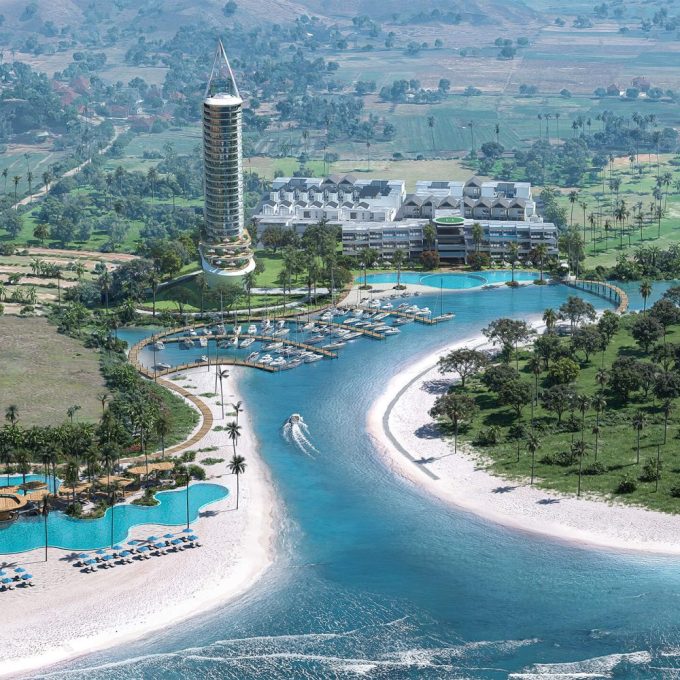
That conviction is why I acquired a significant amount of land and began developing plans for Nesara Bay City, a proposed coastal mini-city in South Lombok. It’s one of six mini-city projects we envisage for Indonesia. I have a direct commercial interest in the project, and the plans are part of my long-term view of the region. Nesara Bay City
Would I buy another Australian property today?
I would if the specific property made sense at today’s price, with today’s borrowing costs, and I could afford to hold it through a flat market. If I already had most of my wealth in Australia, I’d compare that purchase with what the same capital could do elsewhere before signing.
For an overseas investment, I’d want a clear answer on what I’m acquiring, whether I can legally rent it out, what I’ll keep after operating costs and tax, and who is likely to buy it from me later. For an off-plan purchase, I’d also want independent local legal advice on the land rights, approvals, payment milestones and what happens if delivery runs late. A lower entry price helps. The deal still has to work through vacancies, currency swings or a slower resale than you expect.
For Australians who want a home to live in and have the freedom to move, Bali and Lombok deserve a serious look. For investors, the case for looking overseas is strongest when another Australian purchase would add to an already concentrated portfolio. I’d make the next decision on what the property can do for me from here, at the price I have to pay today.














Leave a comment