


Topline
The Senate Judiciary Committee approved Todd Blanche to be attorney general on Tuesday, sending his nomination to the full Senate after Sens. John Cornyn, R-Texas, and Thom Tillis, R-N.C., reached a deal with the Justice Department to rescind its $1.8 billion “anti-weaponization” fund—though Democrats remain concerned the fund could still be revived.
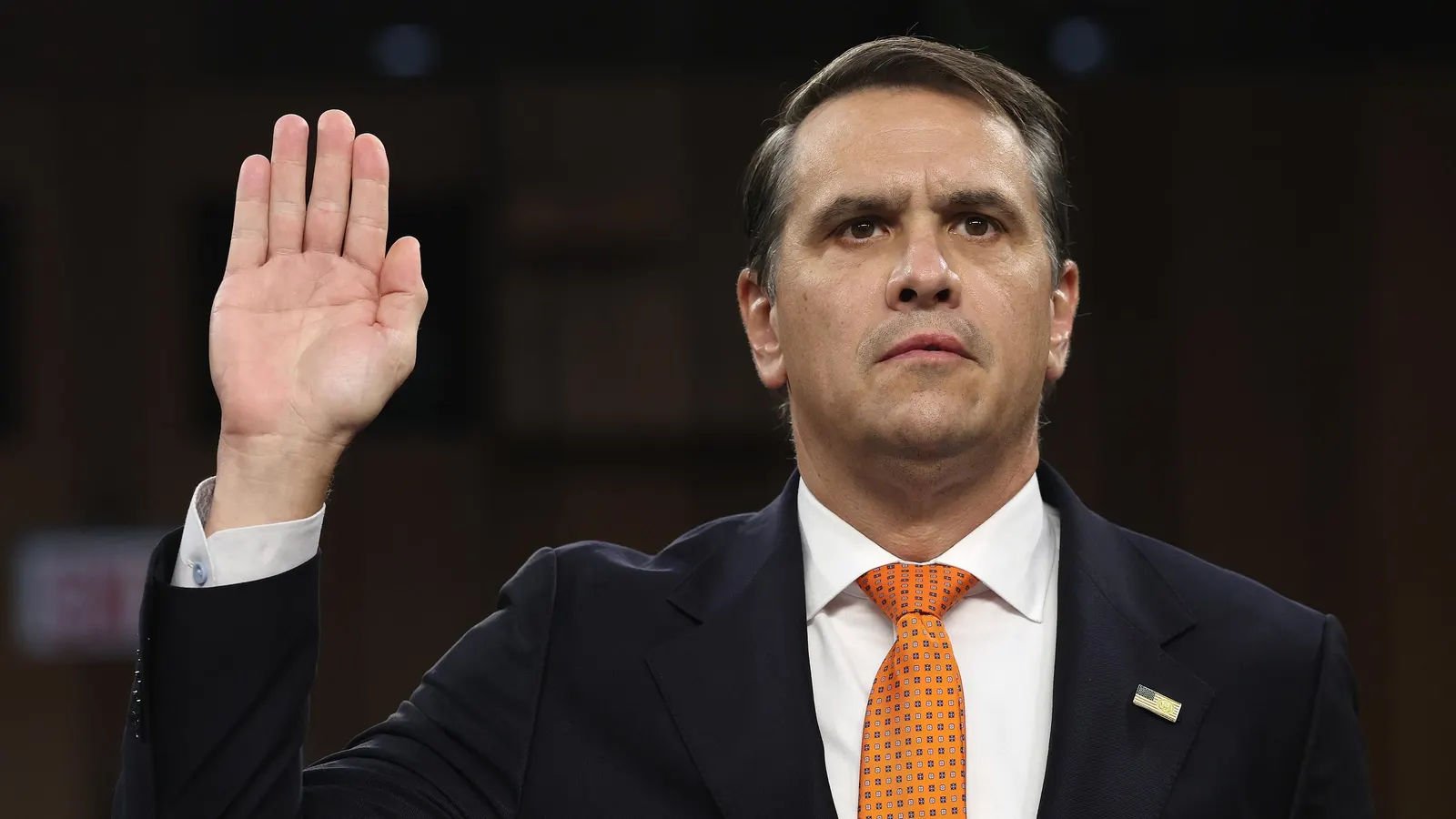
Acting Attorney General Todd Blanche gets sworn in at his confirmation hearing in front of the Senate Judiciary Committee on Capitol Hill on July 15.
Getty Images
Key Facts
The Senate Judiciary Committee approved Blanche’s nomination in a party-line vote Tuesday, with all Republicans voting in his favor and all Democrats voting against him.
The vote took place Tuesday after being postponed last week, after Cornyn and Tillis withheld their votes on Blanche until the DOJ modified Trump’s settlement agreement with the IRS, including by putting something in writing that killed its $1.8 billion anti-weaponization fund—meant to compensate people who felt the DOJ had been “weaponized” against them, including Jan. 6 rioters—and narrowed the scope of an agreement that appeared to give Trump and his affiliates broad legal immunity.
Cornyn and Tillis agreed to vote for Blanche after the nominee issued orders Sunday that said the fund was not moving forward and restricted the scope of the immunity agreement—despite concerns those orders are legally deficient, as the settlement agreement can only be modified with the written agreement of all the lawsuit parties, which Trump confirmed did not happen here.
Despite those concerns the fund could still be revived, Cornyn and Tillis said in speeches Tuesday they were pleased with the outcome of their negotiations with Blanche, with Cornyn saying he “expect[s] the department to live up to” its repeated claims the fund is dead and Tillis saying about the fund, “It’s done, it’s been rescinded and I am satisfied.”
Democrats blasted Blanche in speeches Tuesday, with Ranking Member Dick Durbin, D-Ill., arguing Blanche “continues to operate as the president’s personal lawyer” and Sen. Sheldon Whitehouse, D-R.I., saying the Sunday orders Blanche issued were “decorative” with “enough weasel room” in them “to drive a truck through.”
What to Watch for
Blanche’s nomination will now move to a full Senate vote, where he can only afford to lose two Republican senators in order to be confirmed. Though Cornyn and Tillis are now backing Blanche, there are still a few GOP lawmakers who haven’t publicly committed to voting for him and are considered potential swing votes, including Sens. Bill Cassidy, R-La., Lisa Murkowski, R-Alaska, and Susan Collins, R-Maine. Cassidy declined to comment on Blanche to reporters Monday, while Murkowski suggested the deal Blanche reached with Cornyn and Tillis was a “good step” and it “says a lot” that the GOP senators were satisfied. It’s also still unclear if the Senate will vote on Blanche’s confirmation before lawmakers leave for their August recess later this week, with Senate Majority Leader John Thune, R-S.D., saying Monday he’d “ideally” like to hold a vote before they leave. Blanche will still be able to serve as acting attorney general while senators are on vacation, if he isn’t formally confirmed before.
What Did Cornyn And Tillis Say Tuesday?
In a speech before the vote Tuesday, Cornyn noted how he “needed specific assurances in writing” about the IRS settlement in order to vote for Blanche, calling his requests “critically important to me” and other members of the Senate. Cornyn said he, Tillis and the DOJ reached a deal on Blanche issuing “an agency-interpretive guidance document” that modified the IRS settlement, and did not seem to suggest he believed the guidance was binding or didn’t have loopholes that could allow Blanche to still reinstate the deal. Rather, the Texas senator suggested he trusted the DOJ when they’ve said in court the fund is dead and won’t be revived. Cornyn backed Blanche’s confirmation more broadly, referring to him as a “strong legal mind” and saying the country needs a “stabilizing force at the Department of Justice” rather than a temporary appointee. Tillis, similarly, said he was satisfied with the deal they reached with Blanche and did not argue it was binding, saying only he “believe[s] that we have addressed the concerns” that Cornyn and Tillis had about the settlement fund.
Could The $1.8 Billion Anti-Weaponization Fund Be Revived?
While Cornyn and Tillis are now trusting Blanche when he says he the $1.8 billion fund is dead, it would legally still be possible for the Trump administration to revive it. Since Blanche’s order Sunday—which states,“This Order establishes, beyond any doubt, that there is no fund”—was only signed by him, it doesn’t follow the requirement in the settlement agreement stating it can only be modified “with the written agreement of the parties.” That means there would legally not be anything stopping Blanche from simply repealing Sunday’s order and reinstating the fund, with Durbin commenting Tuesday the fund “can easily be revived with a new order from the Department of Justice 15 minutes after” Blanche is formally confirmed. Trump or other parties in the IRS lawsuit, like his eldest sons, could also theoretically sue the DOJ for breach of contract and allege they should reinstate the fund because they didn’t agree in writing to killing it. If they don’t revive the anti-weaponization fund in its present form, it’s also possible the Trump administration could try to get payouts to political allies in other ways, such as by creating a new fund or paying out individual settlements to allies who bring lawsuits. Whitehouse argued Tuesday that even if the DOJ doesn’t try to revive the fund, the fact Blanche okayed it in the first place suggests he shouldn’t be confirmed. Likening the DOJ backing off the fund to a burglar who was “forced to give back some of the jewelry he stole,” Whitehouse said, “Being forced to give back some ill-gotten gains doesn’t mean you’re not still a burglar.”
Key Background
Blanche formerly served as Trump’s personal attorney before being appointed as deputy attorney general, with the president then elevating him to acting attorney general and nominating him for the permanent job after previous AG Pam Bondi was fired in April. The attorney had also previously served in the DOJ in a variety of jobs, including as an assistant U.S. attorney, before going into private practice and eventually representing Trump. Blanche’s confirmation has been widely controversial given issues like Trump’s IRS settlement and the agency’s handling of the Epstein files, which resulted in a number of victims’ information not getting properly redacted while other information was improperly kept private. The $1.8 billion fund has become particularly controversial even among Republicans, and Cornyn and Tillis said they would not support Blanche without something in writing that rescinded the fund. Blanche issued his orders appearing to kill the fund late Sunday after a week of negotiations, with Cornyn and Tillis claiming an unnamed White House advisor appeared to be blocking the DOJ from making a deal.
















Leave a comment