


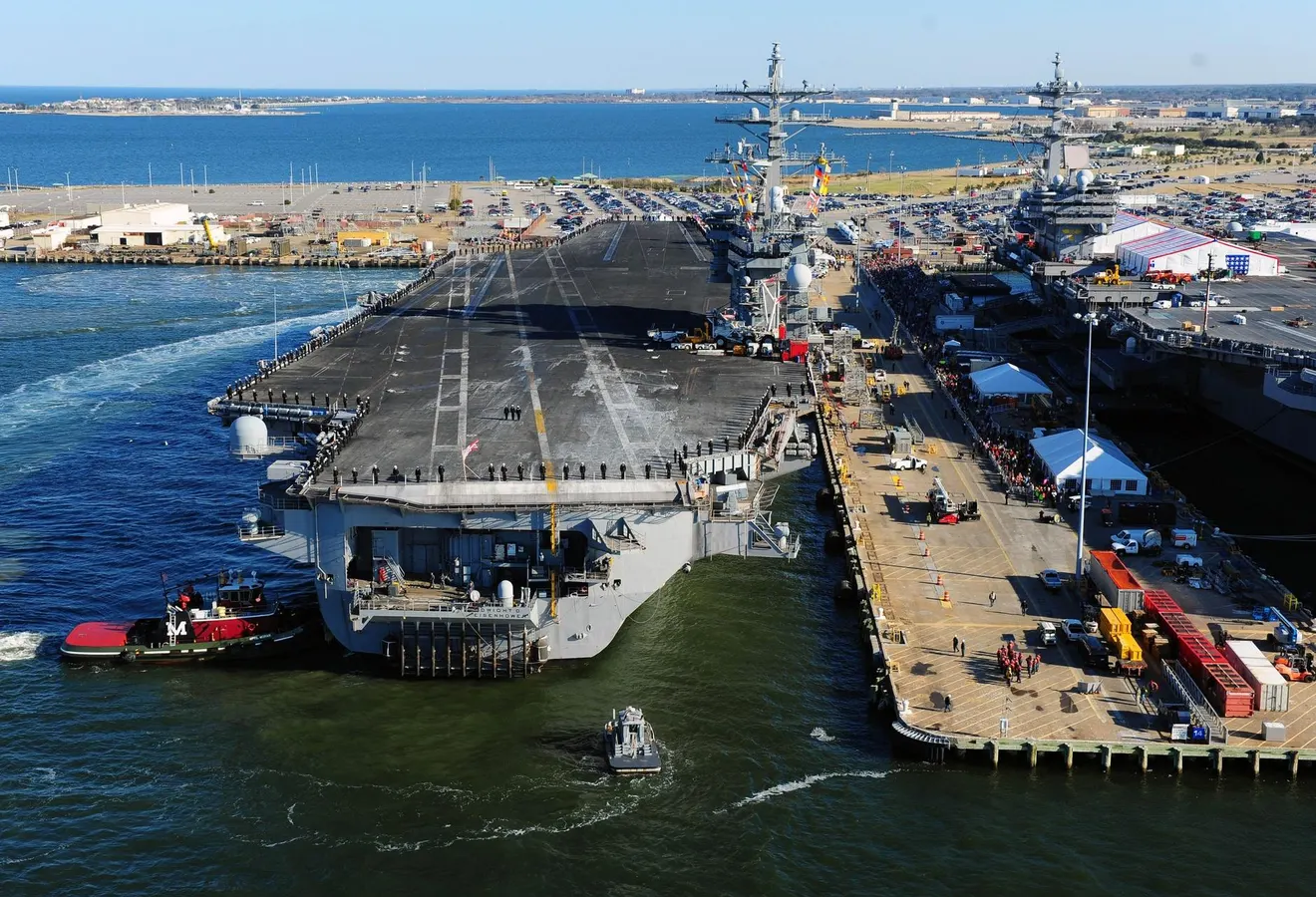

The Nimitz-class aircraft carrier USS Dwight D Eisenhower makes its approach pier side at Naval Station Norfolk, Virginia, December 19, 2012. Image courtesy US Navy Mass Communication Specialist 3rd Class Kevin J Steinberg. (Photo via Smith Collection/Gado/Getty Images).
Getty Images
The United States Navy’s second-oldest Nimitz-class nuclear-powered aircraft carrier, the USS Dwight D. Eisenhower (CVN-69), completed its Planned Incremental Availability in April ahead of schedule. The Naval Station Norfolk, Va.-based supercarrier is now preparing for its next deployment, which is expected to begin later this year or in early 2027.
Although previous plans had called for the carrier to be slated for inactivation as early as 2027, the United States Navy pushed her retirement time to sometime between 2029 and 2031 to ensure operational overlap with the rollout of the third Gerald R. Ford-class carrier, the future USS Enterprise (CVN-80). The delivery of CVN-80 was originally scheduled for March 2028, but its handover shifted to July 2030.
CVN-69 has received significant upgrades, including the installation of advanced combat systems. That has included the integration of the Ship Self-Defense System with AN/SPQ-9B radar tracking, SLQ-32(V) electronic warfare suites, and new MK-29 ESSM/Rolling Airframe missile launchers. What that means in simple English is that despite nearly 50 years in service, the vessel is able to address current and emerging threats.
Improved Creature Comforts
One of the more significant updates that USS Dwight D. Eisenhower has received during the recently completed PIA was to its Library Multimedia Resource Center, the space that serves as a shipboard library and media room. When she was commissioned in October 1977, the crew had little more than a small library with some books and magazines.
The concept of the LMRC has evolved, and it now features traditional book collections with computers, Internet access, and digital learning stations. These facilities are designed to support both the professional education and recreational downtime of the crew.
The United Service Organization, which collaborated on the renovation of CVN-69’s LMRC, is proud of its effort.
“Stepping into the LMRC, Sailors are transported to a space unlike any other aboard IKE. More reminiscent of home-improvement magazines than a U.S Navy warship, the center has stocked bookshelves, televisions, a coffee and snack bar, brand-new gaming consoles, computers, POTS [Ship-to-shore telephones] to allow Sailors to communicate with loved ones, and LED signage lining the pastel walls,” the U.S. Navy media statement explained.
The service acknowledged it was no easy task.
Planning for the renovation began more than two years ago during the supercarrier’s previous deployment. Work then began on the massive overhaul during the IKE’s PIA maintenance period. That included significant structural and electrical upgrades that were completed to create “a more inviting atmosphere.”
The building of the LMRC shouldn’t be dismissed, especially as the carrier is essentially a floating air base that is home to more than 5,000 personnel, including the carrier air wing. As each U.S. Navy flattop is now seeing increasingly longer deployments, the crew requires quiet places to unwind during their downtime.
USS Dwight D. Eisenhower’s (CVN 69) Command Religious Ministries Department reopens the Library, Multimedia, Resource Center (LMRC) after renovation, June 19, 2026
(U.S. Navy photo by Mass Communication Specialist Mass Communication Specialist 2nd Class Miguel Santiago)
Aboard the USS Dwight D. Eisenhower, there was the installation of false walls in the LMRC that were meant to provide a feeling of privacy. The Command Religious Ministries Department, which also collaborated on the renovation, worked with the aircraft carrier’s electrical division to ensure that the facility received the unique power requirements.
“We needed new electrical outlets added to different places we didn’t have before to put the TVs, gaming consoles, DVD players, and [electronic] fireplace that we have in place now,” said Lt. Jesus Dominguez, CRMD division officer. “All of that needed to get redone and we couldn’t have done it without E-DIV.”
The USS Dwight D. Eisenhower completed her most recent overseas deployment in July 2024, after spending more than nine months at sea, which included seven months conducting combat operations protecting commercial shipping in the U.S. 5th and 6th Fleets areas of responsibility, including the Red Sea. During the extremely combat-intensive deployment, CVN-69 spearheaded Operation Prosperity Guardian in the Red Sea and Gulf of Aden to protect international shipping lanes from relentless attacks by Iranian-backed Houthi rebels.















Leave a comment