


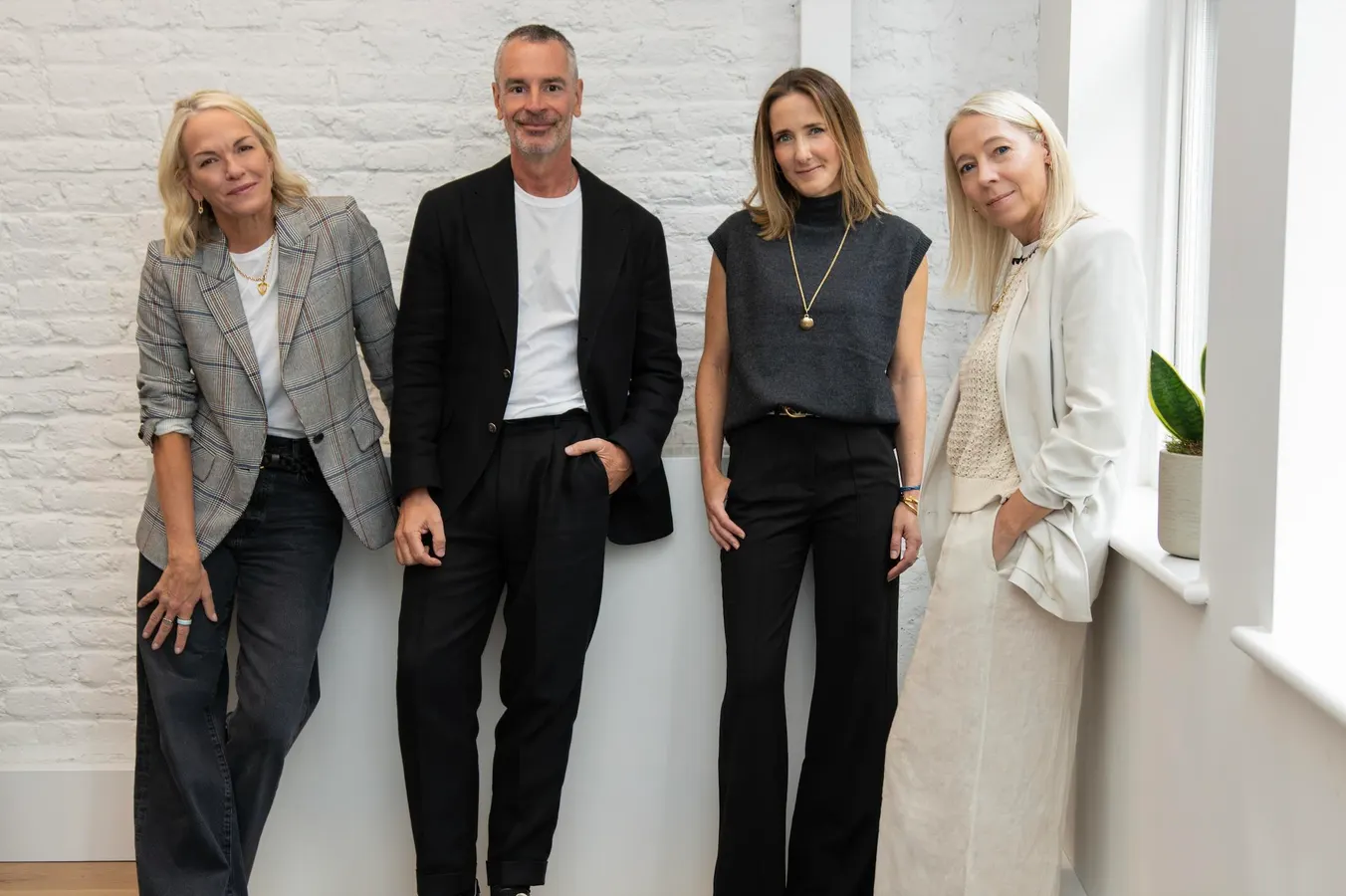

L-R: Elisabeth Murdoch, Anthony Freedman, Lucinda Hicks, Jane Featherstone (Photo Credit: Adrian Jordan).
Courtesy of Adrian Jordan
SISTER Group, the studio co-founded by Elisabeth Murdoch and Jane Featherstone, has taken a minority stake in Common Interest, the communications and entertainment group founded by Anthony Freedman. The investment underpins a partnership, announced on Wednesday, to develop entertainment with brands involved from the beginning.
In a video interview with me, Freedman and SISTER Group CEO Lucinda Hicks described the deal as a response to a changing entertainment economy: tighter budgets from broadcasters and streamers, pressure on producers’ ownership of IP and the growing value of building direct relationships with audiences.
Neither company is saying how large the investment is. They are not disclosing how many projects are in development or what they cost, and no brand partners on the new slate have been named.
Freedman is clear about what the stake is for. Partnerships are announced all the time, he says, and many are wafer thin, with little more substance than the headline of the press release. The equity is there to anchor this one. The capital goes toward Common Interest’s branded entertainment work and its expansion in North America, and he says neither business has any intention of a merger.
That makes this less a story about the size of a new financing model than about what SISTER wants the model to do. The group behind Black Doves and Chernobyl is looking for ways to build audiences and intellectual property without beginning every project with a broadcaster or streamer ordering it.
In other words, brands are not simply replacing broadcasters and streamers as buyers. The experiment is whether entertainment IP can behave like a brand before anyone tries to turn it into a show.
The breadth of the two groups gives them more ways to test that idea. SISTER spans film and TV, podcasts, publishing, live entertainment and digital-first production, while Common Interest’s eight companies include Baby Teeth, which created and produced Finding Jamie, and Amplify, alongside brand strategy, cultural intelligence and communications businesses.
Freedman describes the combined capabilities as an embarrassment of riches: the partnership can choose the format around the audience, budget and commercial objective rather than deciding at the outset whether an idea is a television show, vertical series, podcast or live experience.
What Jamie Oliver Already Owned
There is a useful contrast in Finding Jamie While He’s Finding Himself, the vertical comedy created and produced by Common Interest’s Baby Teeth for the Jamie Oliver Group in partnership with Life360, which I wrote about in August.
Oliver, the British chef and television presenter, came to that arrangement with the valuable pieces already assembled. His business owned the underlying IP, operated its own channels and had an established audience. Life360 could finance entertainment around all of that without needing to own any of it. What it bought was access to attention Oliver had already accumulated.
SISTER and Common Interest are proposing something earlier in the process.
“We are trying to think about our content and our ideas as brands right from the beginning,” says Hicks, describing a model that can begin with an audience or a community rather than with a script.
The conventional economics of production explain the timing. The latest census from Pact, the UK producers’ trade body, found that UK primary commissioning revenue fell 4.7% to about $2.2 billion (£1.65 billion) in 2025. Revenue from non-TV work, including feature films, events and advertising, has more than doubled since 2022.
Hicks points to another pressure: producers giving up control of IP through their commercial relationships with the platforms, and with the streamers in particular. Brand money is one response, but retaining rights is not automatic. She and Freedman both say ownership will be agreed upfront, project by project.
What Has Changed Since 2010
Branded entertainment is hardly a new diversification strategy for production companies. In October 2010 FremantleMedia took a majority stake in @radical.media, the New York production company behind brand-backed series including Iconoclasts on the Sundance Channel, in a deal its parent Bertelsmann described as part of a plan to broaden and diversify the business through new business models and customer groups.
What has changed is the surrounding economics. That deal came before streaming reshaped how television was financed and ordered, and before talent and production companies could routinely build distribution of their own through YouTube, TikTok and other direct channels. Today, controlling the relationship with an audience is itself an economic asset.
Brands “really covet the audience attention that the entertainment industry has been able to curate,” Freedman says. The opportunity, as he sees it, is to redirect some of the money spent renting attention through paid media into entertainment people choose to watch.
That does not make every brand a commissioner. Freedman describes brand involvement as a continuum, from participation in a finished format through to funding a project from the start.
Nor does it mean SISTER intends to make the next Black Doves with a logo attached. Hicks resists that reading as too narrow. The point of the combined portfolio is that the idea does not have to start as television at all.
That is the real distinction. Jamie Oliver came to Finding Jamie with an audience, distribution channels and a brand already in place. SISTER and Common Interest are betting they can build those things around IP before a streamer, broadcaster or advertiser arrives to buy access to them.










Leave a comment