


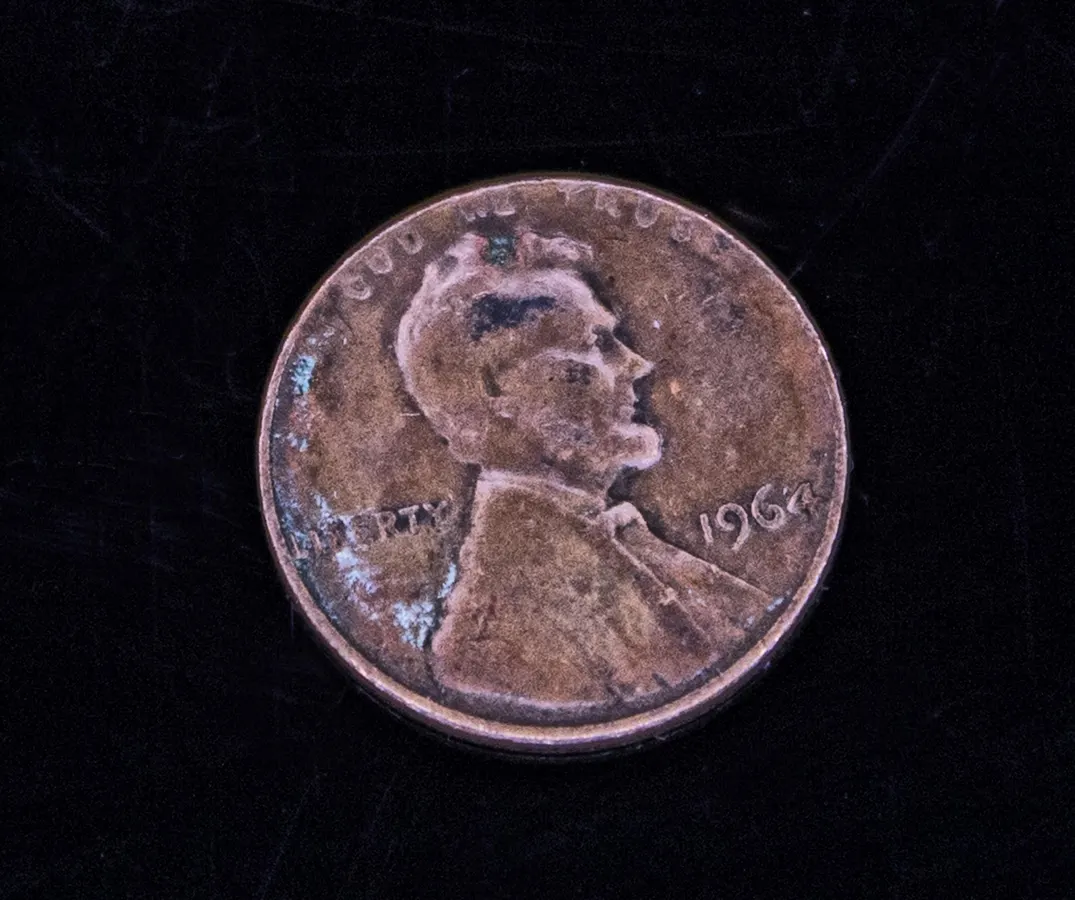

U.S one cent 1964 dated copper penny (Photo by Bill Tompkins/Getty Images)
Getty Images
Right now, retail has 99 problems, and the penny is one.
In November 2025, the U.S. Mint officially halted its production of pennies for general circulation, although the last pennies intended for circulation had already left the Mint in July. More than a year after those coins entered circulation, retailers still lack clarity on how to navigate the coin’s gradual phaseout.
The House-passed Common Cents Act is now under committee review with the Senate and could provide some answers, but it will not eliminate the work retailers need to do to adapt to these decisions beyond their control. Retailers are already navigating a proliferation of state and even local legislation governing extended producer responsibility (EPR), self-checkout (SCO) and automation.
The decision to end penny production was made at the federal level, but responsibility for navigating the transition is increasingly falling to states and retailers. Caught in the middle are some of the country’s most vulnerable populations, as cash-paying customers are more likely to be older or from lower-income households.
As the penny phaseout continues, questions remain about regulatory conflicts, retailer costs and pricing decisions, consumer equity and whether international experience offers a clear path forward.
Is A Penny Saved Really A Penny Earned For Retailers Facing Rounding Costs?
Machines used to strike the penny coin at the US mint (Photo by Demetrius Freeman/The Washington Post via Getty Images)
The Washington Post via Getty Images
Ending penny production is expected to save the U.S. Mint $56 million annually. Retailers, however, will not necessarily share in those savings. Over time, they could benefit from some long-term savings from reduced labor associated with counting and reconciling pennies. In the short term, however, costs from point-of-sale (POS) programming, required in-store signage on rounding policies, compliance costs and losses from rounding down have the potential to compound.
No two retail transactions are ever exactly the same. Multiple payment methods, split-tender options, partial returns, varying tax rates and promotional discounts are just some of the scenarios POS software must process and employees must be trained to manage.
Before retailers see any benefit from spending less time ordering, transporting, counting and reconciling pennies, they must first absorb the cost of modifying their checkout process. The National Conference of State Legislatures (NCSL) estimates this modification to POS systems could take six to nine months. That clock starts once legislation is finalized, and will extend beyond POS to enterprise resource planning (ERP), accounting and other business software.
Supermarket System point-of-sale computer (Photo by IBM/PhotoQuest/Getty Images)
Getty Images
Although always rounding down may be the easiest policy to explain and most favorable to customers, costs have the potential to accumulate quickly for businesses processing millions of transactions or operating on razor-thin margins. The National Restaurant Association estimates that prolonged customer-favorable rounding could cost restaurant operators between $13 million and $14 million a month. A retailer that opts for a symmetric rounding policy instead could face branding challenges and risk customer satisfaction while isolating those paying cash.
Why Brand Perception Is Worth Every Penny In Rounding
Even when the difference is only one or two cents, the retailer must explain a payment disparity created by a policy it did not initiate. Signage, register prompts, receipts and employee explanations all shape whether customers view rounding as a reasonable adjustment or another example of being nickel-and-dimed. Retailers are already contending with customer concerns on self-checkout practices, surveillance pricing and electronic shelf labels, with penny rounding adding another potential point of friction at checkout.
99 cent pizza place (Photo by Alexi Rosenfeld/Getty Images)
Getty Images
One distinctive problem rounding presents is the implications for retail pricing. Research on consumer psychology has long shown that $X.99 pricing can be viewed as more attractive. However, when an apple advertised at $0.99 instead results in a $1 total for a cash-paying customer, it creates a clear disconnect. Although the Common Cents Act’s safe harbor is broad, it does not specifically address how authorized rounding would interact with Federal Trade Commission (FTC) requirements governing deceptive or false price advertising when the advertised price differs from the final cash total.
The phaseout of the penny is unlikely to bring an end to $X.99 pricing. Multiple products, discounts, loyalty offers and sales taxes make the final digits of a basket difficult to predict from any one price ending. Over time, however, retailers may begin evaluating whether certain promotions, bundles or low-ticket offers create an outsized number of cash adjustments.
Beyond the compliance considerations, rounding could alter how consumers perceive $X.99 pricing, particularly for independent 99-cent stores whose names and value propositions remain tied to that price point. Dollar Tree, Five Below and other price-led retailers have already demonstrated how recognizable price thresholds can evolve when operating economics change.
These decisions will ultimately reach the consumers at the register. A retailer’s choice to round down or round symmetrically will determine whether customers pay less, pay more or face pressure to use another form of payment. The amounts may be small, but they will not be experienced equally.
How Penny Rounding Could Nickel And Dime Consumers At Checkout
Research offers widely varying estimates of the cost to consumers. One study estimated an annual cost to consumers of up to $818 million, while a more recent Federal Reserve Bank of Richmond analysis estimated a comparatively smaller annual cost of $6.06 million.
Even if rounding adjustments largely even out across their transactions, the aggregate results will not describe every customer’s experience. The math will be determined by where the consumer shops, the retailer’s rounding policy, the final amount of each purchase and, most significantly, how frequently cash is used.
Eccles Building of the Federal Reserve (Photo by Brooks Kraft/ Getty Images)
Getty Images
Cash remains particularly relevant for businesses that process a higher share of cash transactions, including restaurants and convenience stores, as well as for smaller purchases and for customers who are older, have lower incomes, live in rural areas or have limited access to traditional financial services. For these shoppers, switching to a card or digital wallet may not be a simple alternative, hence the existence of cash-payment laws. Many of these services come with their own fees that could negate any savings from rounding. A Federal Reserve study based on payment activity in 2025 found that consumers age 55 and older averaged 10 cash payments per month, compared to two for those aged 18 to 24.
The overall cost ultimately faced by these households may be small, but it will not necessarily be shared equally. These estimates also remain projections. The experiences of countries that have already eliminated low-denomination coins may offer a more practical indication of what U.S. retailers and consumers can expect.
Penny-Wise Or Pound-Foolish? What Other Nations’ Phaseouts Teach The U.S.
The U.S. is not the first country to drop its lowest-denomination coin. Canada, Australia and New Zealand have executed similar shifts.
Close-up of Canadian Coin
getty
Canada halted production of its one-cent coin in 2012 and distribution in 2013 after a short transition period, while existing pennies remain legal tender. The government provided national guidance for cash transactions to effectively use symmetrical rounding to the nearest five cents. Like the proposed bill in the U.S., this guidance did not act as a strict legal mandate. Any retailers with operations across the border may already have firsthand experience handling such a transition.
Australia withdrew its one-cent and two-cent coins in 1992, while New Zealand removed those denominations in 1990. Both countries established standard practices for rounding final cash totals while allowing electronic payments to remain exact.
New Zealand took the transition one step further by eliminating its five-cent coin in 2006 and moving cash rounding to the nearest ten cents. Its experience raises the question of whether the U.S. nickel could eventually follow the penny. In 2024, producing and distributing a nickel cost 13.8 cents, and the penny phaseout could increase demand for the coin, making these costs more visible.
For U.S. retailers, the fact that other countries rely largely on symmetrical rounding offers some confidence this policy can be widely adopted. Those transitions, however, benefited from national guidance established before production of the affected coins ended. The possibility that the nickel could eventually follow the penny also strengthens the case for systems that can accommodate future changes in currency. U.S. retailers must still contend with an evolving and uncertain regulatory landscape.
What Exact Change Costs Retailers
Log Cabin Home Built Of Toy Lincoln Logs. (Photo by H. Armstrong Roberts/ClassicStock/Getty Images)
H. Armstrong Roberts/ClassicStock
The federal government stopped producing the Lincoln penny before building a framework for operating without it. Retailers are now challenged to assemble their own operational framework from a scattered set of state rules, like a box of Lincoln Logs without instructions.
The $56 million the U.S. Mint expects to save each year is easily quantified, but the downstream costs that will be absorbed by retailers and consumers remain uncertain.
Context matters. What saves the federal government money can create new costs for retailers and different outcomes for consumers. That does not mean the penny, or even the nickel, should continue to be produced. It does, however, mean that the phaseout cannot be measured solely by the savings of the U.S. Mint.















Leave a comment