


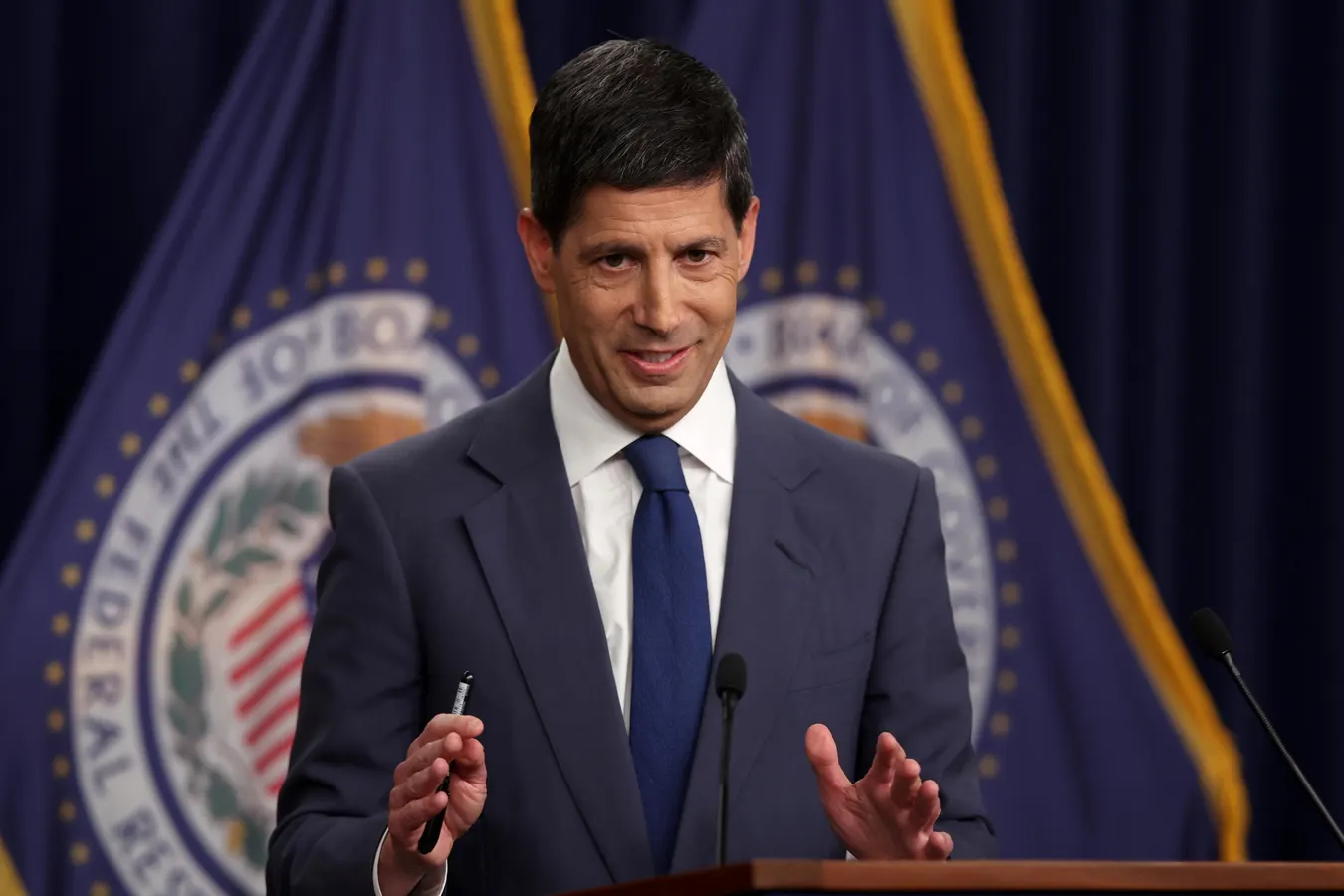

WASHINGTON, DC – JULY 29: Federal Reserve Chair Kevin Warsh speaks during a news conference as the Federal Open Market Committee is expected to hike interest rates one more time in 2026 (Photo by Win McNamee/Getty Images)
Getty Images
Markets are increasingly pricing in the possibility that the Federal Reserve’s September rate hike was only the start of a broader tightening cycle, with futures now implying a meaningful chance of consecutive increases before year end.
Markets See Room For Two More Hikes
Markets increasingly imply that the Fed could raise rates at both remaining scheduled meetings of 2026, on October 28 and December 9. This scenario is not yet the base case, but futures currently assign it roughly a four‑in‑ten probability, according to the CME FedWatch Tool. Markets also see a small chance of rate increases continuing into January, though current forecasts make that unlikely.
This shift follows a September hike, the first under new Fed Chair Kevin Warsh, as inflation has not shown signs of deceleration. Historically, in several tightening cycles, once the Fed begins raising rates, a sequence of hikes can follow. Still, the FOMC is moving away from forward guidance, making policymakers’ future intentions less clear.
For now, the FOMC remains focused on inflation as the labor market holds steady. In its September 16 statement, the Committee noted, “Job gains have kept pace with the workforce, and the unemployment rate has changed little. Inflation remains elevated. Today’s policy action will support a timelier return to the Committee’s 2 percent goal. The Committee will deliver price stability.”
Fuel Costs Push Inflation Higher
Two factors appear to have nudged the FOMC toward increasing rates after a period of watching the data. First, fuel prices have risen materially. Brent Crude climbed back above $100 a barrel after falling into the $70s in early July. That increase mechanically pushes inflation higher because energy costs feed directly into price indexes. Analysts attribute the rise partly to supply chain disruptions linked to the Iran conflict.
Core Inflation Moves Up
Beyond fuel costs, core inflation — which excludes food and energy — rose 0.3% month over month in the August Consumer Price Index report. That pace suggests broad price pressures above the FOMC’s 2% annual goal and offered no evidence that inflation is cooling. The next CPI report is scheduled for October 14.
What To Watch Next
Much will depend on incoming inflation data. If inflation doesn’t show signs of deceleration and the labor market remains robust, the FOMC may be inclined to raise interest rates further as it prioritizes returning inflation to target. Fixed-income markets have begun to price in that possibility.












Leave a comment