


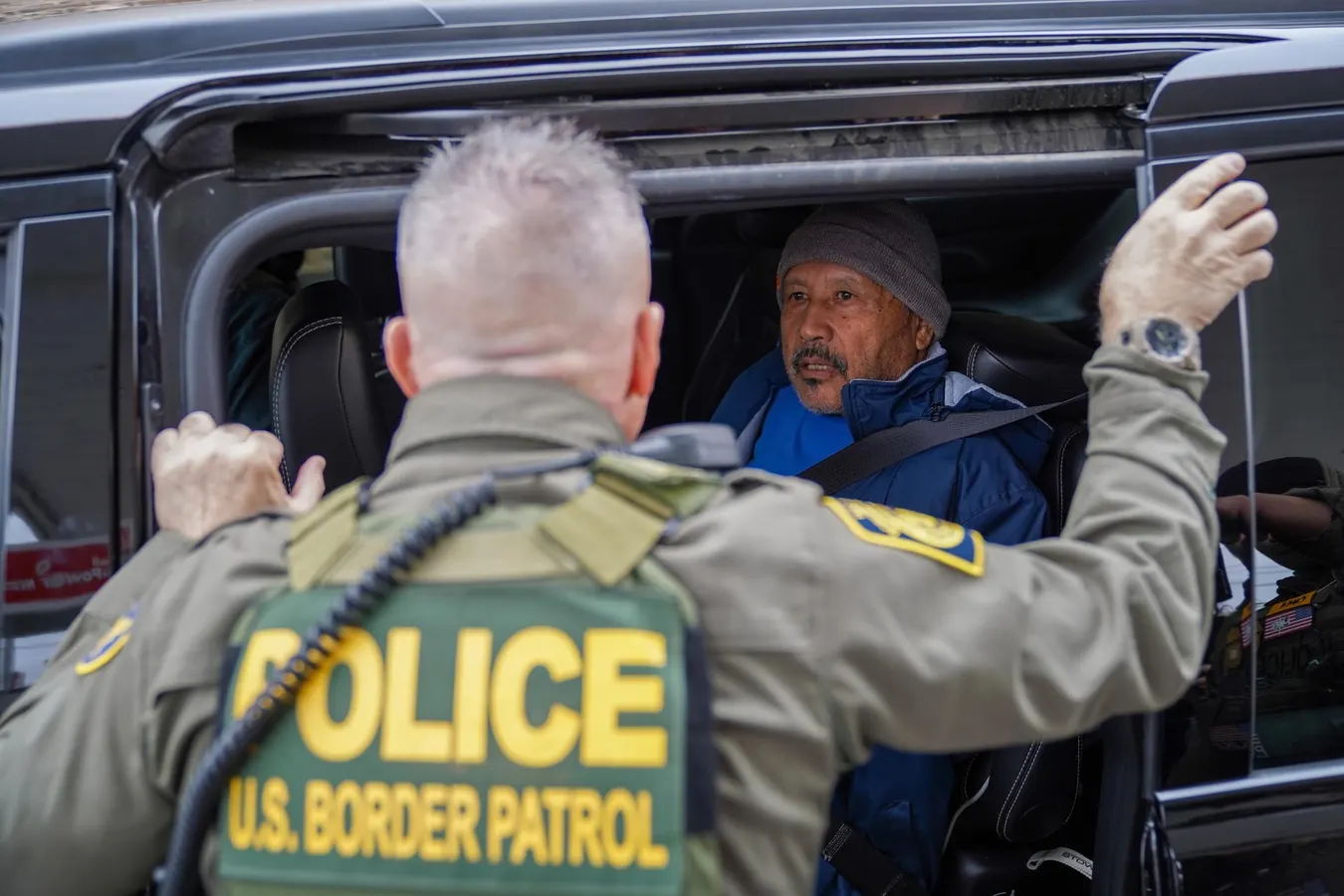

Thousands of Non-US citizens are arrested in the U.S. on federal charges. A focus has been returning these former inmates back to their home countries.
Getty Images
The federal government spends more than $1 billion a year incarcerating people who are not citizens of the United States, many of whom will eventually be deported.
A new report from the Government Accountability Office provides a detailed look at this often-overlooked segment of the federal prison population. According to the September 28, 2026 report, the Federal Bureau of Prisons incarcerated approximately 129,200 unique noncitizens between fiscal years 2017 and 2024. Over that period, noncitizens represented approximately 24% of all individuals incarcerated by the BOP.
The numbers have been falling. The average number of noncitizens in BOP custody declined 44%, from approximately 36,300 in fiscal year 2017 to 20,300 in fiscal year 2024. Still, incarcerating this population comes at a significant cost. GAO estimated that BOP spent approximately $8 billion incarcerating noncitizens from fiscal years 2016 through 2023, including approximately $1.1 billion in fiscal year 2023.
Those numbers raise a larger question at a time when BOP is trying to reduce costs and make better use of limited prison resources: Should more foreign nationals serving federal sentences be allowed to complete those sentences in their home countries?
How Noncitizens End Up In Federal Prison
Being a noncitizen is obviously not itself a reason for incarceration. Foreign nationals end up in BOP custody in the same fundamental way a U.S. citizen does, which is through conviction in federal court and a sentence of imprisonment. However, the types of offenses differ considerably.
According to GAO, more than half of the offenses for which noncitizens were incarcerated during the period it examined were immigration related. Another 30% were drug offenses.
The population also includes lawful permanent residents and other individuals who were legally present in the United States before their convictions. GAO specifically defines “noncitizen” broadly to include anyone who is not a U.S. citizen or national, regardless of immigration status.
Nearly 70% of the approximately 129,200 noncitizens incarcerated by BOP between fiscal years 2017 and 2024 were citizens of Mexico. Another 18% came from Honduras, the Dominican Republic, Guatemala, El Salvador and Colombia.
For many of these prisoners, however, the end of the federal prison sentence does not mean returning to an American community. It usually means being transferred to Immigration and Customs Enforcement (ICE) before being deported from the United States.
Prison Is Different For Noncitizens
A federal prison sentence is measured in months, but two people receiving the same sentence do not necessarily have the same experience or the same opportunities for early release.
It is important to distinguish between someone simply being a non-U.S. citizen and someone whom immigration authorities have determined is removable. An immigration detainer, deportable-alien classification and final order of removal can have different consequences under BOP policies and federal law.
The differences become particularly significant near the end of the sentence.
BOP has been emphasizing greater use of minimum-security prison camps and community placement to reduce costs and prepare prisoners for release. In May 2026, BOP announced an initiative to transfer eligible prisoners from higher-security institutions to minimum-security camps after they receive a Residential Reentry Center, commonly known as a halfway house, or home-confinement placement date. But the BOP specifically excluded “deportable aliens” from that initiative.
That can leave a foreign national serving time at a conventional BOP institution while another prisoner with a comparable sentence and security profile progresses through a camp, halfway house and potentially home confinement.
The reason is understandable. The government is preparing one prisoner to return to an American community while preparing the other for possible removal from the country. But this it creates a very different prison experience.
The First Step Act Has Another Important Distinction
Eligible prisoners can earn First Step Act time credits by successfully participating in evidence-based recidivism reduction programs and productive activities. Those credits can ultimately be applied toward prerelease custody or supervised release.
A deportable noncitizen can earn First Step Act time credits, but there is an important catch.
BOP states that someone subject to a final order of removal under immigration law cannot apply those credits toward an earlier release.
Someone might spend years participating in qualifying programming and accumulating credits that appear on a BOP computation, yet those credits may not move that person into a halfway house, home confinement or supervised release if there is a final order of removal.
This is one reason discussions about First Step Act eligibility can become confusing. Earning credits and being permitted to apply them are two different things.
The Residential Drug Abuse Program presents another area where immigration status is sometimes misunderstood.
RDAP is BOP’s intensive residential substance-abuse treatment program. For qualifying prisoners, successful completion can result in a sentence reduction under 18 U.S.C. §3621(e), potentially worth up to one year.
But immigration status can complicate the benefits associated with the program, particularly when a prisoner has an immigration detainer or is expected to be removed rather than released into the United States. The distinction is important because participation in treatment and eligibility for a particular early-release or community-placement benefit are not necessarily the same thing.
Most Are Eventually Removed
Perhaps the most striking number in the GAO report concerns what happens after prison.
GAO identified approximately 111,200 noncitizens who completed at least one term of federal incarceration between fiscal years 2017 and 2024. ICE had removed approximately 84,800 of them, or 76%, from the United States as of December 2025.
GAO identified approximately 88,200 released noncitizens with executable final orders of removal. ICE eventually removed approximately 96% of them. In other words, for a significant portion of this population, the government knows where the individual is likely going when the sentence ends.
Existing Program Can Do To Return Noncitizens Sooner
The United States already has a mechanism for transferring some foreign nationals to their home countries to complete their prison sentences.
The International Prisoner Transfer Program has existed for decades. The United States has prisoner-transfer relationships with more than 85 countries through bilateral agreements and multilateral conventions. Transfers generally require the prisoner’s request and approval from both governments.
A transferred prisoner remains a prisoner in their own country. Instead of serving the remainder of the sentence in a U.S. federal prison at American taxpayer expense, the individual is transferred to authorities in his or her home country to continue serving the sentence there.
DOJ’s Office of International Affairs administers the program. BOP case managers are supposed to notify eligible foreign nationals about treaty-transfer possibilities and forward applications through BOP’s Central Office to DOJ for review. DOJ considers treaty eligibility, law-enforcement concerns, rehabilitation, the interests of justice and humanitarian considerations when deciding whether to approve a transfer.
The receiving country must also agree.
The Savings Can Be Significant
There is recent evidence of what greater use of treaty transfers could mean financially.
In 2025, DOJ transferred 14 Mexican nationals serving federal drug sentences to Mexico under the U.S.-Mexico prisoner-transfer treaty.
Those 14 prisoners had approximately 96 years remaining on their combined sentences. DOJ estimated that transferring them would save the United States more than $4 million in incarceration costs.
Fourteen prisoners will not meaningfully change BOP’s multibillion-dollar budget. Thousands potentially could. However, states are moving to deport non-U.S. citizens to both reduce costs and to reduce jail populations across the country.
GAO estimates that incarcerating noncitizens cost BOP approximately $1.1 billion in fiscal year 2023 alone. Perhaps even more notable is that the cost increased from approximately $935 million in 2021 even though the number of noncitizens incarcerated remained relatively stable.
BOP has been searching for ways to reduce operating expenses, make better use of prison camps, expand home confinement and move appropriate prisoners into less expensive community settings.
Foreign-national prisoners deserve to be part of that discussion.
















Leave a comment