


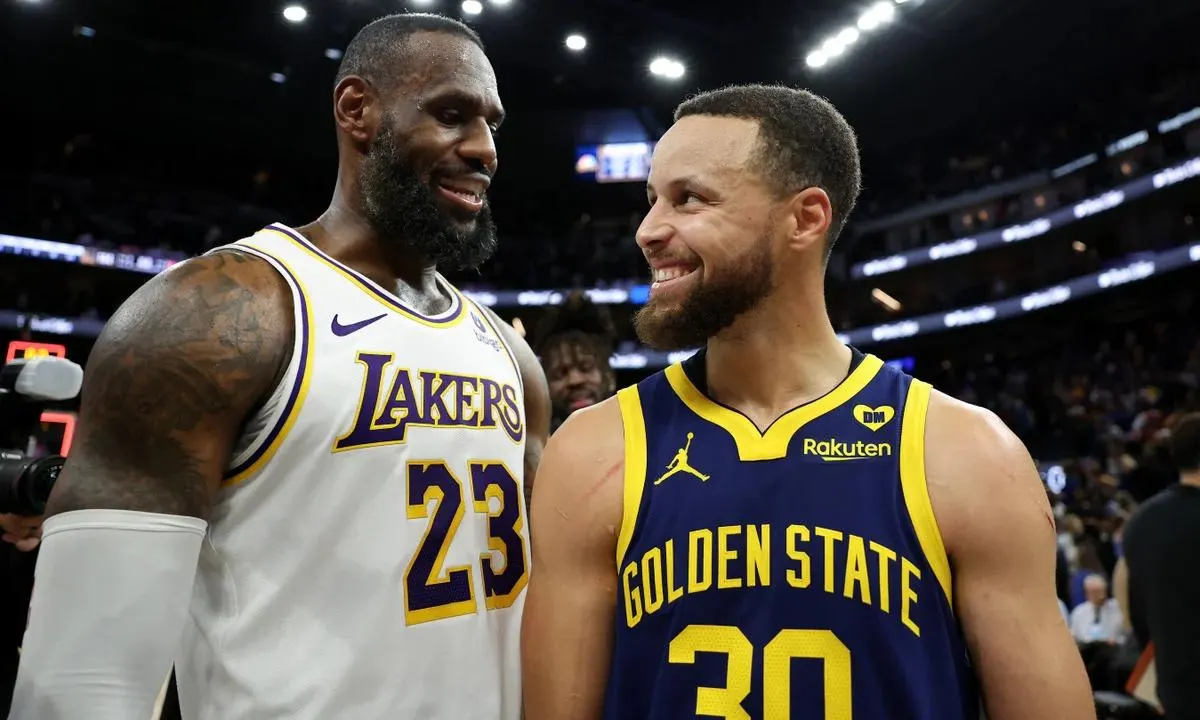

Forbes list of the most valuable NBA teams
The Guardian
Each heading sits before the 7th and 13th paragraphs of 18, which also land close to the one-third and two-thirds marks by word count. The text itself is untouched.
Joe Lacob and Peter Guber bought the Golden State Warriors in 2010 for $450 million. The Dubs team played in Oakland back then. Fifteen years later, Sportico values the franchise at $11.33 billion. The Warriors’ rise has been powered by basketball success. However, that’s not all there is to it. The organization’s biggest business decision may have been moving across the Bay.
Chase Center opened in San Francisco in 2019 as the centerpiece of an 11-acre development. The privately financed arena was built by itself. It stood alongside restaurants, offices, public plazas, and retail space. This created an ecosystem that thrived beyond Warriors games. Sportico cited the arena and surrounding Thrive City development when it placed Golden State at the top of its 2025 NBA valuations.
The basic idea is quite simple. An NBA team controls 41 regular-season home games. This number can jump by double digits if they make the playoffs. However, an arena can host hundreds of events in a year. The Warriors can make money from concerts, premium seating, sponsorships, and other events while the team is on the road or out of season.
That distinction has become increasingly important as NBA franchises have become more expensive. A team renting an arena can build a huge business around tickets, sponsorships, and media rights, but the building itself remains somebody else’s asset. An owner with control of the venue has a much broader set of levers to pull.
The Bucks began building that model in Milwaukee. Fiserv Forum opened in 2018 and became the anchor of the Deer District, a 30-acre development featuring housing, offices, restaurants, and entertainment. Forbes described the project as part of the Bucks’ effort to expand their footprint beyond the arena and make the surrounding area active throughout the day.
The Sacramento Kings took a similar approach with Golden 1 Center and the Downtown Commons development around it. Those projects reflect a shift in how teams and cities think about arenas: less as isolated sports buildings and more as anchors for larger commercial districts.
Controlling the Venue
The economics are particularly attractive when the team has a direct stake in those businesses. Every restaurant does not become a basketball revenue line, and the surrounding property does not automatically increase a franchise’s value. But controlling more of the ecosystem gives an ownership group more opportunities to benefit when the area succeeds.
Steve Ballmer went after another version of that control with the Clippers’ Intuit Dome. He spent more than $2 billion on the privately financed arena in Inglewood, including land acquisitions, after the Clippers spent 25 years sharing Crypto.com Arena with the Lakers. Forbes reported that Ballmer wanted a building designed around the Clippers’ basketball operation, but also one capable of functioning as an entertainment destination.
The arena opened in 2024 with 14 court-level suites, 46 additional suites, and roughly 3,800 lower-bowl premium seats. Those spaces give the Clippers considerably more premium inventory to sell, while concerts and other events provide revenue on dates when the team is not playing.
Ballmer’s investment also changed the Clippers’ relationship with their home games. At Crypto.com Arena, the Lakers and Clippers shared a building and competed for dates. At Intuit Dome, the Clippers control their own calendar and can make decisions about the venue without working around another NBA tenant.
The Lakers are an important counterexample. The franchise does not own Crypto.com Arena, yet Bob Iger and Joshua Kushner agreed to acquire it at a $12.5 billion valuation this year. The figure represented a 25% increase from the $10 billion valuation attached to Mark Walter’s acquisition of a majority stake only about 14 months earlier, according to Reuters.
The Lakers’ value has never depended on owning their arena. Their global brand, Los Angeles market, sponsorship relationships, media business, and enormous fan base do much of the work. That is why it would be misleading to treat real estate as the secret behind every expensive NBA franchise.
Expansion and the Next Phase of Ownership
It is, however, becoming an important differentiator. The Warriors can monetize Chase Center and Thrive City in ways the Lakers cannot directly replicate. The Bucks have a district around Fiserv Forum, while the Kings have continued developing the area around Golden 1 Center. These are long-term assets tied to the teams without being basketball assets themselves.
The same question is now part of the discussion around NBA expansion. Las Vegas remains a leading candidate for a future franchise, and the competing ownership groups have had to consider where the team would play. T-Mobile Arena is one option, while another bid has proposed a new building. Reuters reported that the league could delay a Las Vegas team’s debut from 2028-29 to 2029-30.
For an ownership group, that decision can have consequences. And those consequences can linger long after the expansion fee is paid. A new arena can determine how much premium seating is available and how many concerts it can host. But looking outside, it can also determine whether the surrounding land can support offices, hotels, restaurants, or housing.
Those are increasingly relevant questions now. Sports investors are paying more attention to what surrounds a team. Reuters reported in August that the $12.5 billion Lakers transaction was part of a broader surge in sports investment. This spike has been driven by rising media rights revenue, live audiences, and the limited number of major professional franchises available for purchase. While the idea of expansion and adding franchises has circled the rumor mill, nothing has come of it yet.
None of this makes basketball less important. The team creates the audience in the first place, and winning can make everything around it more valuable.
But for the owners writing the checks, the business case now extends far beyond the hardwood. The most valuable NBA franchises are increasingly being built as broader entertainment and commercial properties, with the arena often serving as the bridge between the two.














Leave a comment