


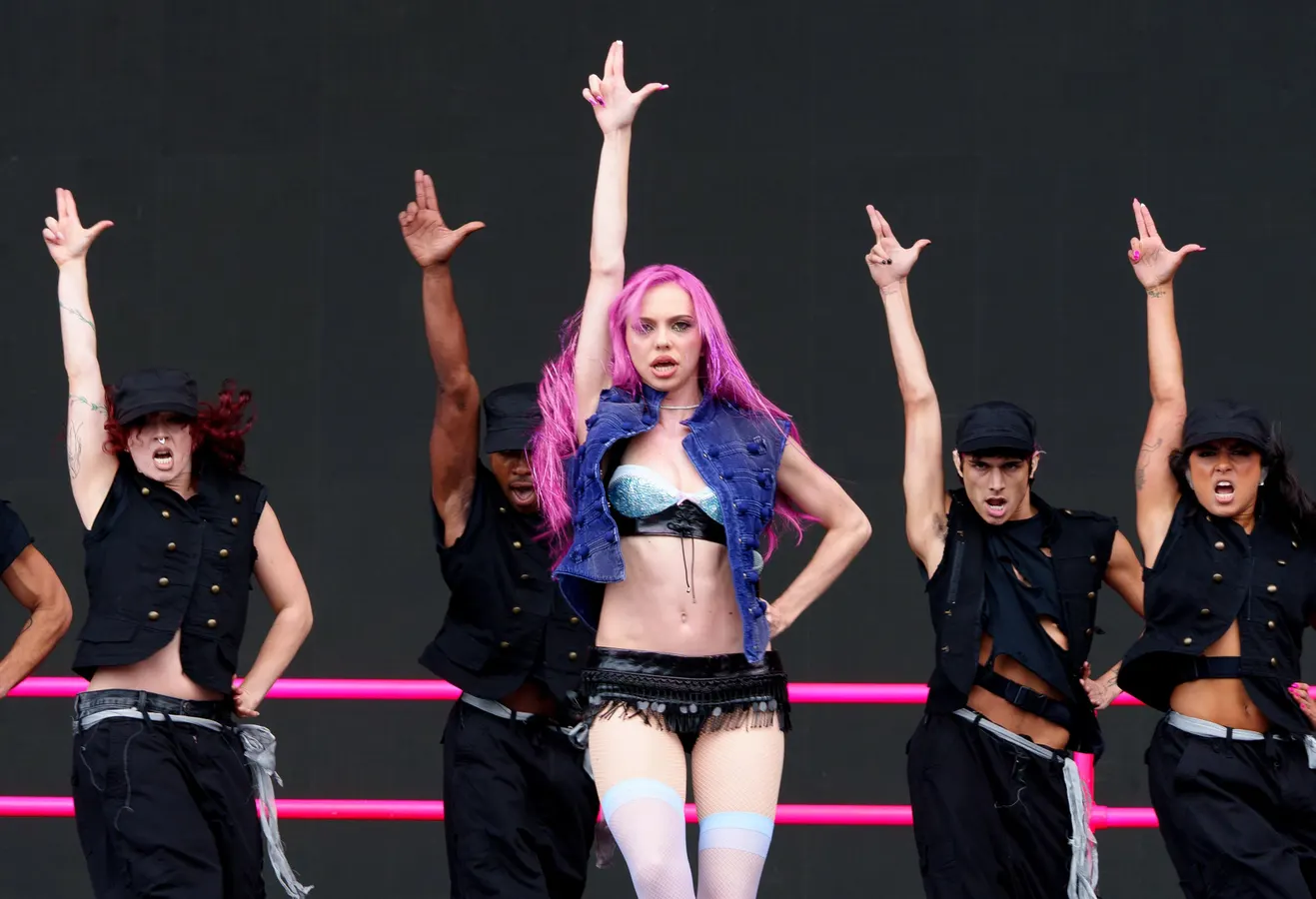

CHICAGO, ILLINOIS – AUGUST 02: Adéla performs onstage during 2026 Lollapalooza Festival at Grant Park on August 02, 2026 in Chicago, Illinois. (Photo by Joshua Applegate/WireImage)
WireImage
When 22 year old Slovak pop artist Adéla released her debut album PRIMA on September 4, the moment capped a rollout that had been unfolding, in plain sight and in careful stages, for the better part of a year. What makes the PRIMA campaign worth studying is not any single viral moment. It is how methodically Capitol Records and Adéla’s team sequenced press, visuals, and platform-specific content to turn a reality show elimination into a legitimate pop star launch.
The Backstory As Marketing Asset
Adéla’s origin story has done more marketing work than most paid campaigns could buy. She was cut in the first elimination round of Dream Academy, the HYBE and Geffen Records competition series that ultimately produced Katseye, then resurfaced with an independent single within weeks of the show’s Netflix docuseries premiere. That “villain edit to underdog comeback” narrative has been the connective tissue of nearly every interview she has given since, and her team has never let it go stale. Instead of distancing herself from the show, Adéla has repeatedly referenced it in press, using her rejection as the emotional hook that makes her ambition legible to a mainstream audience that has never heard of her music.
Telling The Story Through The Press Run
The PRIMA press cycle was staged in ascending order of reach, a pattern that is easy to miss unless you plot the dates. It started small and trade facing, with an October 2025 Harper’s Bazaar interview in which Adéla previewed the album’s tonal shift away from her harder edged debut EP, The Provocateur. From there the run climbed steadily: Vanity Fair in April, timed to the release of lead single “KGB,” Elle later in the cycle for a deeper narrative feature, and finally the two biggest gets landing in the same late August window, a Teen Vogue cover story and a Vogue Czechoslovakia September issue cover shot by Michal Pudelka, a homecoming moment for a Bratislava born artist landing the biggest fashion magazine in her own region. Sequencing the hometown cover for the same month as the international youth culture cover was a smart piece of dual audience targeting, reassuring the Slovak market that success has not erased her roots while cementing her position with the Gen Z fashion audience that will actually stream the record.
STRADBALLY, IRELAND – AUGUST 30: Adéla performs during Electric Picnic 2026 at Stradbally Hall on August 30, 2026 in Stradbally, Ireland. (Photo by Kieran Frost/Redferns)
Redferns
The Digital Campaign Pushes Her Global
Where the press run built credibility, the digital campaign built reach. Adéla’s team treated TikTok less as a promotional channel and more as the primary vehicle for the album’s emotional thesis. Ahead of release she shared a blurred, hand labeled tracklist on her Instagram Broadcast Channel, a low cost teaser that generated fan speculation for months. The full tracklist reveal came through a short visualizer video using a hot pink, handwritten font that has since become her signature typographic identity, carried consistently across singles art, merchandise, and tour visuals. That kind of typographic discipline is easy to overlook but hard to execute, and it is a big part of why the PRIMA era reads as a cohesive body of work rather than four singles bolted onto an album.
Visual Branding And Her Instant Recognizability
Adéla’s visual identity for this era rests on two anchors, ballet and cotton candy pink hair. The pink hair, dyed during what she has called her “manic” post elimination period, has become inseparable from her public image, reinforced across cover art, music videos, and red carpet appearances. The ballet references, drawn from years of training in Bratislava, thread through the album’s title itself, since PRIMA nods to prima ballerina, the highest rank in a dance company, and Adéla has framed her ambition explicitly as wanting to become the prima ballerina of pop. That through line gives critics and fans alike a tidy visual and conceptual metaphor to hang coverage on, which is exactly the kind of shorthand that makes an era easy to write about and easy to remember.
LEEDS, ENGLAND – AUGUST 29: (EDITORIAL USE ONLY) Adéla performs during the 2026 Leeds Festival at Bramham Park on August 29, 2026 in Leeds, England. (Photo by Matthew Baker/Getty Images)
Getty Images
The “Ain’t In LA” Marketing Push
If one single did the heaviest lifting in this rollout, it was “Ain’t In LA.” Released in July with a Fred Gervais directed video shot in Adéla’s hometown of Bratislava, the song became her international breakthrough, entering the Billboard Hot 100 and cracking the top ten in the Philippines. The marketing engine behind it was almost entirely organic in feel even if it was strategically seeded. Adéla posted a TikTok captioned with a line referencing holding down her hometown while others chase Los Angeles, and the phrase mutated into a global template that fans everywhere adapted for their own cities. That is a rare case of a lyric becoming a participatory format rather than just a caption, and it gave the song a second life on the platform that mattered most for reaching an audience outside the United States, and sparking a wide TikTok trend, with people from all over the world proudly showcasing their hometowns.
A Potential Grammy Nod
Beyond the marketing mechanics, two threads have dominated conversation around the era. The first is Adéla’s openly cited influences, particularly Ariana Grande and Addison Rae, which critics have flagged both as a savvy pop literacy move and as a reason some reviews describe the album as assembled from familiar pieces rather than fully original. The second is the sheer speed of her ascent, from reality show cut to sold out headline tour in roughly two years, which has made her a case study in how quickly a rejected reality contestant can outpace the group that kept her out. Both of these narratives can lead to a potential Grammy nod for the fast-rising star, particularly in the Best New Artist category.
How To Fuel The Fire
The pre release campaign was disciplined, but the post release phase has room to build on that momentum rather than coast on it. The team should consider commissioning a short form visual EPK that documents the ballet training and studio sessions behind the record, giving long lead outlets and YouTube something substantive beyond recycled single visuals. A dedicated push around album cuts beyond the four singles would also help extend the campaign’s shelf life, since right now nearly all digital energy is concentrated on tracks that are already a year old in some cases. Finally, given how well the hometown pride angle performed with “Ain’t In LA,” a formalized fan content series inviting international audiences to share their own “prima” moments, whether in dance, career, or hometown pride, could convert a single viral trend into a recurring brand pillar for the rest of the album cycle and into the upcoming tour.













Leave a comment