


Topline
President Donald Trump confirmed Monday he didn’t sign Acting Attorney General Todd Blanche’s order that rescinded the Justice Department’s controversial “anti-weaponization fund,” which means the settlement fund could potentially be revived in the future under the terms of the deal—though that likely won’t stop Blanche from being confirmed anyway, as key GOP senators backed him Monday.
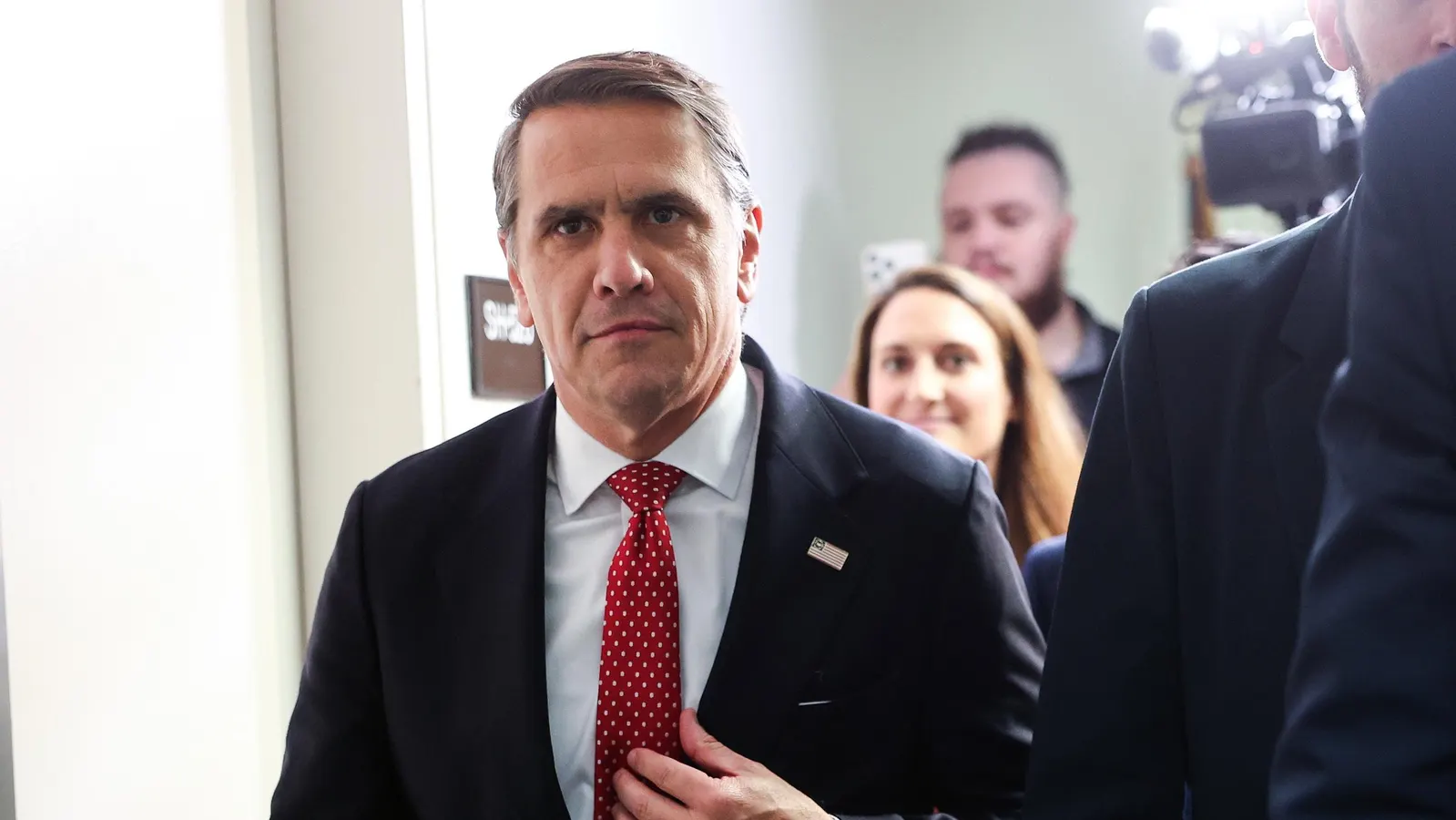
Attorney General Nominee Todd Blanche leaves a meeting on Capitol Hill on July 29 in Washington, DC.
Getty Images
Key Facts
Blanche released two orders Sunday night addressing the DOJ’s settlement agreement with President Donald Trump, after Cornyn and Tillis said they wouldn’t support his confirmation without written modifications to the deal.
The senators requested an order that formally rescinded the $1.8 billion “anti-weaponization” fund—meant to benefit Trump’s political allies like Jan. 6 rioters who felt the judicial system had wronged them—and narrowed the scope of an immunity deal that appeared to broadly shield Trump and his associates from prosecution or litigation over acts they’ve already taken.
Blanche’s order on the fund specifies his initial order establishing the fund “shall have no force or effect” and states, “This Order establishes, beyond any doubt, that there is no fund.”
Critics immediately took issue with the order and suggested it may not be legally binding, as the initial settlement agreement between the IRS and Trump that created the fund notes it can only be modified “with the written agreement of the parties.”
Blanche is the only person that signed the order as it was publicly released, and Trump confirmed to reporters Monday he didn’t sign it or “look at it”—which suggests the acting AG could change his mind in the future and bring back the fund, or Trump or other parties could sue to enforce it, arguing the fund is still active because it was not nullified according to the terms of the agreement.
Despite those issues, Cornyn and Tillis said Monday the order is enough for them to support Blanche’s confirmation, saying in a joint statement, “We are pleased the Department of Justice has issued a formal order terminating the anti-weaponization fund” and they “look forward to voting to advance [Blanche’s] nomination out of the Senate Judiciary Committee soon.”
What Did Trump Say Monday?
Trump defended the $1.8 billion fund to reporters Monday, claiming the fund would have been “very fair” and “could have given” Jan. 6 rioters “some solace” after they were “treated horribly” by the Biden administration. “I view that fund as a positive, and a lot of Republicans do too,” the president claimed. When asked whether he had “signed off” on Blanche’s order, Trump responded, “I didn’t look at it. All I know is that Todd Blanche is great.” Trump said he only knew “there’s been a sign off, but I don’t know what they agreed.” He said he believed Blanche had only confirmed what he’d already told Congress about the fund being dead, adding he thought what Blanche previously told Congress “was OK.”
Crucial Quote
Initial reaction to Blanche’s order suggested even allies of the Trump administration believe the acting AG’s language rescinding the fund could be legally toothless. “Can be undone after Tuesday,” Mike Howell, president of the right-wing Oversight Project, said on X, referring to the Senate Judiciary Committee’s upcoming Tuesday vote on Blanche’s confirmation. “The Anti-Weaponization Fund is great.”
Chief Critic
Legal experts have been broadly skeptical of Blanche’s order since it was released, with Carissa Byrne Hessick, criminal law professor at the University of North Carolina, writing Monday, “I see nothing in Blanche’s letter that would prevent him from reviving the fund the moment that he is confirmed.” Former U.S. Attorney Barb McQuade similarly called the order “hollow,” noting that even if the fund isn’t revived, the Trump administration can still make payouts to allies like Jan. 6 rioters through individual settlements.
What To Watch For
The Senate Judiciary Committee is expected to approve Blanche’s nomination in a vote on Tuesday, now that Tillis and Cornyn are on board, which will send his nomination to the full Senate. It remains to be seen whether the Senate will be able to vote on Blanche’s confirmation before it leaves for its August recess at the end of the week, though Blanche will be able to remain acting attorney general in the meantime regardless of whether the vote gets delayed.
What About The Immunity Deal?
Cornyn and Tillis also got the assurances they were seeking Sunday on Trump’s IRS immunity agreement with the government, which was another highly controversial component of the settlement. An accompanying release from the DOJ on Sunday, which is unsigned, says the immunity agreement only applies retroactively—meaning it cannot shield Trump from future legal action—and applies only to the named parties in Trump’s lawsuit against the IRS, which would be Trump, his eldest sons and the Trump Organization, and the IRS and Treasury Department on the government’s side. That still gives Trump and his family cover from tax audits and other government investigations of their finances, but means other Trump-affiliated businesses wouldn’t be able to claim immunity under the agreement. Cornyn and Tillis suggested the DOJ’s assurances on the immunity agreement were sufficient to assuage their fears, saying in their joint statement Monday the agency had acknowledged the narrowed scope of the agreement “in a binding written order … addressing concerns that multiple of our Republican colleagues share.” Critics also raised questions about whether Blanche’s order fully narrows the immunity agreement, however, with the Tax Law Center at New York University noting in a statement to reporters Monday the narrowed scope of the agreement “seems to conflict with the actual language of the order.”
How Could The Anti-Weaponization Fund Be Revived?
Without the parties all agreeing in writing to rescind the $1.8 billion fund, it’s possible Blanche could simply rescind his Sunday order and declare the fund is back in effect. A federal judge has blocked the fund from moving forward for now, but the government could still clear the way for it to be revived should that order expire. Trump could also sue his own DOJ for breach of contract, arguing the fund should still move forward because he didn’t agree to rescind that. Blanche addressed that possibility at his Senate confirmation hearing, telling lawmakers, “I suppose if President Trump’s counsel sought to enforce it, they potentially could.” It’s also possible the Trump administration could get payouts to political allies even without formally reviving the fund, as The Atlantic reports they’ve been considering. That could be done through establishing a new fund separate from the one in the settlement agreement, or by having allies bring individual lawsuits against the government and awarding them settlement payments.
Surprising Fact
Cornyn’s willingness to back Blanche’s confirmation despite the apparent legal loopholes in his Sunday order came after the Texas senator was the one to bring those loopholes up in the first place. Cornyn asked Blanche during the nominee’s confirmation hearing about the settlement agreement’s requirement that all parties had to agree to any modifications, asking him if the settlement agreement is “enforceable as a contract by the parties” and leading Blanche to concede Trump could sue for breach of contract. “Just to be clear, the President of the United States, who’s a party to this lawsuit, has not agreed in writing to delete this weaponization fund, and there’s no guarantee that he, or one of the other plaintiffs, might raise that issue by way of a lawsuit … in the future,” Cornyn said.
Key Background
Trump and his own administration reached their settlement agreement in May, after the president had sued the IRS for allegedly not properly keeping his tax returns private. The $1.8 billion fund drew widespread condemnation from even Republicans, who opposed the Trump administration paying Jan. 6 rioters convicted for assaulting law enforcement, prompting Blanche to say the fund was “dead.” The DOJ’s failure to formally withdraw the fund or make assurances in writing has worried critics it could still be revived, however, particularly as Trump has continued supporting it. The president said Friday the fund “is dead, but I wish it weren’t,” before threatening over the weekend to revive it if Blanche wasn’t confirmed. Cornyn and Blanche’s deal with the DOJ came after the two senators had negotiated unsuccessfully with the Trump administration all of last week on modifying the settlement agreement, resulting in a planned Thursday vote on Blanche’s confirmation getting delayed. Senators suggested the White House, particularly an unnamed Trump adviser, was holding up the negotiations, and expressed concerns that the administration’s hesitance to reach a deal indicated the fund could still be revived. “Now it looks like they weren’t being honest when they said it was inoperative,” Tillis told The New York Times on Thursday about the fund amid the negotiations.
Further Reading
Trump Doubles Down On Anti-Weaponization Fund Amid Blanche Confirmation Fight (Forbes)
Trump’s DOJ ‘Simply Refuses’ To Formally Restrict IRS Settlement, Senator Says (Forbes)
Key Vote On Todd Blanche’s Nomination Delayed—As Republicans Push Back (Forbes)












Leave a comment