


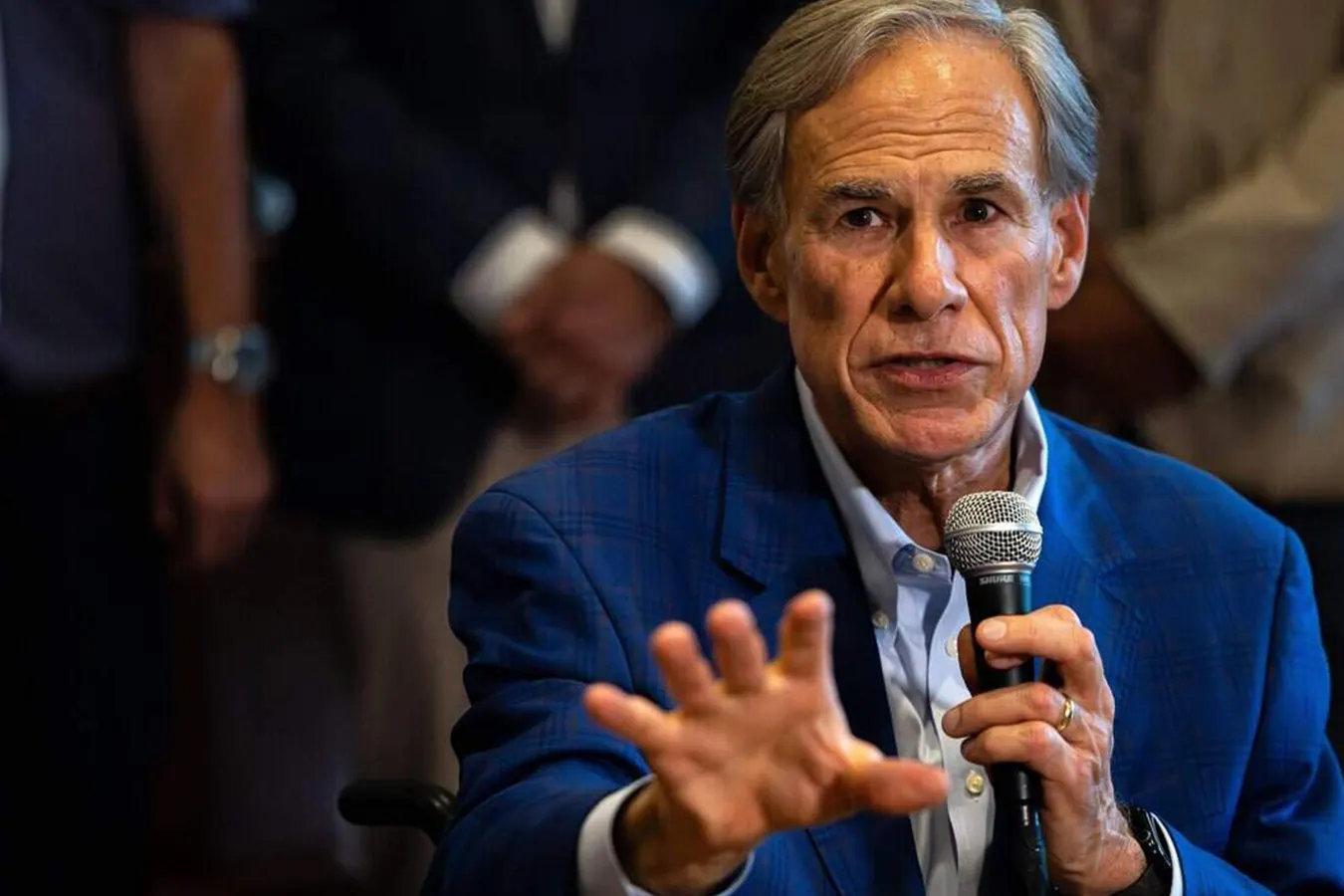

Texas Gov. Greg Abbott speaks during a press conference on Wednesday, July 29, 2026, in Fort Worth, Texas. (Elvis Martinez-Cartagena/Fort Worth Star-Telegram/Tribune News Service via Getty Images)
TNS
Only “behind the meter” projects like a new Chevron-Microsoft data center are likely to avoid uncertain delays from Abbott’s audit order.
Texas in recent years has gone out of its way to be the friendliest state for data centers. Drawn by property tax breaks, sales tax exemptions and green energy from enormous new solar farms and battery installations, the AI hyperscalers have splurged tens of billions on Texas datacenters like Oracle’s Stargate project in Abilene and Galaxy Digital’s Helios campus in west Texas. Google is in the midst of dropping more than $40 billion in Ellis County south of Dallas.
Hyperscale computing in Texas now uses about 12 gigawatts of power. That’s roughly 15% of the electrons coursing through the grid managed by the Electricity Reliability Council of Texas (ERCOT), which in turn manages about 90% of the state’s electric load. That 15% is more than enough to power all of New York City on most days. All this new data center demand has contributed to a surge in Texas residential power prices of 25% over the past five years.
ERCOT too is struggling to absorb accelerating datacenter demands. Texas now has the fattest pipeline of data centers projects, which if they all got built would require an additional 93 gigawatts of power, according to Bernstein Research. That’s a mighty chunk of the 450 GW in potential demand from all centers in the works nationwide (Virginia is second with 44 GW). Just last year ERCOT received requests for grid connection from more than 200 new data center projects — far more than could be added quickly without triggering massive increases in power prices, and even blackouts.
So it’s a good thing, in the short term, that Governor Greg Abbott is going to slow this tsunami down. This week Abbott ordered a pause on ERCOT connecting new datacenters pending the outcome of audits of every one of hundreds of projects in the queue. The state will insist on information detailing how much power and water each project intends to use, and how they intend to source it. Other mandatory disclosures include financial details around ownership, financing, reliance on tax breaks, and efforts undertaken to abate community impacts like noise, nighttime light pollution and traffic. Fail the audit and ERCOT will deny grid connection.
Inside Meta’s datacenter in Temple, Texas.
Austin American-Statesman via Getty Images
Abbott, who knows how to gauge political winds, had already ordered in June that new data centers fund the costs of their needed electric infrastructure. The timeline (and grading criteria) for the audits is unclear, but will certainly extend beyond midterm elections in November. Some Texas counties have already tried to ban data centers.
While Abbott’s move is a far cry from New York Gov. Kathy Hochul’s outright moratorium on new datacenters in the Empire State, “it’s more than a nothingburger,” says analyst Kritika Gaikwad at energy consultancy East Daley, who predicts early stage projects will be shelved as Abbott’s audit adds delays and uncertainty.
If all the datacenters in the Texas pipeline got built, they would need another 93 GW of power — as much as all of Texas uses today. But analysts at Bernstein Research figure that the projects “credible” enough to reach completion will only use roughly a third of that power, still a huge amount. Bernstein says that’s bad news for the growth plans of datacenter giants like Coreweave, which has leases at projects underway in Plano, Austin, Bastrop and at Galaxy’s Helios campus, where expansion efforts may be at risk of delay.
That said, there are some data center projects that appear safe from the governor’s move. The audit doesn’t apply to so-called “behind-the-meter” projects that don’t intend to connect to ERCOT. That would include the state’s biggest data center ventures such as Fermi’s 5 GW project near Amarillo and Pacifico Energy’s 6 GW one near Fort Stockton, which are set to be powered by on-site natural gas turbines if they ever get off the ground. A more credible example of these “behind-the-meter” megaprojects is Chevron’s Kilby data center in the heart of the Permian Basin oilfields of west Texas. Microsoft last month signed a 20-year contract to buy Kilby’s off-grid energy from Chevron, which is building enough gas turbines (at an estimated cost of more than $6 billion) to generate nearly 3 GW for Microsoft. Abbott’s audit questions “are things we designed Kilby to have strong answers on,” says Daniel Droog, Chevron’s VP of Power, who says the pause was “largely expected, because the governor and elected officials need to manage stakeholder concerns.” Droog anticipates that in future phases Chevron will build enough generation capacity that it will have excess power to send out to ERCOT, which could help improve grid reliability.
Matching datacenter electricity demand with dedicated power generation is a no-brainer, says Ed Hirs, an energy economist and lecturer at the University of Houston who has been a perennial ERCOT critic. The problem with ERCOT is its misplaced incentives, says Hirs. Texas power plant owners only get paid based on the spot price for electricity at the time they are selling it into the grid. This incentivizes owners to hold back their electrons to create artificial scarcity and higher prices. Instead the Texas grid needs more regulation to rein in such inflation.
Indeed, why build new power plants when tighter markets make your existing plants more profitable? “If you incentivize scarcity, you’ll get scarcity,” says Hirs, who thinks Texans would be better served by returning to more of a regulated utility model that guarantees power plant owners a set return on capital providing that they maintain a set level of generation capacity sufficient to meet demand from all customers connected to the grid — with enough of a standby buffer to avoid blackouts at peak times without subjecting users to price spikes. Until then, Hirs says, “the Abbott audit doesn’t change anything.”














Leave a comment