


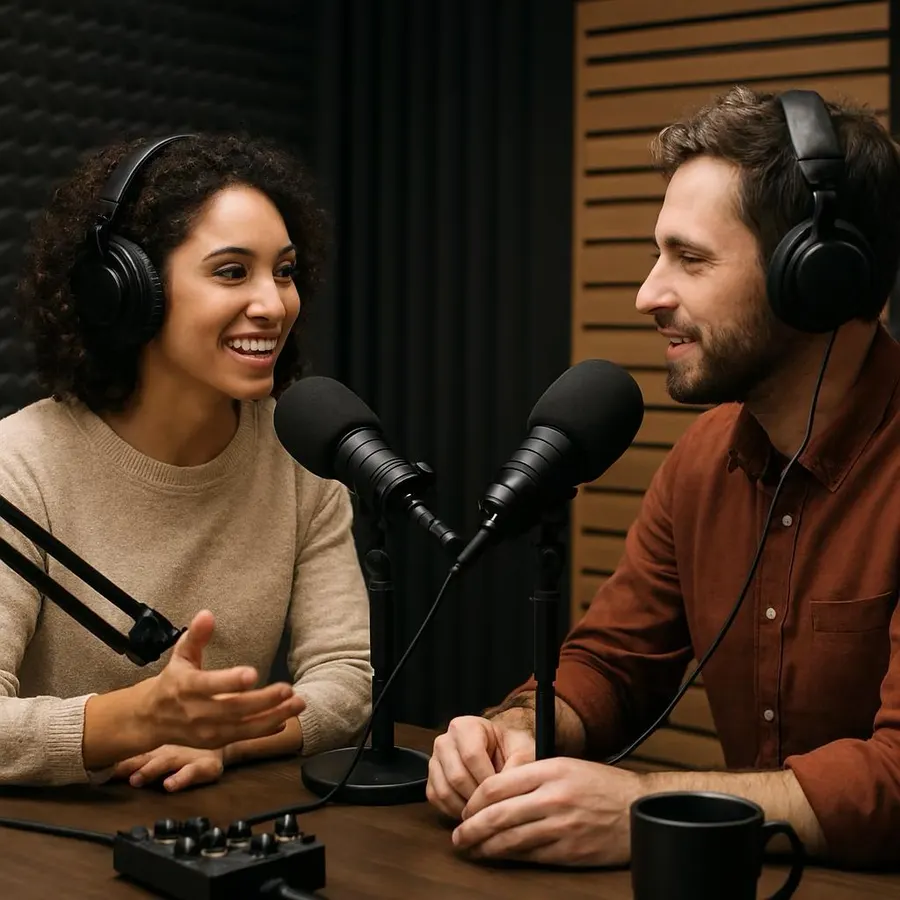

Greg Wasserman, creator/host of Podcast Network Insights thinks strong podcast interviews need, to bring the audience Into the conversation. One technique he appreciates is breaking the fourth wall. Rather than making listeners feel like they’re eavesdropping on two people talking, great hosts occasionally acknowledge the audience directly. Small moments like these remind listeners that the conversation exists for their benefit. They allow the audience to stop, pause, reflect, and think in real time, instead of moving the conversation on to the next topic. This technique creates absorption, repetition, and engagement.
Ear Worthy
What makes an excellent podcast interviewer? With the influx of celebrity podcast interview shows, there is a presumption – possibly false hope because of the money the podcast networks have invested – that doing a podcast interview show is not that difficult. Nothing could be further from the truth.
Recent podcast failures include 2022’s Archetypes with Meghan Markle as the interviewer and host. Add to that list of under performers Paris Hilton on This Is Paris, Barack Obama and Bruce Springsteen on Renegades, and Rob Lowe on Literally! With Rob Lowe. Even late night host extraordinaire Stephen Colbert struggled with interviews.
Critics noted that Stephen Colbert initially struggled to balance his sharp improvisational skills with the conversational pacing required of a traditional late-night host expressed mixed opinions, with some feeling he was finding his footing, while others felt his style was too similar to other late-night hosts.
CBS via Getty Images
When Stephen Colbert first took over CBS’s The Late Show in September 2015, critics and viewers had mixed opinions on his interviewing style. Because he had spent a decade playing an abrasive, satirical pundit on The Colbert Report, adjusting to a standard celebrity interview format proved to be a slightly awkward transition Initially, many reviewers found his interviews a bit manic or overly deferential compared to the sharp, interrogative disequilibrium he created in character. He ultimately found his groove by focusing heavily on sharp, probing political interviews—especially during the 2016 election cycle—and by eventually stepping away from the fawning style often seen on other late-night programs.
The point here is a simple one. Being an effective and entertaining interviewer is hard.
Of course, a primary reason why podcast interview shows are so ubiquitous is the “dollar store” budgets associated with developing a podcast interview show. Putting a microphone in front of someone quasi-famous, or worse, an influencer, and having them interview guests, who are typically coming on the podcast free of charge, is like selling snow shovels during a snow storm. You can’t lose money and can potentially earn a windfall.
One consequence of that shift to interview podcasts is that narrative podcasts, which often take time and money to develop and produce, have nearly been abandoned by the large podcast networks. As a result, independent podcasters have taken up the mantle of narrative podcasting despite their lack of money and resources.
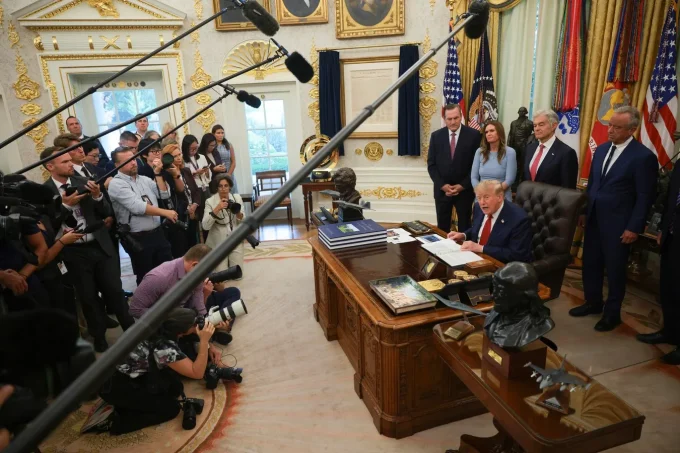
In its most recent “data dump” of viewing ratings, Netflix’s podcast experiment was excluded.
Anadolu via Getty Images
Netflix has added an array of video interview podcasts and there has been much speculation that such shows can subvert the high costs associated with TV interview shows like late-night and daytime talk shows.
With evidence from Sounds Profitable that consumers are beginning to watch video podcasts on their smart TVs, which approximates TV viewing, video podcast interview shows could be the next “appointment viewing” for select segments of the audience.
The tool bag of interviewing skills
Blair Hodges, creator/host of Relationscapes podcast, where he explores the evolving terrain of human identity and connection, diving into topics like gender, sexuality, race, ability, and culture through conversations with leading writers and thinkers, told Forbes, “I think the host’s personality is the top consideration for any interview show. The host is a stand-in for the listener. The host asks the questions listeners would love to ask, and perhaps more importantly, the questions listeners wouldn’t have thought of but which they want to hear answered as soon as the questions are asked.”
Reena Friedman Watts, the creator/host of the Better Call Daddy Podcast told us: “Honestly, it starts with the guest not caring what other people think. No holds barred. I want someone who’s healed from their shit, or at least willing to talk about it without worrying about being judged for it. It helps if we have something in common, or if they’re willing to sit with the things I’m going through. We don’t need to agree on everything, they just need to be open to hearing a different opinion. And obviously, a good daddy story never hurts.
Reena Friedman Watts
Let’s summarize some of the skills necessary to be an effective podcast interviewer.
Kim Masters, host of The Business podcast told us: “A good interviewer must listen well. This is a contradiction because listening isn’t asking questions, but a good listener assesses the direction of the interview, forms strong follow-up questions and truly engages with the subject.”
Podcast Consultant George Witt observes: “Keep the interview focused on the guest, not the host.”
Kim Masters chimes in, “A good interviewer should ask follow-up questions that result from the guest’s previous comments. It goes back to the listening skills I mentioned. You shouldn’t just read from a list of scripted questions like it’s a to-do list.”
Mike Carruthers explains, “I think editing is so important for any interview. I’ve done interviews where the first several minutes are edited out because the guest was just warming up. They didn’t get interesting until six or seven minutes into the interview. So in the show, that’s where the interview starts.”
Mike Carruthers
Mike Carruthers, the Host of Something You Should Know, told me in a previous interview: “A skilled interviewer should control the flow of information imparted by the guest. For example, less astute interviewers ask a question and then sit back while the guest blurts out all the information they have available before another question is asked.
“I have a little voice in my head that keeps asking me right from the start of every interview ‘Is this really interesting?’ Or ‘Is this going on too long?’ Or ‘Is he/she really answering the question?’ I try to assume the mindset of the listener. And in my view, a listener wants every interview to get interesting – FAST. It would be easy to let people talk in the beginning about how they got interested in the topic or what is their background. But I don’t think that’s what an audience wants to hear first. They want to hear why this is interesting to them and why they should be listening. Then once they care about someone, then they might be interested in their background.”
As a host, Robert Peterpaul from The Art Of kindness exudes flamboyant energy, crackling with enthusiasm, passion, and a desire to please. As an interviewer, Peterpaul channels a gossipy, chatty vibe that relaxes his guests and delights the listeners. Peterpaul bathes in sincerity, and when you hear his life story, you quickly understand that focus on kindness and giving back
Broadway Podcast Network
Some podcast interviewers have a unique style and flair that punctuates their shows. For example, in every episode The Art Of Kindness, creator/host Robert Peterpaul elicits tales from Broadway people about how they sprinkle kindness throughout their world. Peterpaul always asks each guest, “What does kindness mean to you?” He also asks guests how they react to people praising them.
Perhaps, the last word on podcast hosting and interviewing comes from Elaine Appleton Grant, the creator/host of Sound Judgment.
Grant possesses excellent cadence, a smidgen of earnestness, a touch of empathy, a dash of clarity, and a heaping of good humor. Sound Judgment began in September 2022, and in the second episode, Grant talked with podcast talent recruiter John Barth, who says he’s “always looking for that blue M&M.” That’s when she introduced a new term she called “hostiness.” for the skills needed to be a good podcast host and interviewer.
The latest debate: Audio or video interview podcasts
The advent of video podcast interview shows on YouTube, which led to Apple’s HLS (HTTP Live Streaming), which is a popular, adaptive-bitrate streaming protocol, then led to the rush to add video to Spotify and other comparably-sized podcast networks and hosting companies.
Now, there’s a presumption that a video version of a podcast interview show is a “must” to stay competitive. Of course, large podcast networks have studios that can do video and audio at little added cost because the cost of studio is now built into the corporation’s fixed costs.
n
Dropping Names With Brent and Jonny
For independent podcasts, video can mean a massive outlay of money. According to the Podcast Tech Stack, adding video typically costs between $200 to $1,200 in upfront equipment and an ongoing $40 to $300 per episode in editing or platform fees. Because video requires more labor than audio-only formats, and indie podcaster’s total budget depends heavily on how much of the work they do themself.
Podcast Hall of Famer Arielle Nissenblatt, on a recent episode of Podcast Weekly Review talked about the pressure to do video for indie podcasters. Arielle’s advice was straightforward: “Don’t do video because you think you have to. Look at your audience, your topic and genre, and then decide if it’s necessary.”
Video interview podcasts feel that they have video as their secret ingredient, since video images can, they believe, communicate so much more than words. For the most part, podcasting video typically offers fans the host and guest with bulky headphones on and talking in a large mic on a swivel and surrounded by technology. It’s not exactly visual stimulation overload.
Audio podcast interview shows often make deft use of tone of voice and sonic cadence, providing the audience with important cues about the tenor of the interview. Sometimes, the silence can be as crucial and full of meaning as the words spoken.
As George Witt explains, “Listeners rely on the spoken word and tone of voice, which often leads to deeper cognitive processing and emotional connection. In addition, audio interviews can be more effective than video because they reduce self-consciousness by the guest, allowing for more natural and authentic conversations. Without the pressure of a camera, the host and guest are often less stressed about their physical appearance, providing a more accessible experience that minimizes subconscious bias.
The “Business” of Interviewing
A preeminent entertainment industry journalist for The Hollywood Reporter and now partner at Puck, Kim Masters has been the host of the entertainment industry podcast, The Business since its inception on 2009. Produced by San Monica public radio station KCRW, the show has utilized an audio format since it began.
“Currently, I’m not seeing any mandate or compelling business reason to move to video,” Masters concludes.
Kim Masters underscores the degree of difficulty of being a strong interviewer.
“I was brought here by Matt Holzman,” recalls Kim. “When The Business began in 2009, it was initially formatted more like an entertainment news show rather than an interview show. I had some experience on podcasts through APM and NPR. After we did those first few shows, I could see the look on Matt Holzman’s face, which said loud and clear, ‘this is not good.’”
“The show changed formats and I got better through experience,” admits Kim.
“But it takes time, practice, and a commitment to improve,” Kim adds.
“I’m fortunate enough that my producer does research for me about the guest I will interview on the upcoming episode,” Masters told me in a phone interview. “For me, I have to go through the research and decide what direction I will take the interview.”
Masters continues: “Like many interviewers, I like to chat with my guest before we begin recording. That way, it seems like a natural extension of our causal conversation.”
In an interview with Ear Worthy several years ago, Masters shared, “I’d say our two-parter with director Kevin Smith about Stan Lee, his heart attack and his interaction with Harvey Weinstein was a favorite, as well as the interview with Jeffrey Katzenberg about his new short-form video service called Quibi.”
Masters also cited her interview with director Lulu Wang about the challenges making the successful indie film The Farewell attempting to navigate the labyrinth of the Chinese government.
“When guests are fearless and honest, those are the best interviews,” Masters notes. “For example, director Tim Miller was very outspoken. He saw that Simon Kinberg had done the show after Dark Phoenix bombed and I think that inspired him.”
The format of The Business is the essence of clean design. First, Masters speaks to “her partner in banter” Matt Belloni, who is a founding partner of the digital media company Puck News. Belloni and Masters tackle topics that include Bob Iger’s successor at Disney, the Paramount/Warner Bros. merger, and Comcast’s surprise decision to break up the company, The second part of the podcast includes an interview with a prominent person (s) in the entertainment industry. Masters avoids the Jimmy Fallon “fawn all over the guests” template for interviewing and instead balances on the paddle board comfortably by asking tough questions and working to capture more than the platitudes and bromides that entertainment people have become accustomed to spouting to the media. Masters doesn’t coddle her guests, but she also doesn’t rough them up, either. In essence, she’s her own “good cop and bad cop” rolled into an audience-friendly package.
“I try to keep balanced and the more relaxed the guests are, the better it works,” she observed in a that interview with Ear Worthy.
If it walks like a duck…
Whether podcast interview shows continue the migration to video, or, as it is posited by many industry experts, there will be a amicable bifurcation with the industry between the two formats, there are still fundamentals to the interview format that require due diligence.
The Streamlined Solopreneur podcast, hosted by Joe Casabona, is a weekly show that teaches overwhelmed solopreneurs how to build simple business systems, implement automations, and utilize AI for administrative grunt work so they can take stress-free time off
Joe Casabona
Steamlined Solopreneur creator/host Joe Casabona notes: “Do your research. Many podcasters will say they don’t do any research because they want to be surprised along with their audience. That’s lazy. The pilot of your airplane doesn’t say, ‘I don’t like to know where we’re going until we’re in the air.’ They know the exact flight path before takeoff. You can’t tell a story unless you know all the story beats first.”
Joe offers an insight shared by many strong interviewers. “Do a pre-interview. This continues the research finding things that may not be available online, as well as ensuring you and your guest jive. There’s nothing worse than having a bad interview because you and your guest weren’t on the same page.”
Finally, Joe offers sage advice about handling your guest. “Don’t tell your guest to come up with the topic/questions. You know your audience best. Don’t outsource this crucial part to someone who doesn’t know your audience at all.”
Golden Goose Creative is a podcast production and management agency that specializes in helping female entrepreneurs and creators launch, edit, and grow their podcasts. Co-owners Aleea Miller and Havalah (Hav) Devins recommend: “Do authentic research. Figure out what questions are best suited for your audience, your show and your guest. You want an interview that makes them look good. You know the kind where they walk away thinking, ‘I said something on this podcast I haven’t said anywhere else.’ You don’t want to ask the same generic questions that have already been asked. Think about how much easier it is to share something different versus the same content over and over.”
Being an interviewer carries with it a lot of responsibility. As a podcast host of an interview show, you are trying to transfer experiential and theoretical knowledge and accrued wisdom to an audience of listeners/viewers through a third person, the guest.
Basketball announcer Ernie Johnson once said, “A lot of times the interview relies not so much on the interviewee but on the interviewer.”
The French philosopher Voltaire once said, “Judge a man by his questions rather than by his answers.”











Leave a comment