


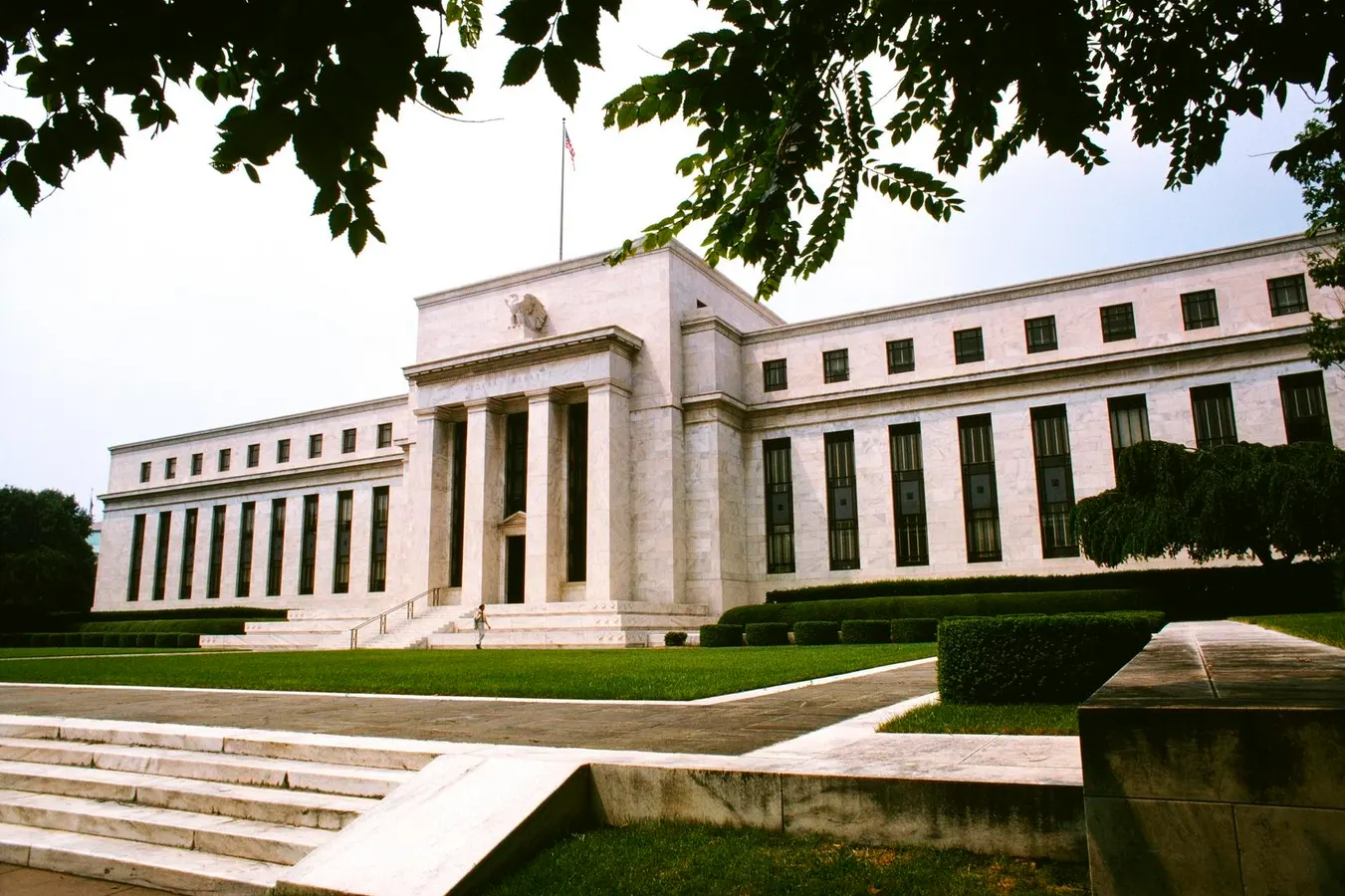

Low angle view of a government building, Federal Reserve Building. The Federal Reserve rose interest in September, and could raise rates again which means investors may want to rebalance their portfolio.
getty
The Federal Reserve is raising rates in response to elevated inflation. The first interest rate hike came in September and fixed-income markets currently view further hikes as more likely than not. This is often bad news for markets as higher rates can raise investor expectations for risk-free returns and reduce economic growth overall.
I have managed asset allocations for hundreds of million dollars and written a book related to this topic. In my view the trends as interest rates rise are always somewhat unique, but with common themes. High inflation, which is prompting the Fed to raise rates, is often not good for stocks or bonds overall. In addition, rising rates do change the shorter-term investment landscape. This can create risk and opportunities for specific asset classes and sectors. So even if the outlook for stocks and the bond market outlook may darken overall, certain sectors such as energy and consumer staples can perform relatively well.
Why The Fed Last Raised Interest Rates
The Federal Reserve last raised interest rates in mid-September in response to both near-term inflation and inflation remaining above the Fed’s 2% annual inflation goal for several years, potentially risking the Fed’s credibility. The rise in inflation came primarily from higher energy prices as a result of the Middle East conflict, but also reflects a general climate of rising prices overall and some additional impact from tariffs and AI spending.
Markets expect more interest rates to come in 2026. Whether that’s one or two more hikes will depend on the upcoming inflation and jobs. Also, if the Fed doesn’t see initial success in taming inflation, hikes may continue into 2027.
How Federal Reserve Rate Hikes Impact Your Investments
The Federal Reserve only controls short-term interest rates, but rising rates, as currently expected at upcoming Fed meetings often ripple through longer fixed income maturities. This causes bond prices to generally decline to adapt to the rising interest rate environment.
This also has a direct impact on consumers as the cost of borrowing whether for mortgages, cars or a loan will generally rise. Businesses are impacted too, as the funding costs for projects become more expensive, that combined with a riskier growth outlook can make business investment less profitable. As a result as interest rates go up, consumers tend to spend less and businesses can cut back, too. The impact of this often happens with a lag, taking months after interest rates start rising to play out, but it can reduce economic growth.
For stocks, some sectors are more sensitive to interest rates than others. Housing stocks and real estate generally fare poorly as interest rates rise because borrowing costs and mortgage costs go up. Consumer discretionary stocks, such as restaurants and hotels, can lag the market during rising rates, too. That’s because consumers can tighten their budgets as the economy slows and job security declines.
Asset Performance In A Rising Rate Environment
As rates rise more conservative, shorter term, lower risk investments can perform better.
Stocks are often most exposed should the growth outlook worsen and alternative assets offer greater income from higher rates. Within bonds, shorter duration government debt is generally least exposed to higher rates.
High yield savings accounts can become more attractive as interest rates rise without capital risk, but cash, though secure, typically does not deliver the long-term capital appreciation that other asset classes have historically. Commodities are less dependent on interest rate moves overall, with variation depending on the specifics of the commodity.
| Asset Class | Sensitivity to Rate Hikes | Strategic Role in Portfolio |
| High Yield Savings Accounts | Low | Emergency fund |
| Short-Term Treasuries | Low | Income, Security |
| Long-Duration Bonds | Moderate | Income, Diversification |
| Commodities | Mixed | Diversification |
| Value Stocks | Moderate to High | Growth, Income |
| Growth Stocks | High | Growth |
Top Sectors And Assets To Consider When Rates Rise
As interest rates rise, certain sectors within the economy can perform better. Two clear examples are consumer staples, where steady growth can become more prized by investors and energy, which can be a natural hedge to the source of inflation that’s driving up interest rates in the first place. Beyond stocks, government bonds can also provide a safe haven for a portfolio, and benefit once the market looks beyond the rising rate cycle.
Consumer Staples
Consumer staple stocks such as branded food, drink and personal care companies can hold up relatively well as interest rates rise. Consumers may cut back on hotel and restaurant expenditure but will continue to buy snacks and toothpaste.
As economic growth slows, so growth within consumer staples may hold up, making what was previously seen as a fairly sluggish stock, look more attractive as other companies see sales decline.
Government Bonds
To the extent rising interest rates bring slowing growth and economic uncertainty, government bonds can be a safe haven for investors. Rising rates may cause bond prices to fall, but this can be offset by a ‘flight to quality’ as investors seek out secure assets driving up their price.
In addition, rising interest rates are often temporary. Looking ahead to the medium term if inflation passes or economic growth declines, the Fed may quickly move to cutting interest rates and that can be supportive of prices for government bonds. Remember that the market is always looking ahead, so even as rates rise the market may ultimately shift to projecting and pricing in cuts several months out.
Energy
Energy stocks can fare relatively well when interest rates rise, especially in the current environment. This is because rising inflation is often caused by high energy costs. A rising oil price has been associated with higher inflation relatively often.
As much as rising fuel costs are bad for many sectors who buy energy, energy stocks, who are now selling at a higher price, can do well. Energy stocks can benefit from exactly the rising prices that may be causing underlying inflation.
Assets To Approach With Caution In A Rising-Rate Environment
Still, rising rates do present risk to investors. Higher rates often create a climate of risk aversion which tilts investors away from more speculative or growth-oriented assets. More growth-oriented stocks and those reliant on discretionary consumer spending can perform poorly as growth prospects decline. Within fixed-income, lower quality longer term bonds are generally most at risk. Companies that have significant debt may struggle to meet interest payments and refinance debt as rates rise.
Consumer Discretionary Stocks
Consumers can easily cut back on spending as rates go up. Spending on restaurants, hotels, cars and other major purchases can fall as consumers work to meet higher interest payments and the economic outlook potentially darkens. This can mean declining sales for consumer discretionary companies. As sales decline, so stock prices can follow.
There may be a chance to acquire quality companies at discounted prices once pessimism has set in, but early in the cycle of interest rate increases these companies can be risky if growth risks are not priced in.
Lower Grade Corporate Bonds
Corporate bonds, especially longer duration debt of companies with lower credit ratings, can be particularly exposed to rising interest rate cycles. The threat to this investment class is two-fold. First, the companies may be stressed by falling growth and rising interest rate costs, making debt payments less secure. Secondly, as interest rates rise, existing debt can be repriced lower, further hurting returns.
Growth Stocks
Growth stocks can be hardest hit by rising rates, especially those which are not yet profitable and require additional financing before they are self-funding. The economic risks from rising rates can hurt the growth prospects of these companies and fundraising can become harder as interest rates rise and alternative investments offer the prospect of superior returns.
Actionable Portfolio Rebalancing Strategies
As rates rise it can be useful to consider portfolio rebalancing. During periods of rising rates excessive short-term pessimism can mean stocks decline to more attractive prices relative to their long-term prospects. Therefore, if fixed income assets hold up better, some rotation from bonds to stocks as rates rise can be prudent. This is because exposure to stocks can naturally decline with weak pricing, but rebalancing can keep a portfolio’s exposure relatively constant.
Rebalancing helps keep a portfolio on target with its initial goals, whereas allowing it to drift can cause it to shift from its original purpose as its risk-level changes. To the extent further rises in rates are expected, it can also be worth considering reducing duration of fixed income exposure and potentially laddering Certificates of Deposits to meet liquidity needs with lower duration risk.














Leave a comment