


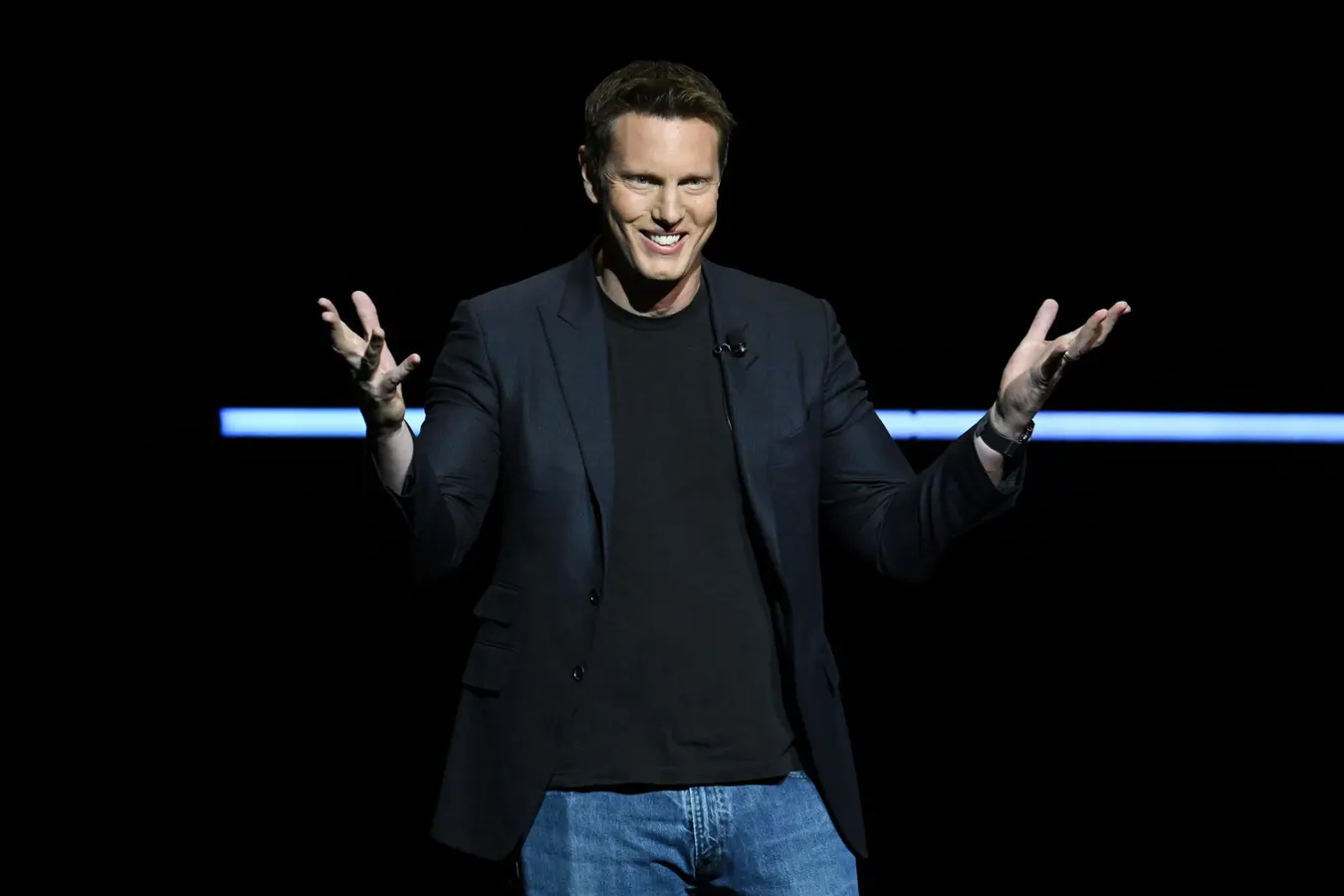

David Ellison at the Paramount Pictures Presentation during CinemaCon 2026, the official convention of Cinema United held at The Dolby Colosseum at Caesars Palace on April 16, 2026 in Las Vegas, Nevada. (Photo by Gilbert Flores/Variety via Getty Images)
Variety via Getty Images
State Attorneys General settled their suit to block Paramount’s proposed acquisition of Warner Bros earlier this week, clearing the way for the Ellison-owned media and entertainment company to hoover up the venerable Hollywood studio and its associated businesses, including CNN. While control of the news media is certainly one of the main drivers of the $110 billion dollar deal, a huge chunk of the asset value of Warner Bros is tied up in one of its blue-chip IPs, DC Comics, home to Batman, Superman, Wonder Woman, the Lanterns and tens of thousands of copyrighted and trademarked characters created over its 90 years at or near the top of the American comic book industry. How Paramount behaves moving forward may have a lot to do with how valuable that asset remains for the merged company.
The DC IP catalog is one of the beating hearts of Warner Bros’ revenue stream. The Batman asset ecosystem alone is valued at close to $30 billion, including licensing from media and merchandise. Below that are 20-50 A-list characters that the studio has been exploiting, with greater or lesser success, as part of its movie, TV and animated production efforts. There’s an additional roster of several thousands of characters known to comic fans, if not the general public, including key cast members like Superman’s pal Jimmy Olsen or Lanterns villain Sinestro. A collaborative community tracking project called the DC Fandom Database has catalogued more than 33,000 “deep continuity” characters altogether.
Those are the building blocks of one of the most extensive story universes ever created. And it all runs on one thing: fan sentiment. DC continues as a viable engine of entertainment and revenue because its creators continue to inspire fans to care enough to read, watch, collect, and celebrate those creations. If people lose faith in the product or the brand, all that’s left is an assortment of unusual names, costume designs and backstories based on forgotten and often farfetched mythologies.
The last few years, DC has been doing a remarkably good job stoking fan enthusiasm. Their comics are topping sales charts for the first time in generations thanks to renovations of key characters into “Absolute” versions. Despite a box office misstep with this summer’s Supergirl feature film, the James Gunn/Peter Safron media universe is humming along, with HBO’s Lanterns winning critical praise and viewers. Excitement is building for the next Batman and Superman franchise installments. The company is rolling into next month’s New York Comic Con with a full slate of programs and talent poised to whip the crowds into a frenzy.
Absolute Batman #1, DC Comics, 2025
Courtesy of DC Comics
Both the value and the fragility of the DC asset rests on the crucial distinction between fans and consumers. Whereas consumers need to be sold and marketed to through conversations led (and financed by) the brand, fans seek out content they love on their own initiative and lead the conversations themselves. Manage fans respectfully and they will do a huge amount of the heavy lifting around creating buzz and attention. Alienate them and they can turn the brand toxic in ways that can be difficult and expensive to fix.
DC fans are both fiercely protective and also extremely wary after a decade of corporate shuffling that has seen three different owners, creative whiplash, raised hopes and broken promises. That leaves them especially suspicious of corporate meddling. If it appears that, post-merger, creative decisions are being taken away through executive dictates, or franchise direction is being made to conform to outside agendas, it will only confirm suspicions and harden attitudes that have only just started to thaw.
Even if Paramount can succeed in maintaining fan enthusiasm around the properties themselves, there is a bigger issue at play. Fans are also citizens whose fantasy-oriented pursuits exist alongside their real lives, where prices are going up, wars are being fought, controversial policies are rolling out, new technologies are uprooting their professional lives, and corporate power is consolidating in the hands of people like Larry and David Ellison.
Like one of those new AI features that appears unwanted and unasked-for in a favorite app, the acquisition of Warner Bros by a company closely aligned with the current political power structure is a reminder of how little control we as fans or consumers have these days over the things that are important in our lives, with those decisions being made at the highest strata of the economy. It will not take much to turn awareness of that fact into resentment. Just because the Attorneys General and the unions settled their suit does not oblige fans to look past their misgivings about all of this if DC’s new owners start throwing their weight around elsewhere in society like swaggering supervillains.
That resentment is a hidden liability on Paramount’s new balance sheet. When consumers get frustrated with a consolidated market or feel like oligarch bullies are pushing them around, they get fatigued, then they get alienated, and then they vanish. Just ask the audience for CBS’s 60 Minutes, which dropped 21% year to year, or CBS Evening News, which logged its worst rated April this century, after heavy-handed and politically-motivated management decisions damaged the product and its legacy, perhaps beyond repair.
CBS News is a prestigious asset and cultural lynchpin, but nowhere near as economically consequential to the future of the merged Paramount/WB as a fan-driven brand behemoth like DC. The data shows that audiences will not be forced to consume a product that has been hollowed out due to politics, executive vanity or agenda-driven personnel moves. If the Ellisons bring that same ham-fisted approach to the delicate fan ecology of DC Comics, or their moves in other areas of their business inspire backlash among the fanbase, it could end up being the kryptonite that poisons one of the most valuable assets in the entire deal.









Leave a comment