


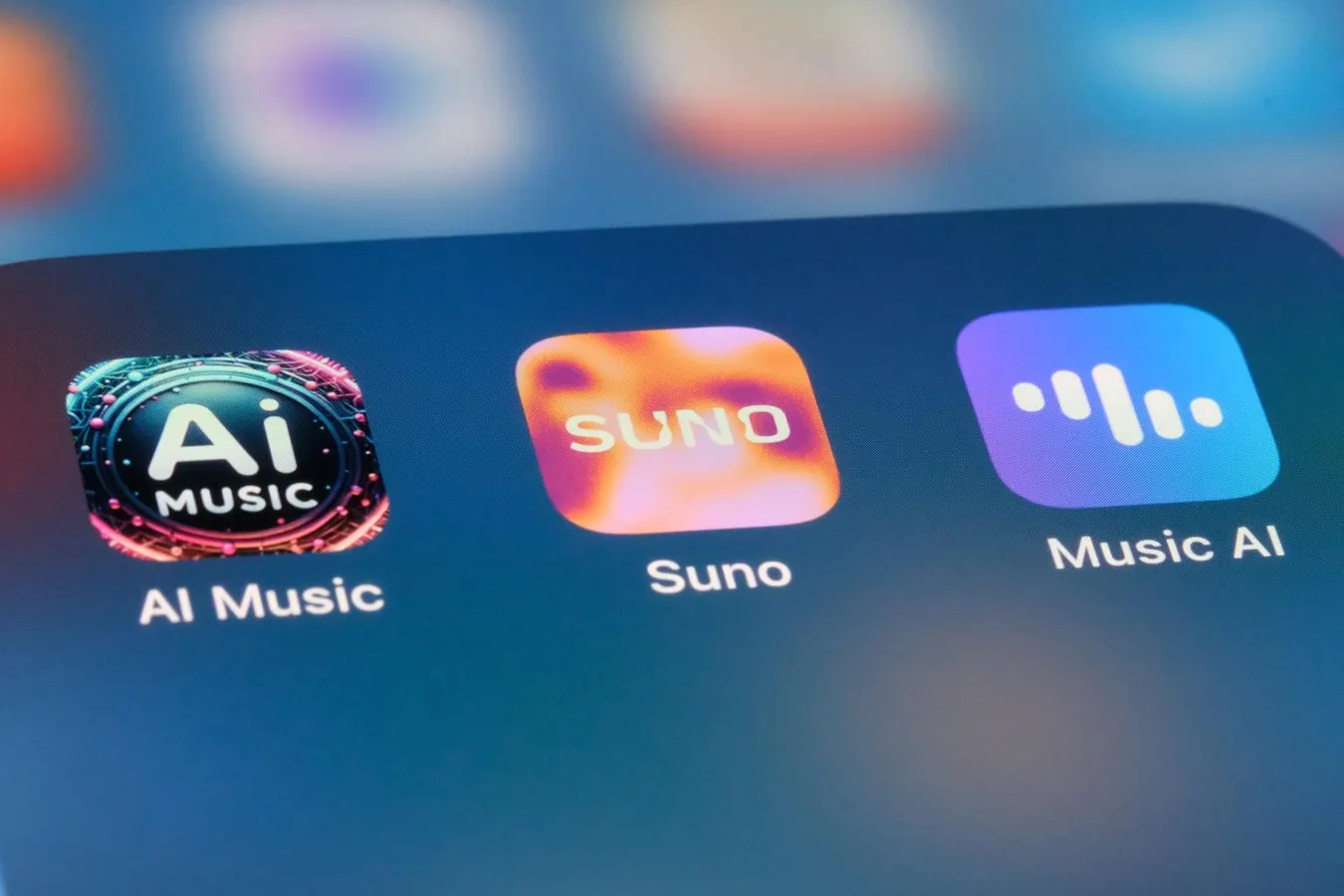

AI company Suno trained its music generator on millions of recordings without permission or payment. A federal appeals court has now ruled on whether that qualifies as fair use.
getty
The first appellate ruling on AI training fair use just went against the AI company. Here’s what it means for the music industry’s pending cases, and why there is more to the Suno settlements than meets the eye.
Suno built its AI tool by using millions of recordings for training without asking permission and without paying anyone. Suno says that is legal under a doctrine called fair use; the labels say it is theft. On September 29, 2026, for the first time, a federal appeals court weighed in on whether AI training on copyrighted work is fair use at all, ruling against Suno.
While that case involved legal research rather than music, the ruling has direct implications for every songwriter, producer, and label watching the Suno case unfold. If you care about whether AI companies can train on your music without paying you, you need to understand what just happened and what is coming next.
The Case That Just Set Precedent
Thomson Reuters, which owns the market-leading legal research software Westlaw, sued a company called ROSS Intelligence. ROSS wanted to build a competing legal research tool. To do it, it copied Westlaw’s editorial content (summaries Westlaw writes about court decisions that are referenced across the legal profession) and used them to train its AI. ROSS argued fair use: we are not reproducing the original work, we are just learning from it. The trial court rejected that argument. ROSS has now lost an appeal of that rejection.
ROSS Intelligence could have bought a license to use Westlaw’s editorial content, and its decision to copy it instead is what sank its fair use defense.
getty
The courts found that ROSS was building a direct competitor to Westlaw, using Westlaw’s own content. Market harm was the key factor in the ruling, for the simple reason that if someone can take your work without paying, build a product that competes with you, and undercut your market, that does not fall under fair use. The licensing market that Westlaw had built (the one ROSS could have participated in but chose to skip) was proof that the copying caused real economic harm.
Why Suno’s Case Is Different (But Not Safe)
There is one big difference between ROSS and Suno that Suno’s lawyers will lean on. ROSS was not a generative AI. It did not create anything new; it simply found existing court opinions and returned them. Suno is generative, meaning that it creates new music from scratch based on what it absorbs from outside information. That distinction matters because “transformative use” (taking a work and using it for something new and different) is the strongest argument in fair use. If the AI is making something genuinely new, one can argue that more closely resembles what a human musician does when influenced by other musicians’ works, not what ROSS did.
But here is where it gets dangerous for Suno. A court in Germany just ruled against Suno in a case brought by GEMA, the German performance rights organization. The Munich court found that Suno’s AI had effectively memorized copyrighted songs and could reproduce substantially similar versions of them when prompted. In other words, the “generative” defense falls apart if the AI’s output sounds like a copy of your song. The German court applied U.S. fair use law to the copies Suno made in America and still ruled against Suno, because unlike other AI cases where the training material never showed up in the output, Suno’s AI could actually reproduce copyrighted songs. That ruling is a warning sign for Suno’s case in the United States. If a federal judge here reaches the same conclusion, that Suno’s AI reproduces copyrighted songs rather than creating something new, the fair use defense falls apart and Suno could be liable for infringing millions of recordings.
A Munich court found that Suno’s model had effectively memorized copyrighted songs and could reproduce substantially similar versions when prompted.
getty
Suno already has filters in place designed to prevent users from generating copies of existing songs. The issue is that they may not work well enough. When prompted with a combination of artist names and lyrics, Suno’s AI may still produce output that closely matches copyrighted recordings. And even if Suno patches every filter tomorrow, it would not undo the training. The infringement claim is about what the model was built on, not just what it spits out today. The ROSS ruling says you cannot copy copyrighted work to build a competing AI product and call it fair use. Suno’s filters cannot undo what has already been built.
The Settling Confusion
Warner Music Group settled with Suno and signed a licensing deal. BMG reached a licensing deal too, in August 2026, though BMG was never a plaintiff in the litigation against Suno. When Suno struck deals with Warner and others, the settlements made headlines and left some with the impression that the legal pressure was easing. That is far from the truth. Two of the three major labels, Universal Music Group and Sony Music Entertainment, are still actively suing Suno in the U.S. After discovery revealed that Suno trained on millions of their recordings, they sought to add over 61,000 copyrighted tracks to the lawsuit. They have also accused Suno of ripping audio from YouTube to build its training dataset, a separate legal claim under the Digital Millennium Copyright Act that has nothing to do with fair use and could survive on its own.
Southern rock icon Jason Isbell is among the many musicians suing Suno in a Massachusetts class action claiming the platform encoded their identities into its model.
Getty Images for the Country Music Hall of Fame and Museum
Round Hill Music separately sued Suno in August 2026 in federal court in California, seeking damages that could exceed $1 billion, and has stated it is not interested in settling. In September 2026, a group of musicians including Jason Isbell filed a class action against Suno in Massachusetts, claiming the platform violates their right of publicity by encoding their identities into its model. The settlements you read about in the headlines are commercial deals. Some labels decided to take a deal rather than wait years for a court ruling. The labels and publishers that did not settle are the ones to watch. They are the ones betting that a court will decide the fair use question in their favor, and they are pressing forward.
What This Means for You
If you are a songwriter, producer, or rights holder, here is what to take away from all of this.
First, the Westlaw case cuts in your favor. The first appellate court to rule on AI training and fair use sided with the rights holder, not the AI company. That does not guarantee the Suno case comes out the same way, but it is a marker of where courts are heading, and it is not toward a blanket permission slip for AI training.
Second, fair use is not a get-out-of-jail-free card for AI companies. It is a fact-specific defense, and when the AI company is using your work to compete with you, the defense gets weak. The Westlaw case proves that. The German ruling against Suno proves it again from a different angle.
Third, the key question for music is whether AI outputs copy your actual songs. If Suno’s AI can reproduce something that sounds substantially like your recording when prompted, the “generative AI” defense falls apart. That is what the German court found, and it is what UMG and Sony are building their case around in the U.S.
Fourth, the next ruling that matters is the summary judgment ruling in the Suno case, expected before Chief Judge F. Dennis Saylor IV in the District of Massachusetts. That ruling could determine whether training generative AI on copyrighted recordings without a license is infringement as a matter of law. It is the most consequential AI copyright decision for music that is yet to come.
The next ruling that matters comes from Chief Judge F. Dennis Saylor IV in Boston, who will decide whether training on copyrighted recordings is infringement as a matter of law.
Getty Images
I flagged in my March column on AI sampling and royalties that the Suno and Udio cases are where the future of your mechanicals is being decided. That has not changed. What has changed is that the first appeals court to address AI training fair use just ruled against the AI company. The settlements are business deals. The litigation is what will set the rules. Keep watching the Suno case. It is where your rights as a creator will be decided.








Leave a comment