


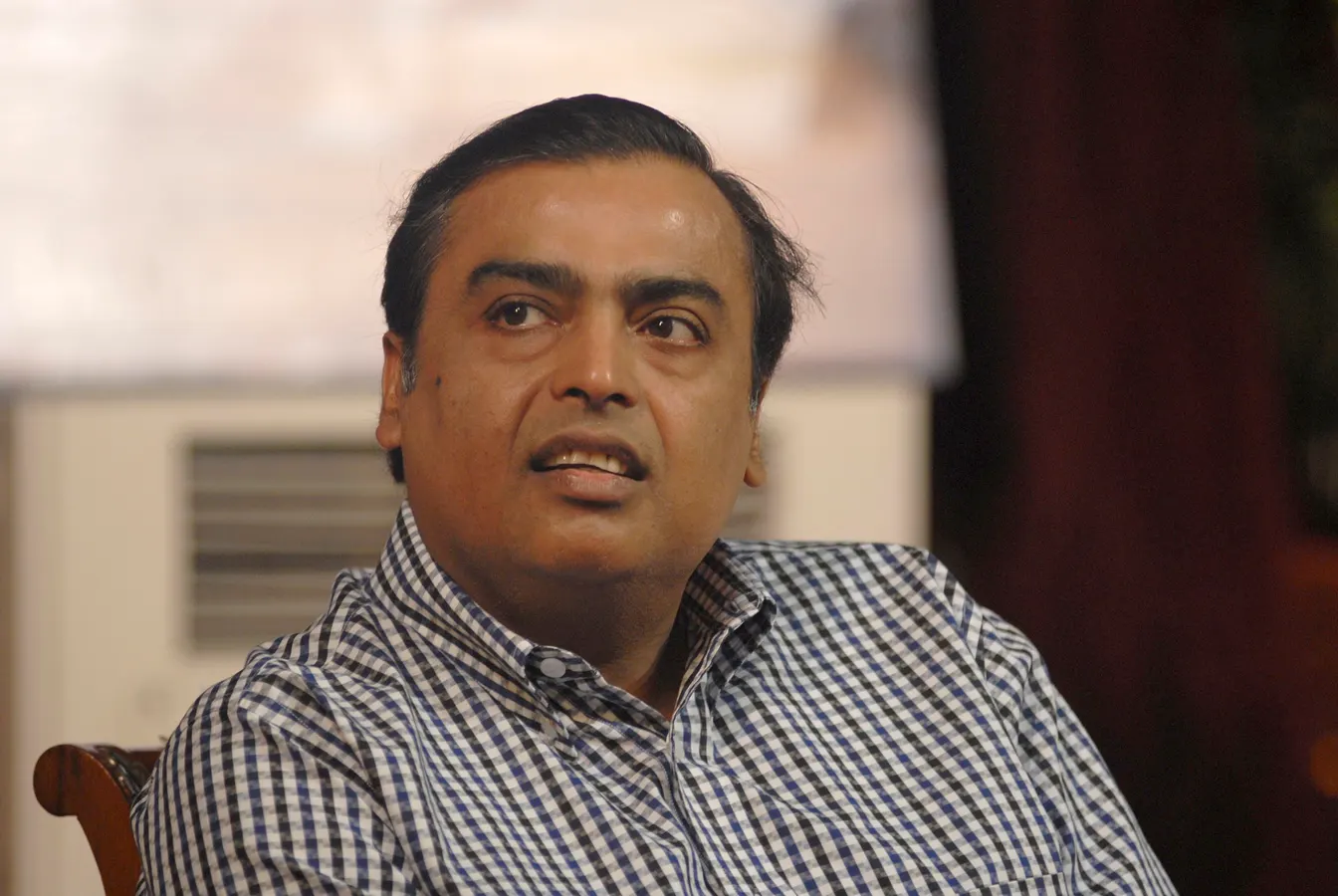
Mukesh Ambani
Getty Images
This story is part of Forbes’ coverage of India’s Richest 2026. See the full list here.
The race to make India a data center hub geared up this year as the country’s two richest men made multibillion-dollar pledges to support a nationwide buildout. Gautam Adani announced in February that his infrastructure conglomerate, Adani Group, would invest $100 billion by 2035 in data centers powered by renewable energy supplied by his Adani Green Energy.
Shortly thereafter, Reliance Industries’ Mukesh Ambani said he would invest $110 billion over seven years in new data center and AI initiatives. These will be overseen by Ambani’s son Akash, with the goal of making AI affordable for Indians. “India cannot afford to rent intelligence,” said the billionaire. “Therefore, we will reduce the cost of intelligence dramatically, as we did the cost of data,” he vowed, referring to his Jio mobile operator, which was launched in 2016 offering free voice calls and cheap data.
India lags in AI infrastructure and is among Asia’s most underserved markets with a data center capacity-to-population ratio of roughly 825,000 people per megawatt of installed capacity, compared with China’s 288,186 people per megawatt, according to Cushman & Wakefield. The real estate consultancy notes that even with the government’s push to increase capacity to 5.7 gigawatts by 2030 from 1.8 gigawatts as of June, India will still trail China, which it estimates will have installed capacity of 6.8 gigawatts by then.
“AI demand has risen sharply across the Asia-Pacific and India is one of the few markets with the scale, cost position and domestic demand base to capture a meaningful share of it,” says Pritesh Swamy, Cushman & Wakefield’s Singapore-based head of data center research and consulting for Asia-Pacific, in an email.
To lure overseas investors, the government has announced a tax holiday from 2027 to 2047 for foreign cloud providers that use India-based data center infrastructure. Global hyperscalers have caught on, with Google, Microsoft and Walmart-owned Flipkart all partnering with Adani Group to establish data center campuses countrywide. In June, Reliance said it would build a 168-megawatt AI data center for Meta in Jamnagar in western India.
India could generate annual revenue of $4.7 billion to $5.6 billion by leasing data center capacity that is expected to be operational by 2030, according to an email from Gaurav Nagori, equity analyst at Mumbai-based Avendus Spark Institutional Equities. Looking at future opportunities, he notes: “While much of the AI training, today, happens in the U.S., inference workloads are expected to increasingly move closer to users in India…potentially positioning India as an exporter of cloud/compute services.”
Meantime, those building the mega projects must contend with the usual constraints, notes Cushman’s Swamy, such as the availability of sites with adequate power, water and connectivity. And while data centers in India are not yet a hot-button issue the way they are in the U.S., some are facing opposition from local communities and environmental activists. For example, Adani’s proposed $15 billion, 1-gigawatt project with Google in the eastern port city of Vizag has drawn protests from residents, and a public interest litigation has been filed in the state high court seeking a review of the land allocated for it by the state government and the project’s potential environmental impact. In a statement, Google says the project will be powered by renewable energy and use advanced air cooling technology to minimize its impact on nearby communities. It will also include a watershed management project to provide clean water systems to the area’s residents.















Leave a comment