


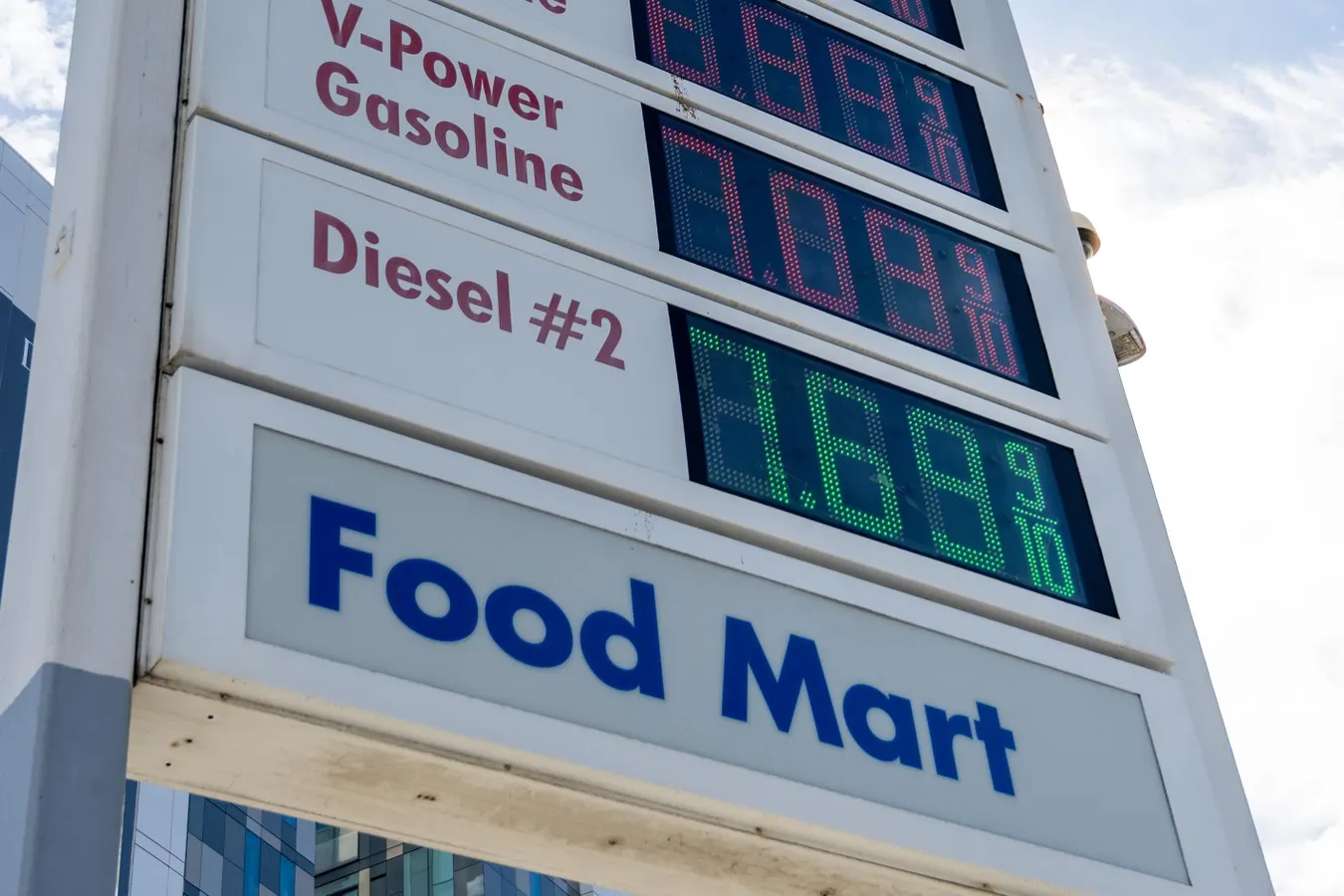

Fuel prices displayed on a Shell gas station and Food Mart sign at Fourth and Bryant streets in the South of Market neighborhood including Diesel fuel prices, San Francisco, California, September 9, 2026. (Photo by Smith Collection/Gado/Getty Images)
Gado via Getty Images
The Trump administration is right to explore every reasonable option to bring down diesel prices and keep more American-made diesel at home. But an export prohibition may not deliver the lasting relief the administration hopes for and will effectively worsen affordability for consumers.
Refineries can’t make diesel without also making gasoline and jet fuel, so a ban that forces them to scale back production shrinks supplies of all three. American families could end up paying more at the gas station and the airport.
Restricting export shipments could force American refineries to cut production, raise consumer costs, and weaken the reliability that makes the United States a valuable supplier to its allies.
In a September 23 letter to Trump, more than 30 organizations, including the American Fuel & Petrochemical Manufacturers, American Petroleum Institute, National Association of Manufacturers and U.S. Chamber of Commerce, urged the President to reject export restrictions. They warned that reduced refinery operations would also squeeze other refined products.
The appeal of a ban is easy to understand. Keep more diesel in the country, and it will tamp down prices. But that argument assumes refineries could keep producing the same volume of refined products after Washington eliminated a major market for their consumption. It also assumes fuel produced at a Gulf Coast refinery could easily be delivered to any U.S. customer who needs it.
Refineries produce diesel, gasoline and jet fuel together, and they have limited ability to adjust the mix. If refiners lose overseas customers and cannot economically store or sell the surplus at home, they have to reduce operations. Less diesel production then means less gasoline and jet fuel, too.
U.S. refineries are producing about 5.3 million barrels a day of distillate fuel, the category that includes diesel and heating oil, against domestic demand of about 3.6 million barrels a day. Export markets help sustain that level of production. A ban would put pressure on refiners to reduce it.
Even if a regional glut briefly pushed local diesel prices down, that would offer little assurance of lasting national relief. Once refineries cut their operating rates, the reduction in other fuels would put upward pressure on those prices. A policy sold as help for truckers, therefore, could leave motorists paying more for gasoline and airlines paying more for jet fuel.
More than half of all U.S. refining capacity is located on the Gulf Coast, where production exceeds regional consumption. The East Coast, meanwhile, relies on imports for about 10% of its diesel supply because there’s not enough pipeline capacity to move the Gulf Coast’s export surplus to other U.S. regions. Keeping fuel inside our national borders doesn’t resolve those transportation constraints.
The Gulf Coast could accumulate unsold supplies while consumers elsewhere are forced to rely on imports. The industry groups cautioned that import-dependent regions, particularly the Northeast, would face higher fuel costs as global supplies tightened, just as the home heating season approaches.
The United States is the world’s largest diesel exporter. Russia ranks second. If American refiners are cut off from their overseas markets, those customers will buy elsewhere. A ban would simply hand our competitors an opening and send the message to our trading partners that the United States is a less dependable supplier.
Republicans recognized this risk in 2024, when then-President Biden paused approvals for new liquefied natural gas export projects. More than two dozen Republican senators, including then-Sen. JD Vance, warned that the pause threatened U.S. economic interests and jeopardized our allies’ access to alternatives to Russian energy.
President Trump reversed course on the first day of his second term. His January 20, 2025, Unleashing American Energy executive order directed the Energy Department to resume LNG export reviews expeditiously and to weigh their effects on American jobs, the economy, and the security of allies and partners. Those priorities should continue to anchor this administration’s policies, but this diesel export ban will contradict President Trump’s energy dominance goals.
Washington should concentrate on making fuel easier to produce and deliver. The energy coalition letter credits the President’s targeted Jones Act waivers with keeping more than 50 million gallons of fuel in the United States and displacing imports. The coalition also urges reducing barriers to energy production and transportation infrastructure to encourage investment in refining capacity.
Permitting reform and better transportation infrastructure would address the constraints that keep American fuel from reaching American consumers. Predictable access to export markets would help refiners plan investments and maintain higher production levels. Those are practical ways to support the abundance Trump has promised.
Washington should prioritize policies that make energy abundance possible, including permitting reform. Republicans rightly rejected export restrictions when the Biden administration floated them. The same logic holds today. Keep American energy flowing, and American strength follows.














Leave a comment