



The Power Grid Hasn’t Changed In A Century.
getty
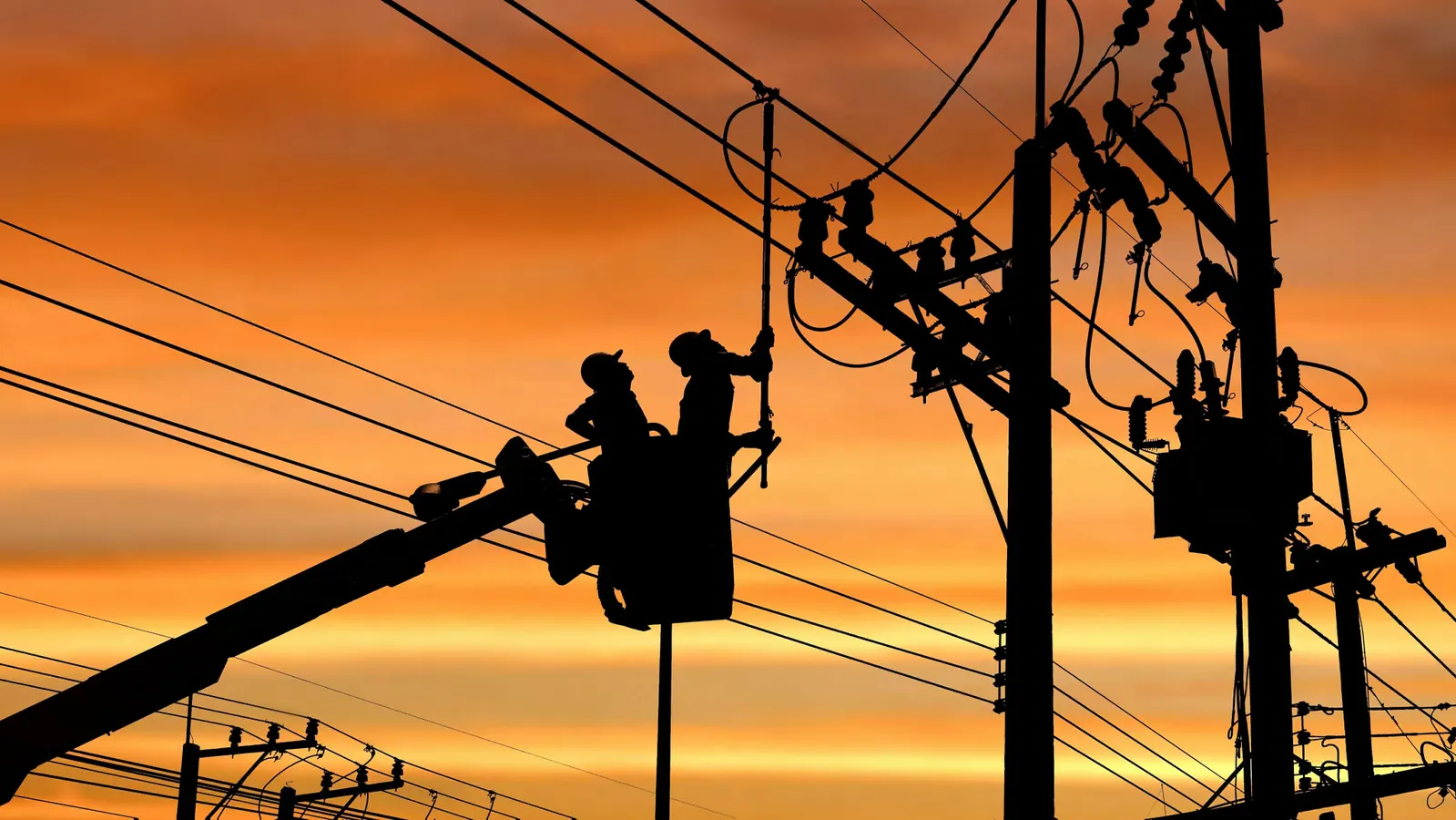
Alexander Graham Bell, if handed a smartphone, would struggle to make a phone call. But Edison, it is often said, would still recognize the power grid. Today, people are becoming acutely aware of that gap as rising demand from data centers and electrification drives up costs while the aging grid becomes less reliable.
The Department of Energy projects data center electricity use could nearly triple to as much as 12% of U.S. demand by 2028. Companies like Google, Microsoft, and Nvidia now invest directly in the grid to expedite access to reliable power. This push for speed to power may finally bring the grid into the 21st century.
Decades Of Uphill Battles
For decades, nothing forced the grid to change. Demand stayed flat. Regulation rewarded caution and incentivized utilities to build generation and transmission rather than enable demand flexibility. The caution made sense: keeping the lights on carries safety obligations, with real consequences and penalties should it go wrong. With nothing pushing hard enough to force change, the centralized grid remains the dominant architecture with generation chasing demand in real time.
Plenty of technologies tried. Solar, wind, batteries, EV charging, monitoring and control hardware and software, virtual power plants and more. Each spent decades pushing against the inertia of a centralized, regulated grid. Fifty state regulators and thousands of individual utilities—each with its own rules, incentives and risk tolerance—made every deal its own negotiation. Success meant closing one utility, one state, one pilot at a time. Vendors built entire go-to-market strategies just to survive that patchwork. While technology matured over time, the customer stayed the same, which posed the greatest hurdle to adoption.
A New Customer In Town
Data centers arrived as a sizable and different kind of buyer: technology-forward and flush with capital they can deploy freely on the open market. They spend that money deploying technology at rapid speed. Global data center capital expenditure will surpass $1 trillion annually by 2029, according to Dell’Oro Group.
Take VEIR, a Massachusetts company founded in 2019 to build superconducting transmission lines. Its technology can move 5 to 10 times more power through the same footprint, easing siting and permitting. The company spent six years making inroads into the utility sector before expanding its focus on data centers. In 2025, they raised $75 million backed by Microsoft.
Tim Heidel, VEIR’s co-founder and CEO, said in an interview: “The boom in AI is a once-in-a-lifetime opportunity to drive innovation across the power grid. Data centers give us a near-term opportunity to accelerate commercialization and deployment much faster than we could have in transmission alone.”
Slide Rules And Typewriters
Grid evolution never incorporated at scale the kinds of modern technology adopted in just about every other industry. Outages still require a phone call in most places, while operators often manually dispatch power and manage only a small slice of demand to shift peak and match available generation.
The grid needed this evolution regardless of data centers. Because grid modernization never happened proactively, it now arrives as a reactive scramble driven by one industry’s urgency rather than any broader plan.
Uneven Ground
Data centers are forcing a reckoning across the grid faster than communities can absorb it. That reactive posture unsettles people and communities. The grid underpins every aspect of society and the transition won’t necessarily reach everyone equitably. Data center demand strains an already burdened grid, raising prices and increasing the odds of outages. Build-outs also raise concerns around water and land use, diesel-generator pollution and equity since a handful of communities absorb most of the boom.
Texas Gov. Greg Abbott this week directed TCEQ to halt all permits sought by data centers, joining16 other states that have introduced moratorium bills in 2026. Similar actions can be seen globally: Denmark’s grid operator paused new data center connections nationally in May after project requests hit 60 gigawatts, roughly eight times peak demand, a stark sign of how fast this is outrunning grid capacity everywhere.
Data centers push the grid to evolve: distributed instead of centralized, software-driven instead of purely mechanical, built to flex demand instead of building generation to follow it. Less like the rotary phone, more like the smartphone. And like the smartphone, the grid of the future may be unrecognizable to Edison. That, more than any single technology, measures what data centers have set in motion.













Leave a comment