


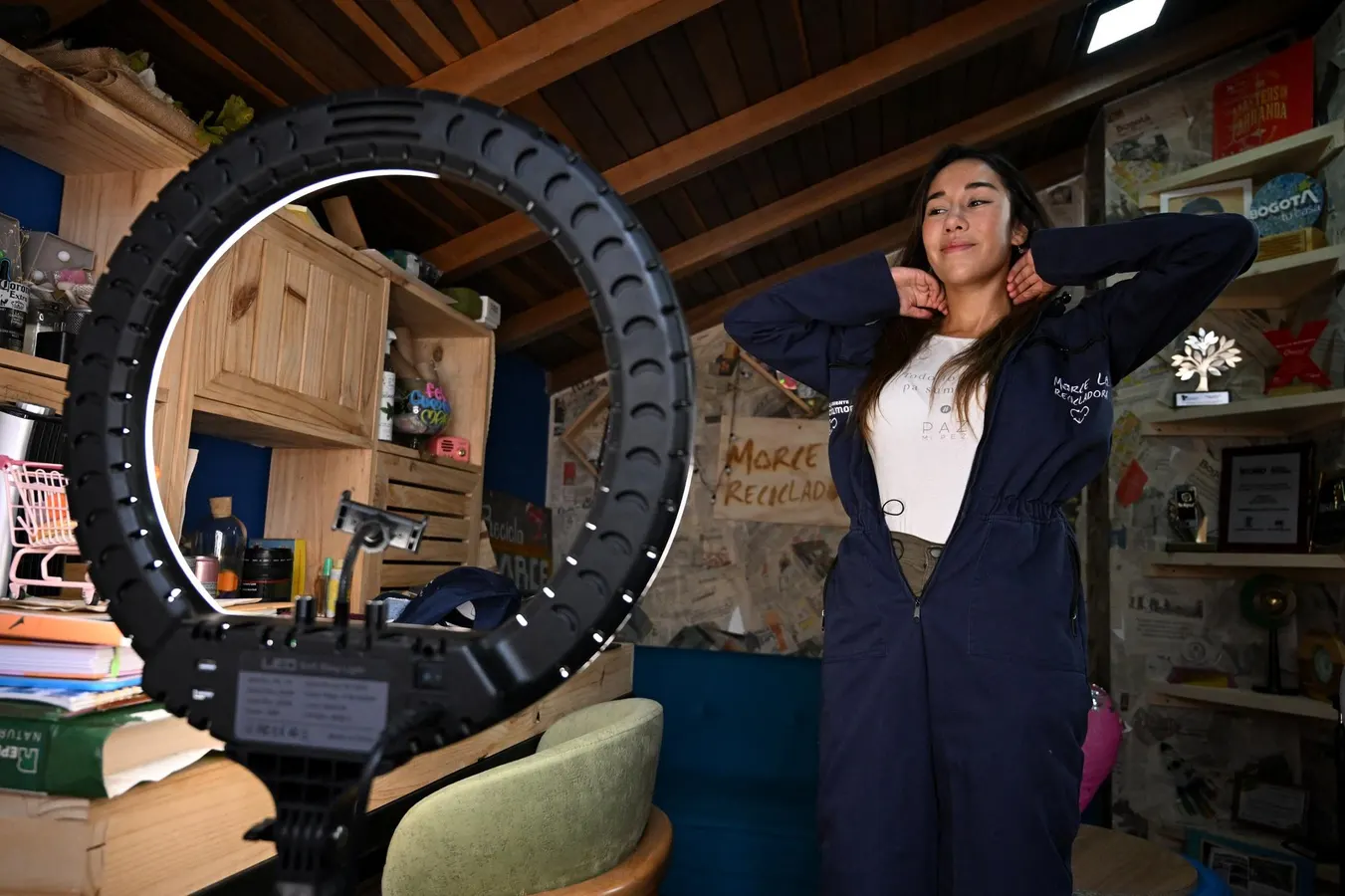

Creator of content for social networks, Sara Samaniego, known as “Marce, the recycler,” records a video at her house in Bogota on February 26, 2025. Sara Samaniego interviews recyclers in Colombia’s capital, transforming into “Marce, the recycler,” a 32-year-old influencer who teaches about environmental issues while promoting recycling. Samaniego’s unique style, including blue overalls, braided hair, and a cap worn backwards, resonates with thousands of followers on social networks. (Photo by Raul ARBOLEDA / AFP) (Photo by RAUL ARBOLEDA/AFP via Getty Images)
AFP via Getty Images
The creator economy was once viewed as an alternative to Hollywood’s traditional entertainment system. Digital creators built audiences on social media while traditional talent agencies focused primarily on actors, musicians, directors and other established entertainment professionals. That distinction is quickly disappearing.
Creative Artists Agency’s (CAA) latest push into the creator economy suggests that Hollywood is no longer looking at successful creators simply as influencers. Increasingly, the biggest creators are being treated as businesses capable of producing content, launching products, building intellectual property and expanding across multiple areas of entertainment. This evolution could also change the contracts creators sign.
CAA Is Betting On Creator-Led Businesses
In June, CAA and TPG-backed Integrated Media Company announced Compound Creative Holdings, a $250 million company created to acquire, operate and grow creator-economy businesses. This is not another talent representation initiative.
The business model is significant in the creative industry. Compound is designed to invest in businesses created around digital talent and help scale them with capital and operational support.
CAA’s existing creator operation is already broad. Its Creators division works across digital media, podcasts, talent representation, brand partnerships and content sales, among other areas. The agency describes its approach as helping talent build opportunities across original content, licensing, touring, publishing and consumer products.
Taken together, these efforts point toward a larger shift in entertainment. The creator is no longer the product. The creator now may be the founder of the company producing the product, and that distinction matters.
The Traditional Talent Contract May No Longer Be Enough
Traditional talent agreements are generally built around representation. An agent helps secure opportunities and receives a commission in return. However, creator businesses can be much more complicated.
A single creator may simultaneously operate a YouTube channel, host a podcast, sell merchandise, license a name or likeness, develop television projects, participate in live events and enter multimillion-dollar brand partnerships. Some are also launching independent production companies and consumer brands.
As those businesses expand, the question becomes what exactly a representative is representing. A creator negotiating a new agency or management agreement should therefore pay close attention to the agreement’s scope. A broadly drafted contract could potentially reach revenue streams that did not exist when the relationship began.
For example, should an agency receive a commission from a creator’s sponsorship deal? Probably, if it negotiated the agreement.
But what about revenue from a company the creator founded independently? Or a consumer product business? A licensing deal? Equity received from a startup? A television project developed by a separate production company? Those questions become increasingly important as the line between talent and enterprise disappears.
Intellectual Property Becomes More Valuable
The shift also places greater importance on intellectual property. For traditional talent, a contract may focus heavily on compensation, exclusivity and the services the performer will provide.
Creators often bring something additional to the table: an existing universe of content. That can include trademarks, recurring characters, show formats, catchphrases, podcasts, video libraries, subscriber communities and other assets developed before a new business relationship begins.
Creators should understand whether they are licensing those assets or transferring ownership of them. That distinction can have enormous consequences.
A successful online series could later become a television show. A podcast could become a live tour. A social media personality could become a consumer brand. Contracts written when those properties appear small may decide who controls them once they become valuable.
Exclusivity Could Become More Complicated
Exclusivity provisions deserve similar attention. A creator may work across several platforms and industries at the same time. That makes a broad exclusivity clause potentially more restrictive than it would be in a traditional entertainment relationship.
Consider a creator who signs a beauty sponsorship while also developing her own cosmetics company. Could the sponsorship agreement prevent her from promoting her own products?
Or, imagine a creator who signs an exclusive podcast agreement but later wants to develop a television show based on the same concept. Does the exclusivity provision cover audio only, or does it extend to video, live events and derivative content? The more creators move between industries, the more carefully contracts will need to define where exclusivity begins and ends.
Creators May Start Negotiating More Like Founders
Perhaps the biggest change, however, is economic. Traditional influencer deals often involve a straightforward exchange: create content and receive a fee.
But creators increasingly provide something brands and investors cannot easily purchase elsewhere: direct access to an established audience. That may give successful creators leverage to negotiate beyond a one-time payment. Equity, revenue sharing, licensing royalties, profit participation and ownership interests could become more common components of creator deals.
The trend is already visible in brand relationships. Some companies are bringing creators into product development and strategy while others have begun experimenting with creator equity arrangements. That changes the conversation from “How much will I be paid for this campaign?” to “What am I helping build, and what should I own if it succeeds?”
Representation Could Become More Complex, Too
CAA’s investment strategy also highlights another issue that could become increasingly important: conflicts of interest. Compound operates separately from CAA’s creator representation business. That separation matters because representation and investment involve different incentives.
An agent’s job traditionally centers on advancing the client’s career and negotiating favorable opportunities. An investor, meanwhile, wants to increase the value of the business in which it holds an interest. Those goals can overlap, but they are not necessarily identical.
As agencies, investment firms, production companies and creator businesses become more interconnected. Contracts may need stronger provisions addressing disclosure, consent and potential conflicts.
Creators should know not only who represents them, but also who may have a financial interest. This could come from the companies or opportunities being presented to them, and shapes the current landscape of content creation we see today.
The Creator Economy Is Becoming An Ownership Economy
CAA’s investment is ultimately about more than creators becoming more influential. It reflects a broader transformation in how value is created in entertainment.
Social platforms initially allowed creators to bypass traditional gatekeepers and reach audiences directly. Now those audiences are becoming the foundation for businesses that extend far beyond social media.
The next generation of major entertainment companies may not begin with a studio, television network or record label. They may begin with a creator and an audience.
That means creator contracts will have to evolve as well. Representation agreements will increasingly intersect with intellectual property, corporate ownership, licensing, investment, brand partnerships and long-term business strategy.
For creators, the most important question may therefore be changing. It is no longer, “Who represents me?” but rather “Who owns what I am building?”.











Leave a comment