


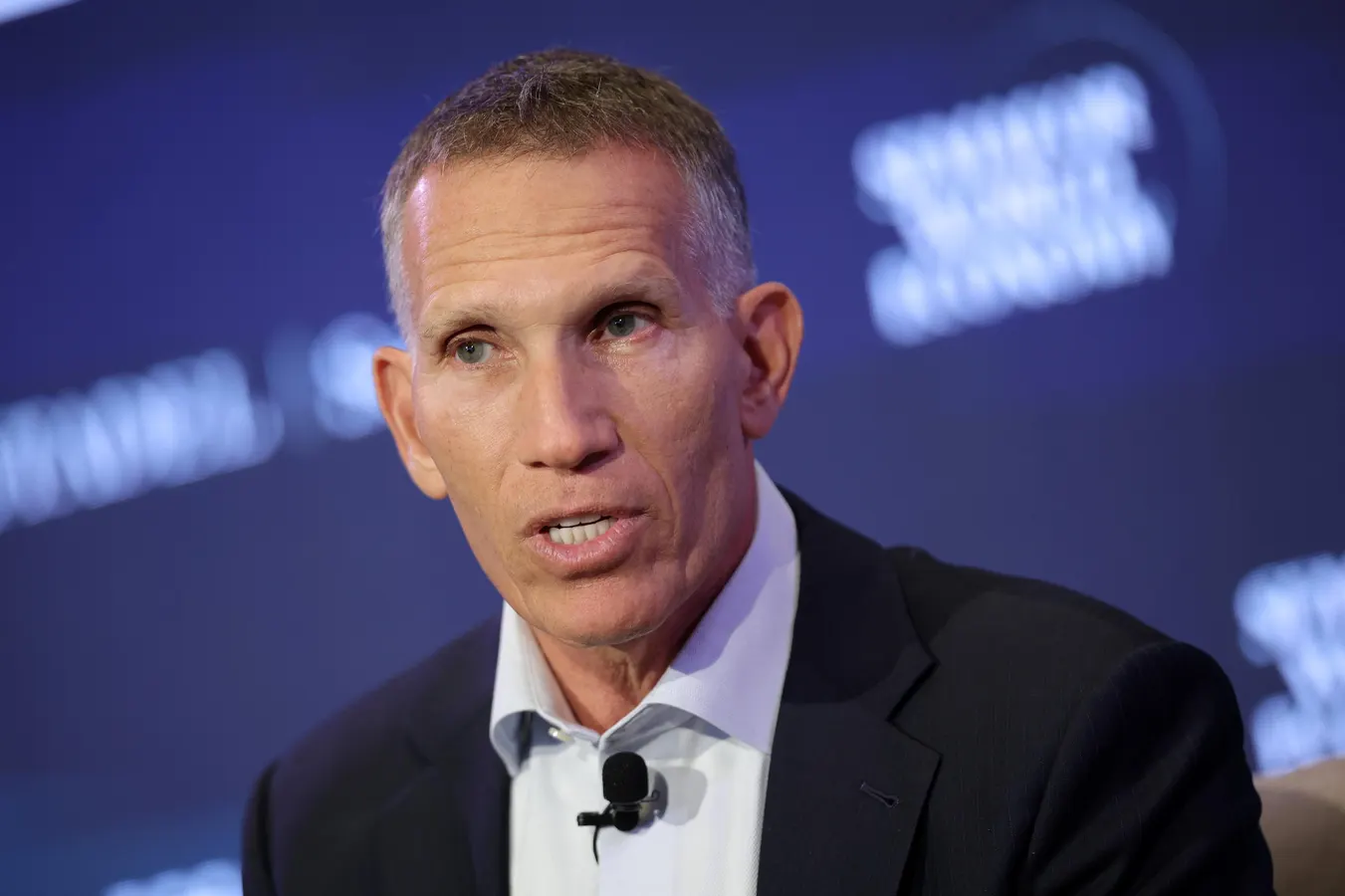

Ynon Kreiz, the incoming co-CEO of the combined Paramount and Warner Bros. Discovery company. (Photo by Kevin Dietsch/Getty Images)
Getty Images
Ynon Kreiz starts at Paramount on October 5 with a number attached to the job. Paramount has told investors its $110 billion deal for Warner Bros. Discovery, expected to close the following day, will produce more than $6 billion in synergies.
That puts Kreiz closest to the task of delivering it. David Ellison keeps strategy, creative direction, talent relationships, technology and capital allocation, while Kreiz runs day-to-day management and integration of the combined businesses. Paramount has already identified where some of the savings should come from: a single enterprise resource planning system, consolidated streaming technology, procurement and real estate.
His career suggests the harder part may be knowing what not to combine. Paramount has committed to maintain both studios and invest in the creative engines of both companies. Under its settlement with 12 state attorneys general, the merged company must also negotiate carriage for Paramount and Warner Bros. basic cable channels separately for five years and release at least 30 films a year.
The problem is how to cut duplication without forcing every part of the company to work the same way.
Fox Kids And Endemol Were Tests Of Global Scale
Long before Barbie, Kreiz ran businesses built around production and distribution across markets.
He co-founded Fox Kids Europe, developing pay-TV channels across Europe and the Middle East. He later became chairman and CEO of Endemol, then the world’s largest independent television production company, producing more than 10,000 hours of programming annually and controlling franchises including Big Brother and Deal or No Deal.
At Endemol, that meant managing a company whose formats traveled globally but were produced for different broadcasters, budgets and audiences. Fox Kids Europe presented a related challenge, with channels operating across multiple countries and media markets. In both cases, scale came from coordinating a broad network without assuming that every market should be run in exactly the same way.
Kreiz is not arriving from outside the production business to impose a cost program on it. He has previously managed large creative operations whose value depended on not treating every market, program or production company alike.
This set of experiences also gave Kreiz a long view of production economics.
Mattel Added IP Expansion And Cost Cutting
At Mattel, the same idea appeared in a different form. Under Kreiz, the company increasingly described itself as an IP company managing franchises across film, television, games, publishing and live experiences, often through outside partners.
Barbie was its most visible success, with Warner Bros. distributing the film. But the larger precedent was organizational: Mattel did not have to own every part of the production chain to take its brands into more businesses.
At the same time, Kreiz was cutting costs. Mattel’s Optimizing for Growth program generated $343 million in annualized gross savings from 2021 through 2023, exceeding its original target.
Paramount now needs both sides of that record at far greater scale: running production across markets and cutting costs while extending franchises.
Ellison has assembled the assets. Kreiz has to find $6 billion across them without assuming that scale requires sameness.











Leave a comment