


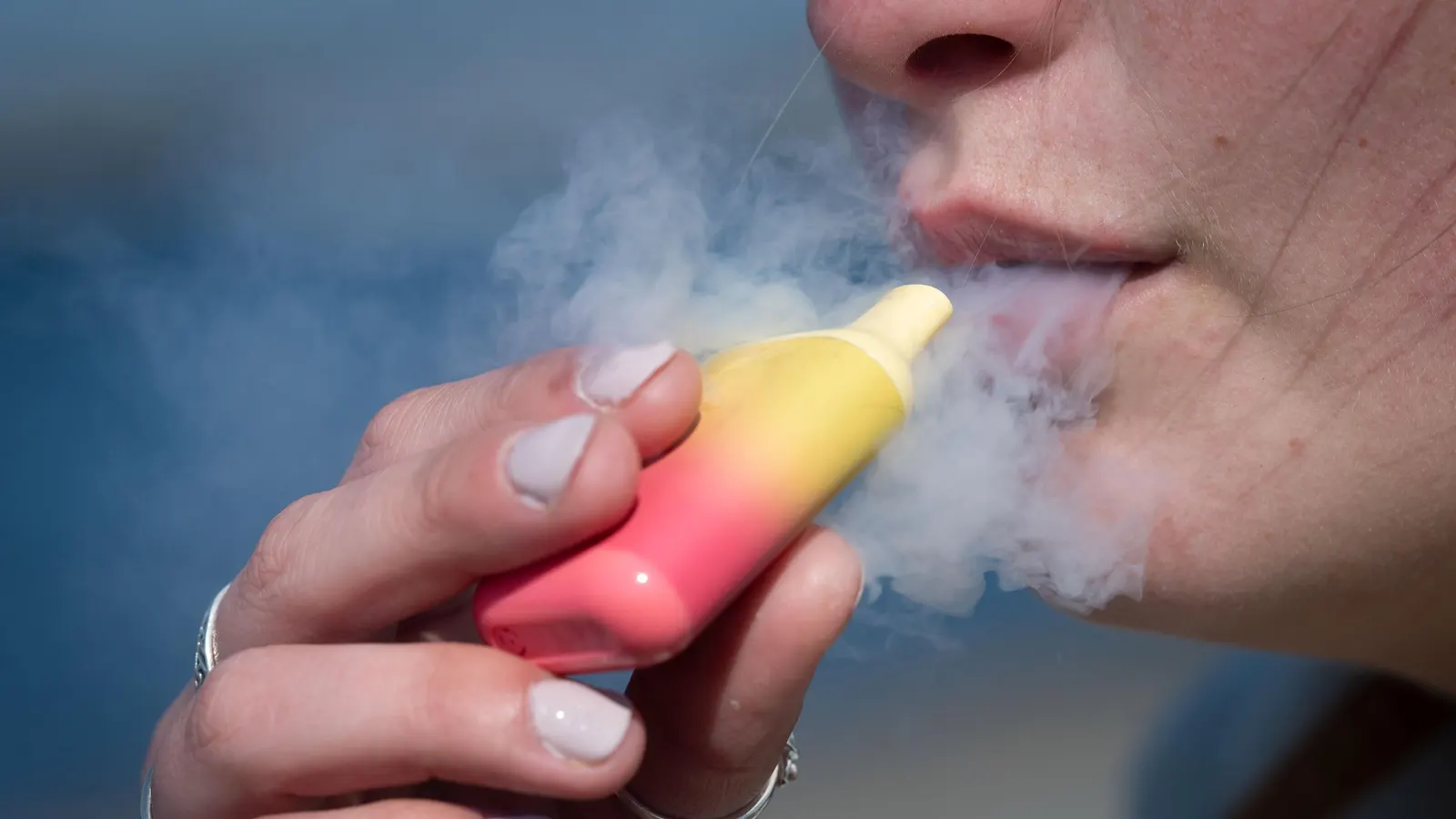

Beginning October 1, Virginia treats any product missing from the attorney general’s directory as contraband.
Getty Images
Amendments to Virginia’s liquid nicotine product directory law took effect this week. Police can now seize any vape product that is not on a list maintained by the state attorney general, and any retailer caught selling an e-cigarette item not on the list now faces a fine of at least $5,000 per product for a first violation. Legislators in Richmond sold the law as a public health measure. But it functions as a barrier to market entry, and the companies that sell cigarettes pushed for it.
The market this law is closing
E-cigarettes come about as close to an unregulated consumer market as you will find for any legal product in the United States. Retail scanner data identifies 6,957 distinct e-cigarette products sold in the U.S. in the six months ending March 22, 2026. That count only covers convenience stores and other mainstream retailers, not vape shops or online sales, which are the primary shopping outlets for many e-cigarette customers.
Walk into any vape shop and the first thing you notice is how much there is to choose from. Dozens of manufacturers compete on price, battery life, puff count and flavor, and the ten largest brands still leave a fifth of the market to smaller upstarts. This is what a market looks like when there are almost no barriers to entry.
Aside from being used for enjoyment, e-cigarettes help people quit smoking. A 2025 Cochrane review covering 104 studies and more than 30,000 participants found high-certainty evidence that they are more effective nicotine patches and gum. About nine of every 100 smokers who try to quit smoking with e-cigarettes succeed, compared with six with patches and gum.
A 2022 review commissioned by England’s Office for Health Improvement and Disparities concluded that “in the short and medium term, vaping poses a small fraction of the risks of smoking.” Britain’s Royal College of Physicians reached the same conclusion in 2024. E-cigarettes carry some risks of their own, and long-term data remain scarce. But no serious person considers them as dangerous as inhaling burning tobacco.
Besides the health benefits, e-cigarettes save consumers money. The Campaign for Tobacco-Free Kids puts the national average price of a pack of cigarettes at $10.15 including taxes, which for a pack-a-day smoker comes to about $3,700 a year. A smoker who buys two disposables a week, roughly the nicotine content of a pack-a-day habit, spends about $2,600 a year, about 30 percent less than for the cigarettes.
Population-level statistics are consistent with a broad societal shift away from traditional cigarettes and toward e-cigarettes. The adult smoking rate in the U.S. fell to 9.9 percent in 2024, the lowest on record, while 7 percent of adults used e-cigarettes, up from under 4 percent a decade earlier.
The U.S. smoking rate has fallen to a record low as e-cigarettes have grown in popularity.
Author’s calculations.
What Virginia’s law does
Virginia’s directory law first passed in 2024. It requires every manufacturer to certify each product it wants to sell in the state. A product is only eligible if the FDA has already issued it a marketing order, or if it was on the market as of August 8, 2016 and a premarket application for it, still awaiting review, was filed with the FDA by September 9, 2020. Products newer than that, meaning practically every disposable on the shelves, cannot get on the list at all.
The attorney general publishes the list, and selling anything not on it has been illegal since December 31 of last year. In practice, however, nothing happened for months. The attorney general’s annual report to the General Assembly recorded no enforcement actions as of the end of 2025. Meanwhile, a federal judge blocked the law in December. After the Fourth Circuit stayed that order the state pushed the start of enforcement to April 1.
The October amendments have ramped up the pressure on e-cigarette manufacturers. The amendments raise the initial certification fee from $2,000 to $5,000 per product and the annual renewal fee from $500 to $2,500. So a manufacturer with a dozen flavors in three strengths now pays $180,000 to get on the list and $90,000 a year to stay on it.
For retailers, the law may be even more harsh. The previous daily fine of $1,000 per product becomes at least $5,000 per product for a first violation, $10,000 for a second and $15,000 for a third, and products missing from the list become seizable contraband. Worse than the fines for a shop is watching most of its inventory become unsellable, because nearly every disposable it stocks is missing from the list.
The attorney general’s live directory lists just 185 products from 13 manufacturers as of this week. Compare that figure to the nearly 7,000 products the scanner data captured nationwide. Of the five best-selling brands in the country, two, Geek Bar Pulse and Foger, are absent. Breeze survives with just a single tobacco flavor. What remains is mostly tobacco and menthol pods from Vuse, NJOY, JUUL, Logic and blu, a brand owned by Imperial Brands. Together these account for roughly 70 percent of the entries. A handful of older e-liquids and disposables from small companies whose applications are still pending at the FDA also make the list. As one Richmond shopkeeper told local media in December, “If this goes into effect the way it’s written, I don’t know how we stay open.”
Who wrote the rules
The situation starts to make more sense when looking at who holds the FDA’s marketing orders. The agency has authorized 48 e-cigarette products, out of applications covering nearly 26 million. Those 48 products belong to five companies. Vuse belongs to R.J. Reynolds, NJOY to Altria and Logic to Japan Tobacco. The rest are products of JUUL and of Glas, a small company whose device only works for an adult who has verified their age with a government ID through a smartphone app, and which received the first fruit-flavor authorizations in May of this year. Every product on the FDA’s list except for Glas is tobacco or menthol flavored. Glas has not certified in Virginia either, so the one fruit-flavored vape the FDA has authorized is not on the state’s list.
By the FDA’s own estimate, the average cost of a premarket application is $466,563 per device and as much as $2.6 million at the high end. Meanwhile, the review takes years. A company with billions of dollars in cigarette cash flow can bear that cost, especially when it is selling only a few tobacco-flavored pods. A manufacturer focused only on disposables, while offering a dozen flavors, cannot.
Altria does not hide its role in pushing for state laws to outlaw its competitors. Altria’s public policy page says the company “supported enactment of state legislation requiring all e-vapor manufacturers to verify compliance with the Tobacco Control Act enabling states to publish directories of products for legal sale.” When Virginia’s bill passed, an Altria spokesman called it “a meaningful step towards addressing the widespread sale of illicit vapes,” and an Altria enforcement executive told Bloomberg that the directories are “important steps to telling retailers what they can and can’t sell.” The company is also headquartered in Richmond. More than a dozen states now have similar laws.
Rent Seeking in action
Rent seeking occurs when companies use government power to capture profits that competition would otherwise eat away. It’s most straightforward form is creating legal rules that established incumbents can satisfy and smaller rivals cannot, thereby creating a regulatory moat around an industry. Directory laws do not ban e-cigarettes. That, after all, would hurt Altria as much as anyone else. Instead, they ban the e-cigarette products that were beating its NJOY in the marketplace.
Perhaps the strongest argument in favor of the state laws relates to youth access. Under the October amendments, permitting and inspections move to the state’s Alcoholic Beverage Control Authority, which will also send underage buyers into every retailer at least once every two years to check for sales to minors. But Virginia already bans sales of e-cigarettes to anyone under 21, and the test purchases could have been enacted on their own. Instead lawmakers attached the product list.
The Virginian who switched from Marlboros to a mango disposable now has a few options. He can buy a tobacco-flavored pod from a cigarette company. He can buy the mango one from an unlicensed seller or across the state line. Or, he can go back to Marlboros. Altria makes those too.















Leave a comment