


Oura’s IPO delay. The dangers of “secretagogues.” Unpaid medical debts. These stories and more in this week’s InnovationRx newsletter. To get it in your inbox, subscribe here.
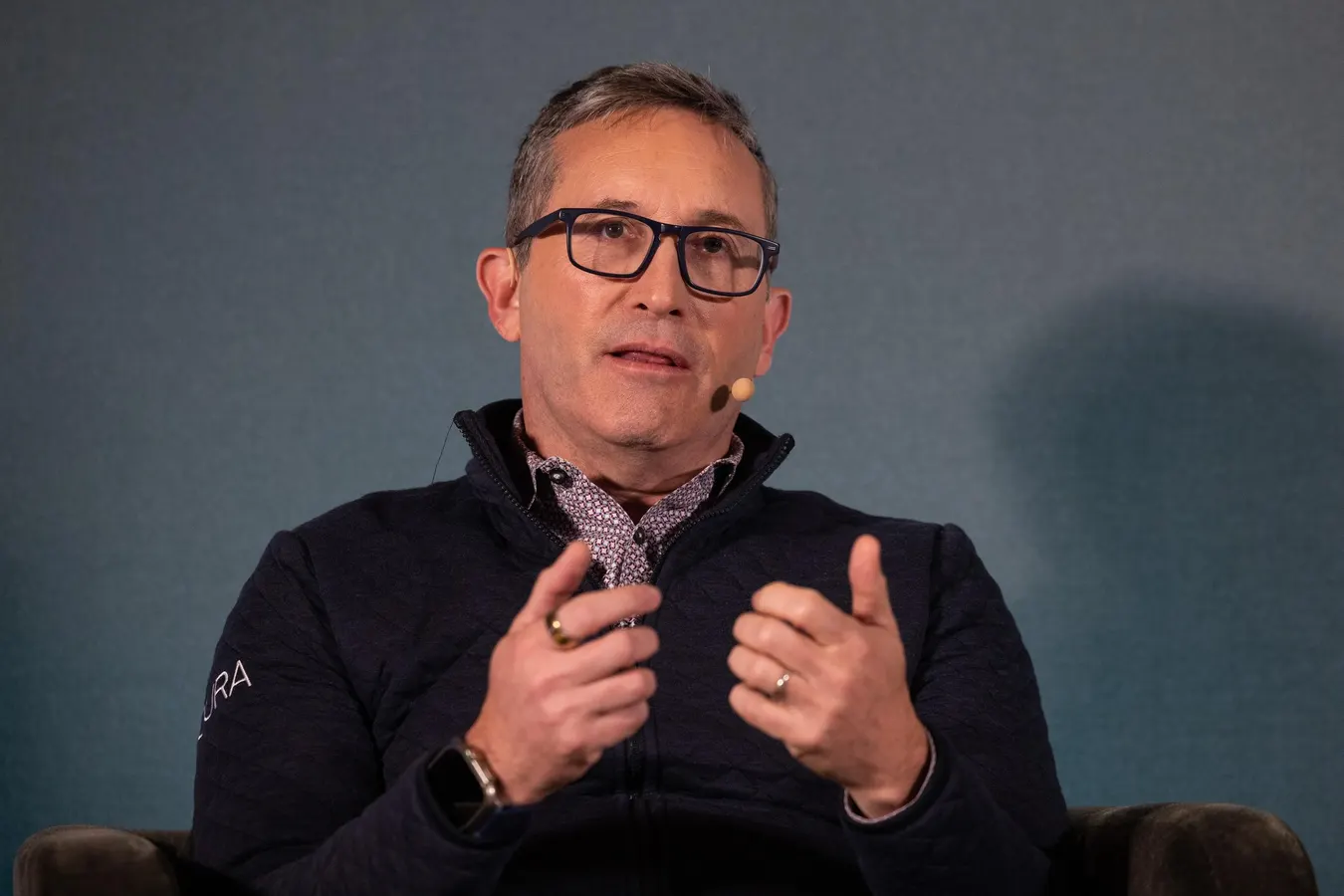
Oura CEO Tom Hale
Bloomberg Finance
The countdown to Oura’s IPO ended with a fizzle. On Tuesday, the smart-ring maker said that it would postpone its blockbuster offering due to “uncertainty in the IPO market.”
Just last week, Bloomberg reported that investors were clamoring for shares, with the offering four times oversubscribed. The deal was slated to price on Tuesday and Oura was expected to raise $2.2 billion at a valuation around $15 billion, up from $11 billion at its most recent venture funding round last year.
It’s a dramatic turn for the company. But worries over higher interest rates, the ongoing war in Iran and questions about the sustainability of the AI boom have weighed on public markets. “What is now clear is we are in a very different IPO market to the one we envisaged just a few weeks ago,” Samuel Kerr, global head of equity capital markets at Mergermarket, told Reuters.
Whether or not Oura is worth $15 billion depends, in large part, on the value of its health data in the age of AI. Stiff competition could be around the corner: Apple has reportedly been working on a screenless wearable. The public market can be particularly fickle for fitness companies: Seven years ago, Peloton went public in a much-watched IPO and reached a peak valuation around $50 billion, before tumbling, post-pandemic, to a recent $2.2 billion.
Oura, which was founded in Finland and is now based in San Francisco, had earlier revealed revenue of $1.2 billion for the nine months ending June 30–up 74% over the same period the previous year–in documents filed with the SEC for its coming IPO. The filing also showed still meager, but much improved profits of $60.8 million in the same nine-month period compared with just $1.6 million in the same period last year.
Oura said in its statement postponing its IPO that revenue for the 2026 fiscal year (which ends today) was forecast to rise 90% over last year.
Peptides Like ‘Tesa’ And Sermorelin Are Landing Fitness Fans In The Hospital With Allergic Reactions.
ILLUSTRATION BY MACY SINREICH FOR FORBES; PHOTOS BY FRANCESCO CARTA FOTOGRAFO/GETTY IMAGES; CHARNCHAI/GETTY IMAGES
Sarah Keese knew within seconds after injecting the peptide sermorelin into her stomach that something was wrong. Flushed and lightheaded, she cried out to her boyfriend for help. As Keese walked toward him, she fell to the ground, unconscious.
The next thing Keese remembers is being carried into the emergency room at the hospital in Sheridan, Montana. She later learned that her heart rate had slowed to 20 beats per minute, her blood pressure had crashed, and she had stopped breathing briefly after suffering a severe allergic reaction to the gray-market peptide. “If I had not been in the ER, I would have died absolutely,” says Keese, 35, an engineer now based in Anchorage, Alaska.
Keese was given epinephrine, then flown by medical helicopter to a larger hospital in Missoula, Montana, for more treatment and observation on July 3, 2025. That landed her with an $80,000 medical bill and a series of follow-up visits to a cardiologist to check on an irregular heartbeat triggered by the anaphylactic shock. She’s now sworn off peptides.
Forbes interviewed five people, including Keese, who experienced reactions after taking sermorelin and other peptides that belong to a group known as “secretegogues,” that stimulate the producton of human growth hormone. Dozens of others have shared similar accounts on social media.
Without testing what Keese and the other peptide users took, it’s impossible to know whether their reactions were a side effect of the drug, or caused by other ingredients or contaminants. Making sense of peptides’ safety is even more complex for those who take them “stacked,” using multiple gray-market drugs at the same time in the belief that this will increase their benefits.
“The safety and efficacy are unknown, so why would you want to be putting something like that in your body?” says Dr. Thomas Kremen, a sports medicine doctor at UCLA Health who works with both amateur and pro athletes, including at the L.A. Lakers and L.A. Chargers.
Kremen recently published a survey of the clinical literature on six popular peptides, including a secretagogue called ipamorelin. He found potentially concerning safety issues and little evidence of effectiveness. With people relying on social media for information, he says, peptides may be “more marketing than science.”
Unpaid Medical Bills Expected To Rise
Hospitals and health systems are seeing bad debt and charity care from unpaid medical bills rise this year. The problem is only expected to get worse. “Uncompensated care pressures are intensifying,” according to a new analysis from Kaufman Hall, a healthcare consulting firm owned by Vizient. Employers’ benefit costs are projected to jump next year by rates not seen in more than two decades, with much of that rate increase hitting employees.
What We’re Reading
AstraZeneca bought a $2 billion stake in Summit Therapeutics, a major bet on its high-profile cancer drug.
Former House majority leader Eric Cantor will be next CEO of PhRMA, the pharmaceutical industry’s trade group.
A “zombified” CDC, hobbled by cuts that have shrunk its staff by nearly one-third, is struggling to fulfill its scientific mission.
RNA therapy may help preserve muscle for people taking GLP-1s for weight loss, according to new research from Northwestern University. The loss of muscle mass along with fat has been one of the big drawbacks of GLP-1s.
The Trump administration plans to speed up the authorization of flavored vapes and tobacco pouches, despite lawmakers voicing public health concerns.
Investors Arch and Population Health have teamed up to launch a new startup for sleep disorders, called Somnivera, by licensing an early-stage drug from China for as much as $517 million. The same investors were behind last year’s $10 billion sale of obesity-drug maker Metsera to Pfizer.















Leave a comment