


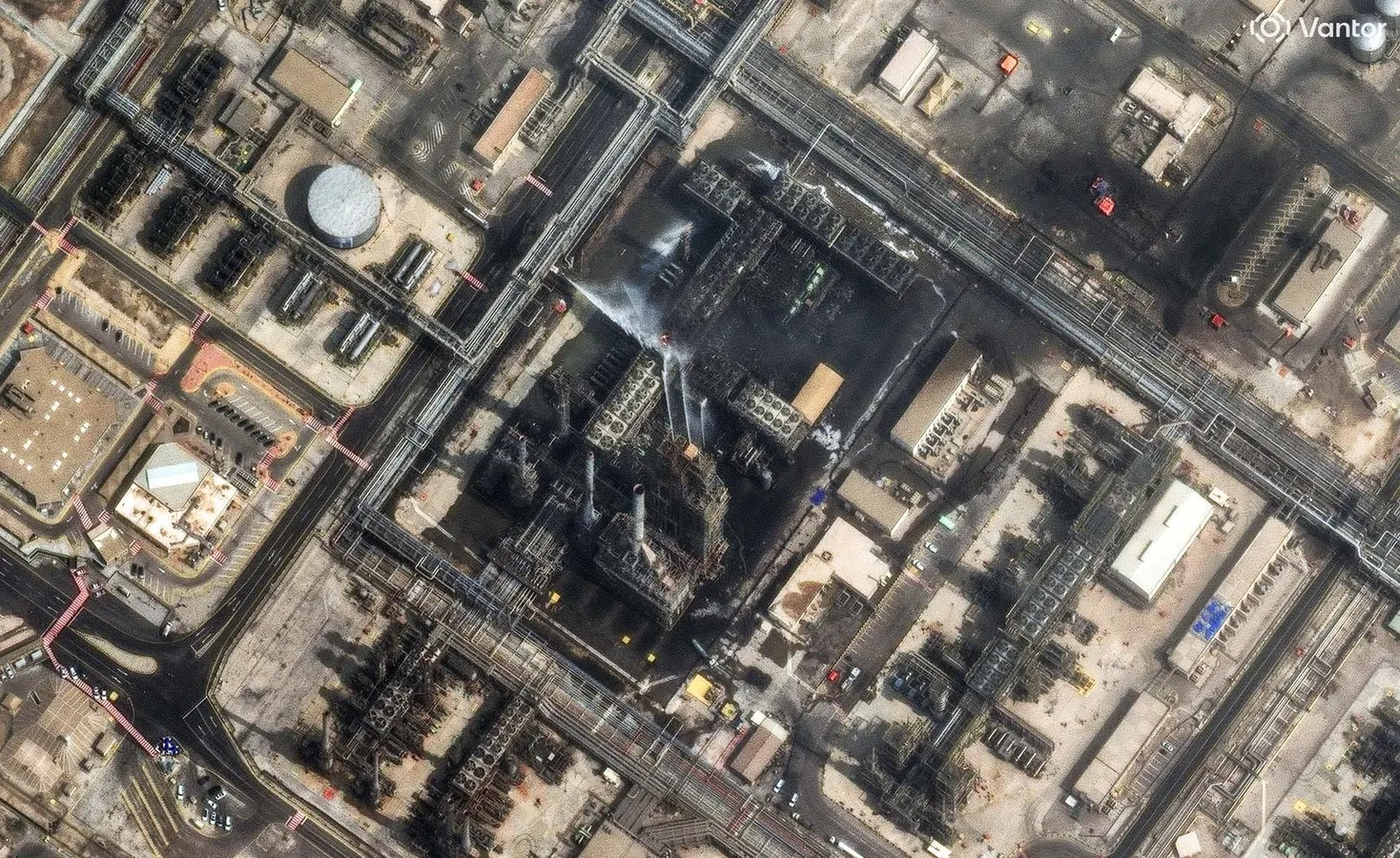

Satellite image of an oil refinery damaged by fire in Saudi Arabia earlier this year. Satellite image (c) 2026 Vantor.
DigitalGlobe/Getty Images
The Iranian and U.S. blockades of the Strait of Hormuz which have restricted Persian Gulf oil and gas shipments might be just a warmup for something more damaging and longer lasting; widespread and successful attacks on oil refineries in the region.
In one scenario explored by Morgans, an Australian stockbroking firm not connected to the bigger American firm with the same name, refinery outages could drive oil to $150 a barrel and perhaps higher.
“A strike that takes major processing or export capacity offline is supply lost for years and the market isn’t positioned to absorb it,” Morgans said.
Oil will rise sharply if refineries become the prime target of the Iran war.
getty
“Instead of oil flow being interrupted by blockades and vessel attacks, it would be a loss of meaningful oil supply potentially for years.
“It’s not our base case, but if it happens, we expect Brent crude oil to rise through $150/bbl.”
In its latest Oil & Refining research note the broker included another original thought; that China will emerge as “the new OPEC”, not by controlling supply as the Organization of Petroleum Exporting Countries attempts to do but by controlling demand.
The China demand theory is more complex than the potential damage from refinery losses which Morgans describes as “the new Hormuz”.
The Next Chokepoint
“Refineries are proving to be the next critical chokepoint for the global economy with tightness in the diesel markets remaining high,” the broker said.
“For oil this isn’t about reserves, it’s about the growing risk of oil infrastructure being attacked and taken offline for a period of years.”
Warnings about the potential for a major infrastructure outage have been growing louder for months with refineries on both sides in the Iran war being hit, followed by last week’s closure of the Saudi east-to-west oil pipeline.
Vantor satellite image shows fire damage and extensive blackened areas in and around the East-West pipeline pumping station in Saudi Arabia following the September 11, 2026 drone attack and resulting fires. Satellite image (c) 2026 Vantor.
DigitalGlobe/Getty Images
Morgans theory of China playing an enlarged role in the oil market starts with an observation that China’s demand for oil is a reason Brent is not already at $150/bbl.
With an estimated 1.4 billion barrels of stockpiled oil and declining demand for refined product as electric vehicle numbers grow China has already been able to cut oil imports by four-to five million barrels a day.
The big stockpile and falling demand mean that China only needs to buy oil when the price is low.
China The OPEC Of Oil Demand
“OPEC historically ran the market with supply (control), while in our view China now runs it with demand and will restock when the price suits,” Morgans said.
“Or restock when leaning on Washington or Brussels suits.”
The broker warned that the recent role of U.S. refineries in boosting production to plug Middle East shortfalls might not last much longer as domestic demand for gas and diesel becomes a hot political issue.
“U.S. refineries are keeping the world going, offsetting much of Russia’s absence from export markets” Morgans said.
“But political pressure is building to keep U.S. supply at home.”















Leave a comment